Table of contents
- Otter vs Lightspeed pricing at a glance
- What is Otter POS?
- What is Lightspeed for restaurants?
- Lightspeed POS features vs Otter
- Hardware: built-in delivery vs built-in table service
- Support and switching from Lightspeed
- What restaurants say about consolidating their order flow with Otter
- Which restaurants fit Otter, and which fit Lightspeed
- Match your POS to how orders reach your kitchen, not just how tables turn
- Frequently Asked Questions (FAQs)
Full-service restaurants aren't sitting out the shift to off-premises dining, either: 43% expect to grow curbside pickup and 31% expect to add dedicated takeout counters in the years ahead, according to the National Restaurant Association. So the old line between "dine-in POS" and "delivery POS" is getting blurrier every year, and that's exactly where Otter and Lightspeed pull in different directions.
Otter and Lightspeed both run a restaurant's front and back of house, but they were built around different operators. Otter was built first for restaurants juggling dine-in, online, and delivery orders across multiple platforms at once, quick-service, fast-casual, and ghost-kitchen concepts especially. Lightspeed was built first for full-service, table-managed dining, with floor plans, course firing, and reservations baked into the core product, and added delivery support on top. Neither is the wrong choice on its own. Which one fits depends on how much of your business is a server walking up to a table versus an order arriving through an app.
Key insights
- Otter was built around multi-channel and delivery-heavy service from day one. Lightspeed was built around full-service, table-managed dining, with floor plans, course firing, and reservations built into the core product.
- Otter's Order Manager connects natively to DoorDash, Uber Eats, and Grubhub with real-time menu sync. Lightspeed leans on third-party middleware like Deliverect, an added monthly cost, to do the same job.
- Otter's pricing runs three tiers from a $79-per-month bundle up to a $278-per-month plan with a branded website, loyalty, and gift cards built in, hardware included at every tier. Lightspeed's restaurant plans run roughly $69 to $399 a month, plus hardware, and pairing certain plans with an outside payment processor can add a separate monthly gateway fee.
- Otter's plans carry no published long-term commitment. Lightspeed's plans are typically sold on annual terms with early termination fees, worth confirming in your specific agreement before signing.
Otter vs Lightspeed pricing at a glance
Here's how the two compare right now. Pricing changes from time to time on both sides, so if a number here looks different from what you see on Otter's or Lightspeed's own site, our team is always happy to confirm the latest details for you.
Otter POS pricing
Tier | Software + hardware | Card-present rate | Card-not-present rate | What's included |
|---|---|---|---|---|
Starter | $79/mo | 2.79% + $0.20 | 3.29% + $0.30 | POS software, hardware, Inventory Savings |
Advanced | $178/mo | 2.59% + $0.15 | 3.29% + $0.30 | + Delivery App Aggregation, Online Ordering, QR Code Ordering |
Professional | $278/mo | 2.39% + $0.10 | 3.29% + $0.30 | + Branded Website, Loyalty, Gift Cards |
Hardware, including the Dual Screen Terminal, is now bundled into the monthly price shown above at every tier rather than billed separately. Kiosk is still sold separately from the core POS bundle; see the hardware and contract table below for current starting prices
Lightspeed pricing for restaurants
Tier | Monthly software | Card-present rate | Card-not-present rate | What's included |
|---|---|---|---|---|
Starter | $69/mo | 2.6% + $0.10 | 2.9% + $0.30 | Core POS, table management, basic reporting |
Essential | $189/mo | 2.6% + $0.10 | 2.9% + $0.30 | + order management, table service tools, standard reporting |
Premium | $399/mo | Custom, volume-based | Custom, volume-based | + multi-revenue center support, raw API access |
Enterprise | Custom pricing | Custom, volume-based | Custom, volume-based | Multi-location management, advanced analytics |
Kitchen display runs $30/month per screen on any Lightspeed tier. Using an outside payment processor instead of Lightspeed Payments adds a separate monthly gateway fee, roughly $99/month on the plans where that applies, on top of tiered per-volume fees. Lightspeed does not publish these processing figures on its own pricing page; see the editor's note above for sourcing detail.
Hardware and contract terms at a glance
Item | Otter | Lightspeed |
|---|---|---|
Countertop terminal | Dual Screen Terminal Bundle: included in the monthly price, any tier | Smart Terminal (Hospitality): $399 |
Kitchen display | Add-on, contact sales for pricing | Kitchen Bumpbar $199, plus $30/mo per screen |
Kiosk | Software from $99/mo; hardware $100 to $289/mo by size | Add-on, contact sales for pricing |
Stands and accessories | Included with bundle pricing | iPad/tablet stands $89 to $199; barcode scanners $149 to $399 |
Typical contract | No separate hardware contract, bundled monthly | Annual, with early termination fees |
Delivery integration | Native, built into every plan | Requires third-party middleware (e.g. Deliverect, $49 to $199/mo) |
If you are pricing out the full cost of a POS switch, not just the software line item, Otter's guide to restaurant POS system costs breaks down the pieces, hardware, processing, add-ons, that add up beyond the sticker price.
What is Otter POS?
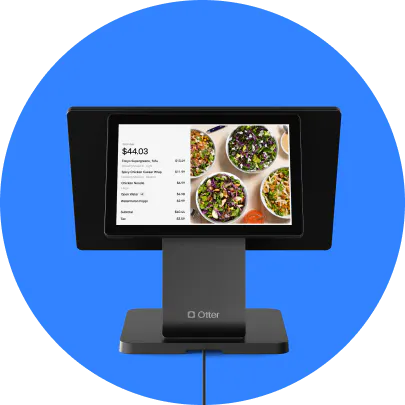
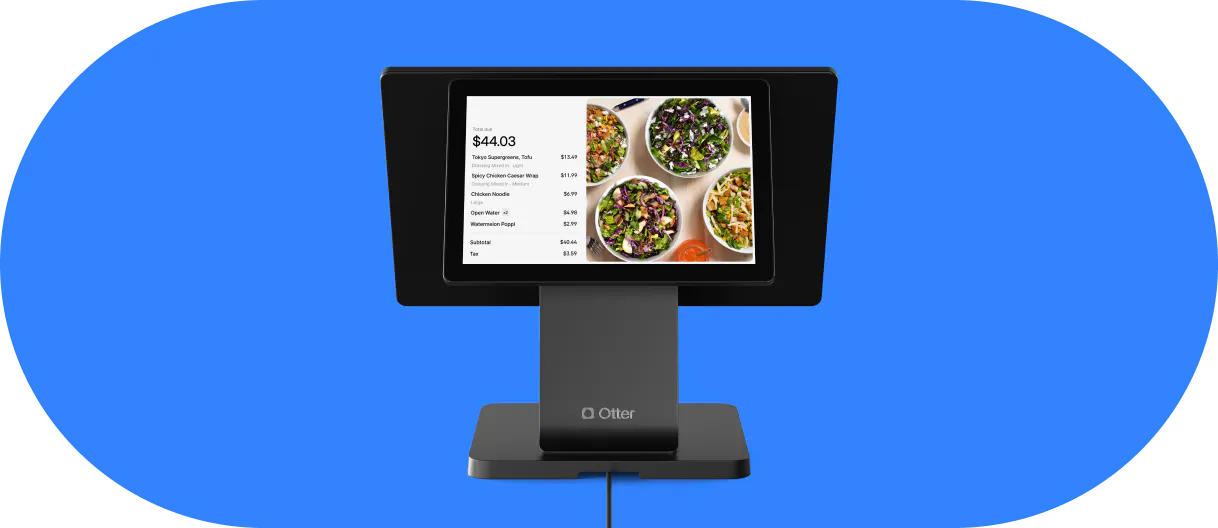
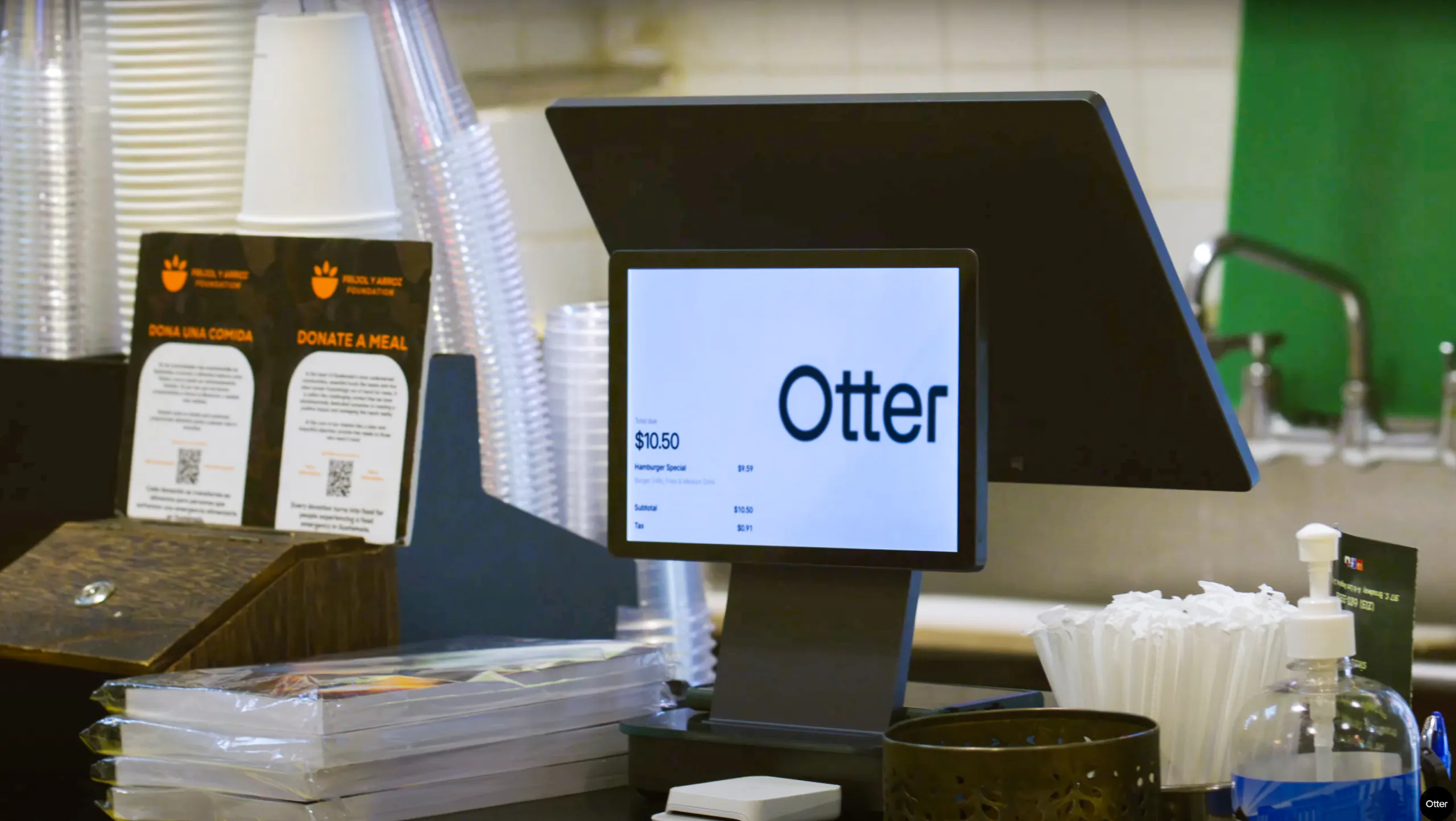
Otter builds restaurant point-of-sale software first, and everything else builds around that. The platform targets restaurants juggling dine-in, online, and delivery orders at once, from single-location quick-service spots to multi-location and ghost-kitchen operators. Every Otter POS plan pairs the software with Inventory Savings, a cash-back program on food a restaurant is already ordering, and each higher tier adds the ordering channels and branding tools a growing restaurant tends to need next.
What is Lightspeed for restaurants?
Lightspeed Restaurant grew out of Lightspeed's broader point-of-sale business, which also serves retail and golf, and it leans into full-service dining strengths: table and floor plan management, course firing for multi-course meals, and reservation and waitlist tools built into the core product. That table-service depth is where Lightspeed tends to be strongest, and it's also where the two platforms diverge most from Otter, delivery aggregation and how fast a menu change reaches every ordering channel.
Lightspeed POS features vs Otter
Order and delivery management
- Otter's Order Manager consolidates DoorDash, Uber Eats, Grubhub, and other delivery platforms into one tablet, with orders and menu changes syncing in real time.
- Lightspeed doesn't build delivery aggregation into the core POS. Restaurants typically add third-party middleware like Deliverect, itself a separate $49 to $199 monthly cost, to route orders and sync menus across delivery apps.
Table management and floor plans
- Lightspeed's floor plan and table management tools, course firing, seat-level ordering, and reservation and waitlist support, are purpose-built for full-service, sit-down dining.
- Otter's software is not built around table-and-floor management the same way. It is built for concepts where orders arrive from many directions at once rather than a server working a fixed set of tables.
Kitchen display and menu sync
- Otter's Kitchen Display System shows dine-in, kiosk, online, and delivery orders in one unified view, and menu changes publish everywhere at once, so 86ing an item instantly pulls it from every channel.
- Lightspeed's kitchen display runs $30 per month per screen on any tier, and menu updates to delivery platforms follow whatever cadence its third-party middleware supports rather than syncing natively.
Analytics
- Otter's Analytics comes standard on every plan, with real-time sales data across channels and locations.
- Lightspeed reserves its deeper reporting and raw API access for the Premium and Enterprise tiers, with more basic reporting on Starter and Essential.
Hardware: built-in delivery vs built-in table service
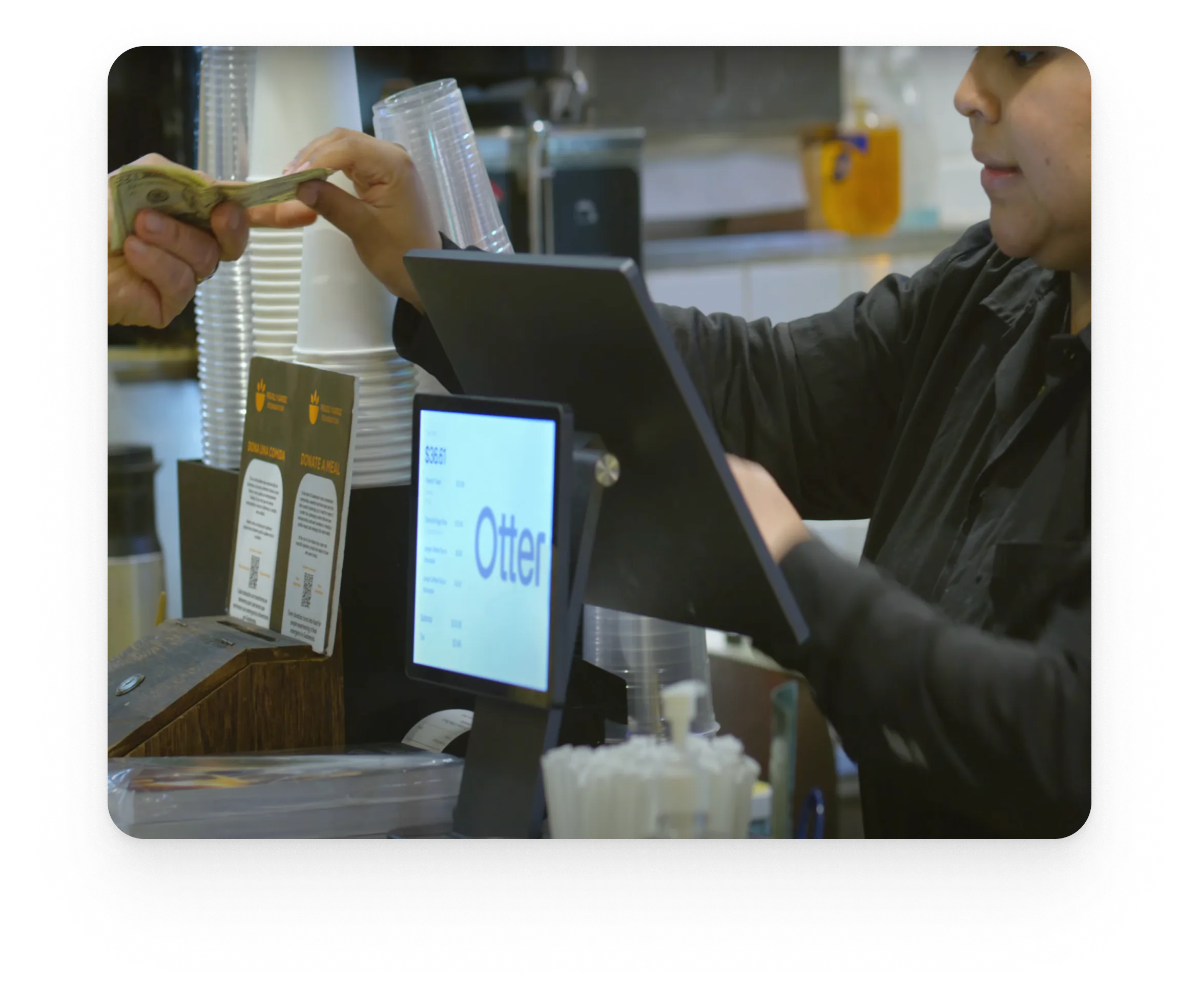
Otter's hardware, including its Dual Screen Terminal Bundle, is built around a single tablet or terminal handling every channel a restaurant serves, dine-in, kiosk, online, and delivery, from one screen. Lightspeed's hardware lineup, terminals, kitchen bumpbars, tablet stands, and barcode scanners, is built for a more traditional front-of-house and back-of-house split, sold and priced piece by piece.
For a full-service restaurant that already runs its floor a certain way, that piece-by-piece hardware approach isn't necessarily a downside, it's built for exactly that workflow. For a restaurant leaning heavily on delivery and takeout, Otter's single-screen, all-channels approach tends to mean less hardware to buy and fewer systems for staff to check. See the hardware and contract terms table above for what each option costs.
Support and switching from Lightspeed
Otter includes 24/7 phone, chat, and email support on every plan, no separate support tier required. Lightspeed's support access and response times can vary by plan tier, and restaurants on lower tiers may have narrower support hours than what higher tiers get.
Restaurants already on Lightspeed typically need to work through any remaining term on their current agreement, and any early termination fees, before switching, since Lightspeed's plans are commonly sold on annual terms. Otter's onboarding team handles menu setup, staff training, and platform integration as part of the move.
What restaurants say about consolidating their order flow with Otter
Christina Hong runs Seoulmates, where a large share of orders come through third-party delivery apps:
“One of my favorite things about Otter is the integration with the third-party deliveries. It makes my job as an owner so much easier, everything is in one place and runs smoothly, because we rely on a lot of those third-party deliveries for our business.”
Christina Hong, Owner, Seoulmates.
Which restaurants fit Otter, and which fit Lightspeed
Choose Otter if
- Delivery and takeout are a meaningful share of your orders and you need real-time consolidation across apps, not added middleware
- You run a QSR, fast-casual, ghost kitchen, or multi-location, delivery-heavy concept
- You want analytics and 24/7 support included without paying for an upgrade
- You would rather run every channel from one screen than piece together separate tools
Choose Lightspeed if
- You run a full-service, table-managed dining room, fine dining, bar, or hotel restaurant
- Course firing, seat-level ordering, and floor plan management matter more to your workflow than delivery aggregation
- You are comfortable adding third-party middleware to handle delivery-platform sync
- You are comfortable with an annual contract and its early termination terms
For a wider field than just these two, Otter's roundup of POS systems for restaurants compares more vendors side by side.
Match your POS to how orders reach your kitchen, not just how tables turn
Table service polish matters less here than one practical question: how many of your orders already skip the table entirely. If delivery and takeout are already a meaningful slice of the business, Otter's native, real-time sync across ordering apps closes a gap that Lightspeed's third-party-middleware approach leaves for a separate tool to solve. If a restaurant runs a full-service dining room with lighter delivery volume, that gap matters less, and Lightspeed's table management depth might be the simpler fit.
Frequently Asked Questions (FAQs)
Is Otter or Lightspeed better for restaurants?
It depends on how orders reach you. Otter tends to be the stronger fit for restaurants that rely on delivery and takeout and need real-time order consolidation across platforms like DoorDash, Uber Eats, and Grubhub, along with analytics and support included on every plan. Lightspeed tends to work well for full-service, table-managed dining rooms that need deep floor plan, course-firing, and reservation tools.
Which has lower processing fees, Otter or Lightspeed?
Otter's card-present rate starts at 2.79% plus $0.20 on its Starter tier and drops to 2.39% plus $0.10 on Professional. Lightspeed's published card-present rate is 2.6% plus $0.10 on its lower tiers, with custom, volume-based rates on Premium and Enterprise. Which one costs less depends on your tier and your split of in-person versus online orders, see the pricing table above for the exact rate at each tier.
Does Otter integrate with DoorDash, Uber Eats, and Grubhub?
Yes. Otter's Order Manager integrates with DoorDash, Uber Eats, Grubhub, and other major delivery platforms, consolidating orders into one tablet with real-time menu sync across all of them.
Does Lightspeed integrate with delivery platforms directly?
Not natively. Lightspeed's core POS doesn't build in delivery-platform aggregation the way Otter does, so restaurants commonly add third-party middleware like Deliverect, a separate monthly cost, to route orders and sync menus across delivery apps.
Does Lightspeed require a long-term contract?
Lightspeed's plans are commonly sold on annual terms with early termination fees, based on the prior published version of this comparison; check your specific agreement for exact terms. Otter does not carry a published long-term commitment; hardware is now bundled into the monthly price rather than sold on a separate lease term.
Does Lightspeed have good table management features?
Yes, table and floor plan management is one of Lightspeed's core strengths, along with course firing and reservation and waitlist tools built for full-service dining. Otter is not built around table management the same way; it's built for restaurants where orders arrive from many channels at once.
Is Otter a good Lightspeed alternative for restaurants?
For restaurants where delivery and takeout make up a real share of the business, yes, Otter's native, real-time order and menu sync across delivery platforms is the clearest gap it closes versus Lightspeed. For full-service restaurants built around table turns and course-by-course dining, that gap matters less, and it's worth weighing against Lightspeed's floor management depth before switching.
Can I switch from Lightspeed to Otter?
Yes. You will want to account for any remaining term on your Lightspeed agreement and its early termination fees first, since Lightspeed's plans are commonly sold on annual terms. Otter's onboarding team handles menu setup, staff training, and platform integration as part of the switch.

Weigh Otter against Lightspeed