
Table of contents
- Otter vs Toast at a glance
- What Otter POS is built for
- Toast POS features and who they are built for
- How Otter and Toast price their platforms
- Feature comparison: point of sale, kitchen, menus, and reporting
- Running a delivery-heavy restaurant on Otter vs Toast
- Hardware, setup, and daily use
- Customer support on each platform
- Switching from Toast to Otter: what to plan for
- Best fit by restaurant type
- Pros and cons of each platform
- Match the system to where your orders actually come from
- FAQs about Otter vs Toast
Nearly 75% of all restaurant traffic now happens off-premises, according to the National Restaurant Association. Almost three out of four orders leave the building. That single shift is why choosing a point of sale system has stopped being a back-office decision and started being a question about where your revenue actually comes from.
Otter and Toast are both built for restaurants, and both are capable systems. They just solve different problems. Toast was designed around the dining room, with table management, tableside ordering, and a deep back-office suite. Otter was designed around the order, wherever it originates, with delivery apps, kiosks, and direct online ordering feeding one screen. Neither is objectively better. The right answer depends on whether your busiest hour happens at a table or on a phone.
Key insights
- Toast is the stronger system for full-service dining rooms that need floor plans, coursing, seat-level ordering, and native payroll in the same platform.
- Otter is the stronger system for restaurants where delivery apps, pickup, and kiosk orders make up a large share of volume and need to land in one queue.
- Both platforms publish a starting price that understates the real number, because add-ons, processing rates, and hardware are where restaurant technology costs actually accumulate.
- The switching cost matters as much as the monthly cost: check contract length, termination terms, and what happens to your hardware before you sign with either provider.
Otter vs Toast at a glance
| Otter | Toast |
|---|---|---|
Built around | Multi-channel order flow: delivery, pickup, kiosk, dine-in | The dining room: tables, servers, coursing |
Best for | Quick service, fast casual, ghost kitchens, delivery-led brands, multi-location operators | Full-service restaurants, bars, high-volume cafes, multi-location groups |
Pricing model | Bundled plans plus a build-your-own option, quoted at signup | Tiered plans from a hardware-bundled starter tier up to custom builds |
Payment processing | Quoted with your plan | Toast's own flat-rate processing is included in the plans |
Delivery integration | Native order consolidation through Order Manager | Available as a paid add-on |
Kitchen display | Pulls every channel into one view | Built for high-heat kitchens with routing and station modes |
Menu sync | Update once, syncs across channels | Supported, may need configuring per platform |
Table management | Limited | Extensive: floor plans, seat-level ordering, coursing |
Payroll and scheduling | Not native | Native, sold as an add-on |
Support | 24/7 included on every plan | 24/7 available, plus onboarding specialists |
The short version: Toast gives you more surface area, especially in the dining room and the back office. Otter gives you fewer moving parts and a tighter grip on orders arriving from outside your four walls. Restaurants that run a complex floor tend to be happier on Toast. Restaurants where the delivery tablet used to be its own full-time job tend to be happier on Otter.
What Otter POS is built for
Otter POS came out of food delivery operations rather than payment processing, and it shows in what the product prioritizes. In-store, pickup, and delivery orders arrive in one interface instead of three. Menus are managed once and pushed everywhere. Reporting treats each sales channel as a first-class citizen rather than an afterthought.
The system runs on a dual-screen terminal with a card reader dock and front-of-house printer, not a consumer tablet propped on a stand. The terminal also keeps taking orders and card payments when the internet drops, which matters more in practice than most demos suggest.
Where Otter fits best
Otter is a natural fit if you recognize your restaurant in this list:
- Quick-service or fast-casual concepts where line speed at the counter is the constraint
- Ghost kitchens and delivery-first brands with no dining room to manage
- Restaurants running two or more brands out of one kitchen
- Operators with several locations who want channel-level visibility in one place
- Anyone currently reconciling a stack of separate delivery tablets by hand
Toast POS features and who they are built for
Toast has been building restaurant software since 2012 and is now one of the largest restaurant platforms in the United States. Unlike systems adapted from general retail software, it was designed for restaurants from the start, and the depth shows in the dining room.
Toast POS features at a glance
The core Toast feature set covers:
- Table and floor management, with drag-and-drop floor plans, seat-level ordering, and coursing for multi-course service
- Tableside ordering on the Toast Go handheld, so servers fire orders and take card payments without walking back to a terminal
- Kitchen display screens built for hot, high-volume kitchens, with routing rules and expediter and prep station modes
- Online ordering and delivery integration, each sold as a paid add-on or bundled into higher-rate processing tiers
- Native payroll, scheduling, and team management, which is genuinely rare among restaurant point of sale providers
- A marketing suite covering email, SMS campaigns, and customer segmentation
- A large third-party partner network spanning scheduling tools, reservation platforms, and accounting software
Where Toast fits best
Toast is the better choice when the dining room is the business:
- Full-service restaurants and fine dining with real table service
- Bars and nightclubs running tabs through a busy night
- Cafes where dine-in complexity outweighs delivery volume
- Operators who want payroll and scheduling inside the same platform as the point of sale
- Teams comfortable trading flexibility for a single, tightly integrated ecosystem
How Otter and Toast price their platforms
Published starting prices are close to meaningless in this category, on both sides. What determines your actual bill is the combination of subscription tier, processing rate, hardware, and the add-ons you end up needing six months in. Both companies move their pricing, so treat any figure you read anywhere (including here) as a prompt to go get a current quote rather than a number to budget against. Otter publishes current plans on the Otter pricing page, and Toast publishes its tiers on the Toast pricing page.
If you want the full anatomy of what a restaurant point of sale actually costs across the market, Otter's guide to what a restaurant POS system costs breaks the line items down provider by provider.
How the software subscription works
Otter sells bundles. Each bundle packages the point of sale with a set of products, and there is a build-your-own option for operators who want to assemble their own combination. Analytics, live alerts, and 24/7 support are included rather than gated behind a higher tier.
Toast sells tiers. The entry tier bundles a small hardware kit with no monthly software fee and recovers the difference through higher processing rates. Moving up to a paid monthly plan lowers those rates. Above that sits a custom build for larger or more complex operations. The structural difference is that Toast's model asks you to choose where you pay: monthly, or per transaction.
How payment processing is handled
Toast includes its own flat-rate processing in every plan and acts as the payment facilitator, so the software and the payments come as a pair. That simplifies the relationship and removes the option of shopping your processing separately.
Otter quotes processing alongside your plan rather than publishing a public rate card. Ask for the card-present rate, the card-not-present rate, and the per-transaction fee in writing, and ask both providers what happens to those rates as your volume grows.
How hardware is bought or leased
Otter sells purpose-built restaurant hardware including terminals, kitchen display screens, printers, and self-service kiosks, with monthly leasing available so the upfront cost does not land all at once.
Toast bundles hardware into its entry kit and sells it separately on higher plans, with a line built for spills and high-heat service. The Toast Go handheld is the standout piece and the main reason full-service operators pick Toast.
One question worth asking both vendors directly: what happens to the devices if you leave? Get the answer in writing rather than inferring it.
Where the add-on costs show up
This is where the two bills diverge, and it is the single most useful thing to model before you sign.
On Otter, the common add-ons are loyalty, marketing, and additional kitchen display screens. Delivery integration is included on some bundles and paid on others.
On Toast, the add-on list is longer because the platform covers more ground: online ordering, third-party delivery integration, loyalty, gift cards, the marketing suite, payroll, inventory, and team management are each priced separately. A restaurant that wants the full Toast experience is buying a stack of subscriptions, not one. That is not hidden, but it is easy to underestimate when you are comparing headline prices.
Build the same shopping list for both vendors, ask each for a quote against that exact list, and compare those two numbers. Nothing else is a fair comparison.
Contract length and what happens if you leave
Neither company publishes contract terms on its public pricing page, so this has to come from your sales conversation. Ask both providers, in writing, for: the initial term length, whether it auto-renews, what an early termination costs, and whether hardware is returned, bought out, or yours to keep.
Restaurant operators consistently report that this is the part of the deal they wish they had scrutinized harder. It is also the part that is easiest to get in writing before you sign and impossible to renegotiate after.
Loyalty and marketing
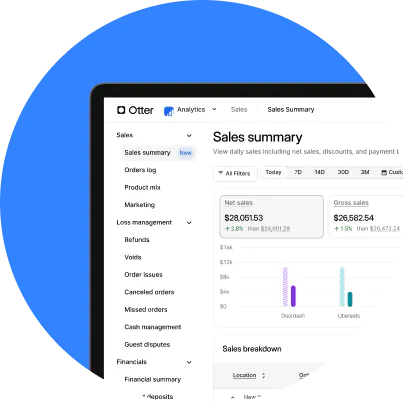
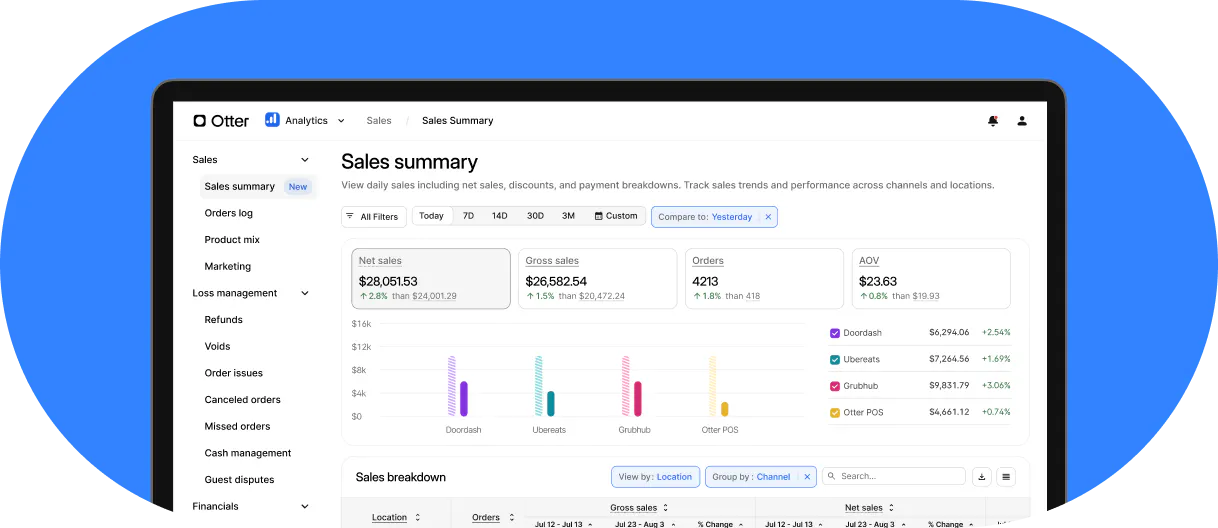
Otter Loyalty and Toast's loyalty product are both points-based and both integrate with the point of sale and online ordering, so there is little to separate them on capability. Marketing is where they diverge. Toast's suite is the more developed of the two, covering email, SMS, and customer segmentation. Otter Marketing focuses on running ads across delivery apps to win visibility where delivery-led restaurants actually compete, plus email and SMS built on customer data from online ordering. If you run an active marketing calendar for a dining room, Toast's toolset is broader. If your growth problem is ranking higher in the delivery apps, Otter's is pointed at that specific job.
Feature | Otter | Toast |
|---|---|---|
Point of sale | Fast counter-service entry, every channel on one screen | Full table management, tableside ordering on a handheld |
Kitchen display | Every channel consolidated into one queue | Durable hardware, routing rules and station modes |
Online ordering | Commission-free direct ordering | Paid add-on or higher processing tier |
Delivery integration | Native through Order Manager | Paid add-on |
Menu management | Real-time sync across all channels | Included, delivery sync may need per-platform setup |
Analytics | Advanced included on every plan | Basic included, advanced on higher tiers |
Loyalty | Add-on | Add-on |
Marketing | Email and SMS at additional cost | Broader suite at additional cost |
Payroll and scheduling | Not native | Native add-on |
Table management | Limited | Extensive |
Running a delivery-heavy restaurant on Otter vs Toast
If delivery and pickup are a meaningful share of your volume, this section is the comparison. Everything else is secondary.
How delivery orders reach the kitchen
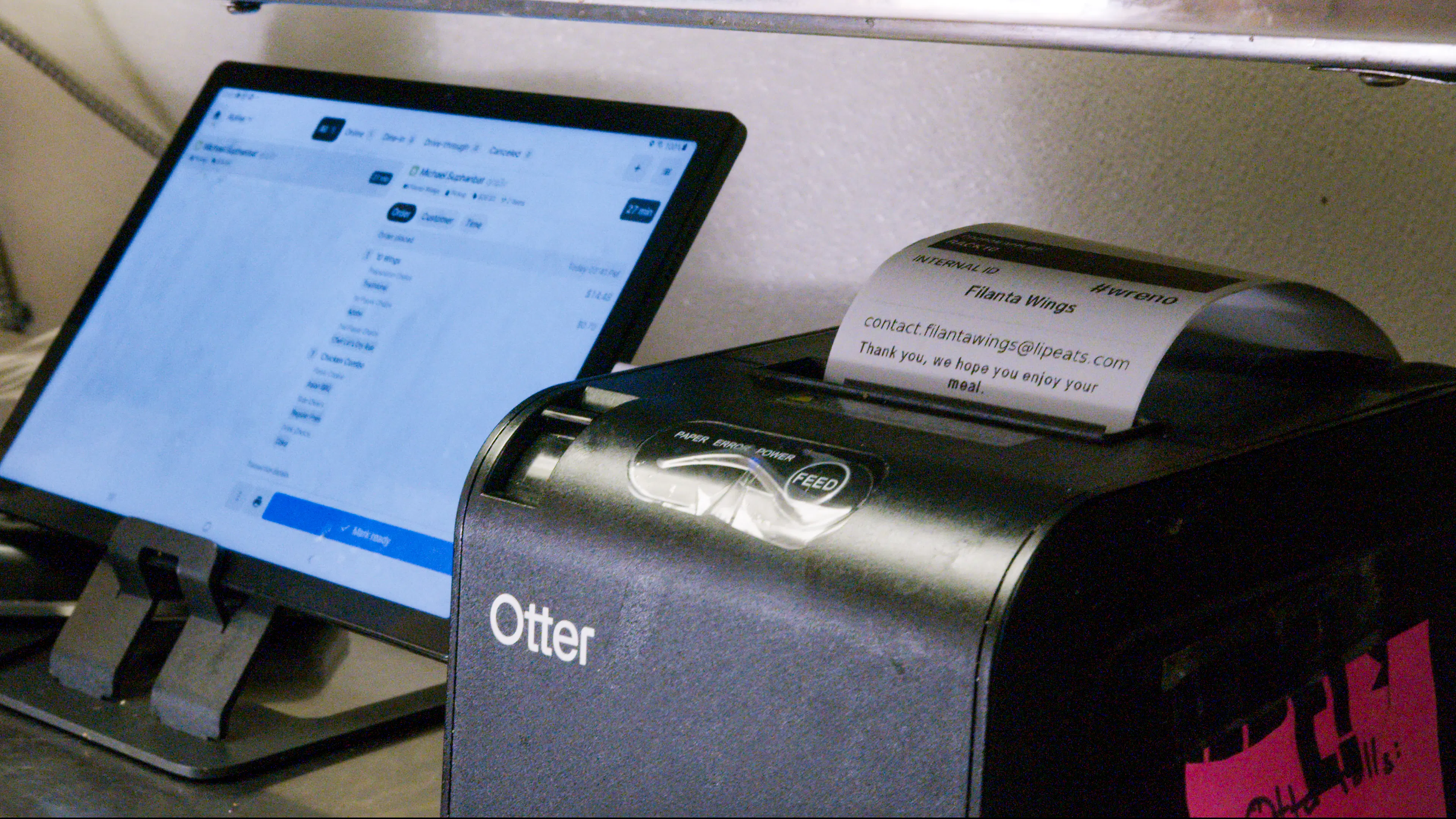
Otter Order Manager is native to the platform. Orders from delivery apps land in one chronological list on a single tablet, print automatically to the kitchen, and can be auto-accepted with custom prep times so the queue stays manageable during a rush. The point of sale and the tablet stay in sync in both directions, so a delivery order and a counter order are the same kind of object in your reporting.
Toast integrates with the major delivery platforms and routes those orders into the Toast point of sale and kitchen display without a separate device, which is a real advantage over running native delivery tablets. It is sold as a paid add-on rather than included, and it is worth confirming which platforms are covered in your market before you assume the one you depend on is supported.
If you are still weighing whether native integration is worth paying for at all, Otter's rundown of POS systems with delivery integration covers what changes operationally once orders stop arriving on their own screens.
Keeping menus in sync across delivery apps
Every operator running three or more delivery platforms eventually hits the same wall: a price change or an 86'd item has to be made three or four times, and one of them gets missed. Otter's menu sync is designed specifically around that problem. Toast handles it too, through the delivery add-on, with more configuration per platform.
Commission-free direct ordering
Both platforms sell direct online ordering as a way to move volume off commission-charging marketplaces. Otter includes commission-free direct online ordering in its bundles; Toast sells its digital storefront as an add-on. For a delivery-led restaurant, the math on shifting even a modest share of orders to a direct channel usually dwarfs the difference in monthly software fees.
Hardware, setup, and daily use
Hardware
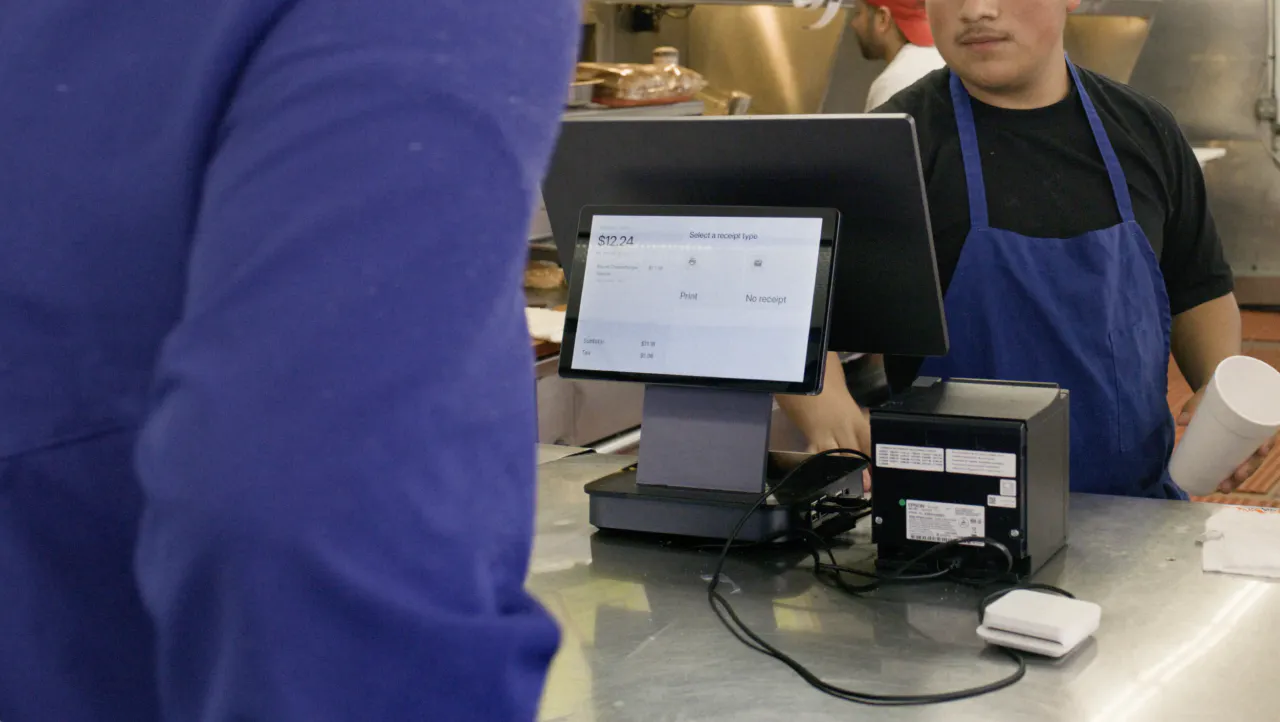
Otter's line covers counter-service and delivery-focused operations: a dual-screen terminal, kitchen display screens, printers, and kiosks in multiple sizes, with leasing available across the range.
Toast's line is purpose-built and durable, designed for spills and high-heat service, and the Toast Go handheld is genuinely good at what it does. For a restaurant with servers on a floor, that handheld is often the deciding feature.
Setup and onboarding
Otter tends to deploy faster, with a streamlined setup process and 24/7 support available throughout onboarding. Toast onboarding runs from a few days to several weeks depending on complexity, with dedicated specialists handling hardware installation, menu configuration, and staff training. The trade-off is predictable: more configurable systems take longer to configure.
Daily operations
Day to day, Otter is oriented around speed and fewer screens, with every channel in one dashboard and automated notifications keeping the kitchen informed. Toast gives full-service teams precise control over the floor, with a steeper initial learning curve that flattens once staff are trained.
Customer support on each platform
Otter includes 24/7 phone, chat, and email support on every plan, with no premium tier required to reach a person, and that stays true as you add locations.
Toast also offers 24/7 support across plans, along with dedicated onboarding specialists and a large self-service training library. Operator feedback on day-to-day responsiveness is more mixed, with reports of uneven quality across channels.
Support quality is difficult to evaluate from a demo. The most reliable test: ask each provider what their median response time is on a Friday night, and ask for references from restaurants your size.
Switching from Toast to Otter: what to plan for
Most people reading an Otter vs Toast comparison are not opening a first location. They are already running one system and wondering whether the other would be less painful. Here is what actually matters in that decision.
What your current contract means for your timeline
Before anything else, find your term end date and your termination terms. If you are mid-contract, the cost of leaving early is a real line item, and it may mean the sensible move is to start the evaluation now and switch at renewal rather than paying to exit. Ask your current provider for the terms in writing.
What carries over and what does not
Your menu data, your item photography, and your customer list generally move with you. Hardware usually does not, so budget for a new terminal set or a lease. Ask any prospective provider whether they will import your menu for you, because doing it by hand across a large menu is the single most time-consuming part of a switch.
How long the transition takes
Menu import, hardware setup, and staff training are the three phases. Restaurants that plan the cutover for a slow day and run both systems in parallel for a short window tend to have an uneventful transition. Restaurants that switch on a Friday do not.
"Transitioning from a previous POS system to Otter has been very smooth. The setup process was super easy. I'm not technologically advanced, so for me to be able to set it up and do it without having to ask any questions, that was very helpful. Anyone can do it."
Christina Hong, owner of Seoulmates, Beverly Grove, Los Angeles
If Toast is not the right fit but Otter is not obviously the answer either, Otter's overview of Toast POS competitors covers the wider field of alternatives.
Best fit by restaurant type
Restaurant type | Stronger fit | Why |
|---|---|---|
Quick service and fast casual | Otter | Built for counter speed and multi-channel order volume |
Ghost kitchen | Otter | Consolidates every delivery platform with real-time menu sync |
Delivery-first brand | Otter | Channel-level visibility and native order management |
Multi-brand operator | Otter | Runs multiple menus and brands through one system |
Multi-location operator | Either | Otter for channel visibility, Toast for back-office depth |
Full service and fine dining | Toast | Floor plans, seat-level ordering, and coursing |
Bar and nightclub | Toast | Strong tab handling and dine-in tooling |
Cafe and coffee shop | Either | Otter if delivery is central, Toast if dine-in complexity is |
Food truck | Otter | Simpler footprint, delivery and pickup oriented |
Pros and cons of each platform
Otter pros
- Native delivery order consolidation, with orders from major platforms landing in one queue
- Menu changes made once and synced across every channel
- Analytics, live alerts, and 24/7 support included on every plan rather than gated
- Offline mode on the point of sale terminal, so service continues when the internet does not
- Purpose-built restaurant hardware with leasing available, including kiosks
- Straightforward bundles with a build-your-own option
Otter cons
- Table management is limited compared with a full-service system
- No native payroll or team scheduling
- Smaller third-party integration ecosystem than Toast
- Less brand recognition in the full-service segment
Toast pros
- The deepest dine-in feature set of any major restaurant platform
- Excellent tableside ordering on the Toast Go handheld
- Restaurant-grade hardware built for spills and high heat
- Native payroll, scheduling, and team management in the same platform
- Large third-party partner network across scheduling, reservations, and accounting
- Established, well-supported product with extensive training resources
Toast cons
- Add-on costs accumulate, since most capabilities beyond the core point of sale are priced separately
- Delivery integration and online ordering are both paid add-ons rather than included
- Payments and software come as a pair, so processing cannot be shopped separately
- Contract and termination terms are not published and must be negotiated case by case
- More configuration and a longer onboarding runway than lighter systems
- More platform than a delivery-led quick-service restaurant is likely to use
Match the system to where your orders actually come from
There is no universal winner here, and any comparison that declares one is selling you something. The honest decision rule is narrower than most buying guides admit: look at last month's sales by channel.
If most of your revenue came from tables, and servers walking a floor is the operational reality you are trying to improve, Toast is built for that and it would be strange to pick anything else. If most of your revenue arrived through delivery apps, a pickup counter, a kiosk, or your own website, then the thing slowing you down is order fragmentation, and that is the specific problem Otter was designed to solve.
Pull the channel mix report, ask both vendors to quote the same shopping list, get the contract terms in writing, and the answer usually stops being ambiguous.
FAQs about Otter vs Toast
Is Otter better than Toast for restaurants?
It depends entirely on how your restaurant takes orders. Otter is the stronger fit for quick-service and fast-casual concepts, ghost kitchens, and delivery-heavy operations that need multi-channel order management in one place. Toast is the stronger fit for full-service restaurants that need advanced table management, tableside ordering, and native back-office tools like payroll. Neither is better in the abstract.
Which has lower processing fees, Otter or Toast?
Neither publishes a full public rate card that would let you compare like for like, and both structure rates by plan tier. Toast includes its own flat-rate processing in every plan, while Otter quotes processing alongside your bundle. The only reliable comparison is to ask both providers for card-present rates, card-not-present rates, and per-transaction fees in writing, then run them against your actual monthly volume and average ticket.
What are the main Toast POS features?
Toast's core feature set covers point of sale with table and floor management, tableside ordering on the Toast Go handheld, kitchen display screens with routing rules, online ordering, third-party delivery integration, loyalty and gift cards, a marketing suite with email and SMS, and native payroll, scheduling, and team management. Most capabilities beyond the core point of sale are sold as separate add-ons.
Can Otter integrate with DoorDash, Uber Eats, and Grubhub?
Yes. Otter Order Manager consolidates orders from delivery platforms into a single chronological list on one tablet, prints them automatically to the kitchen, and supports auto-accept with custom prep times. Menu updates and item availability are managed from one interface and pushed to every connected channel, so an 86'd item disappears everywhere at once.
Does Toast require a long-term contract?
Toast does not publish contract terms on its public pricing page, so the term length, auto-renewal, and any early termination fee are set in the individual agreement you are offered. Ask for all three in writing before signing, along with what happens to your hardware if you cancel. The same question is worth asking any provider you evaluate, including Otter.
Can I switch from Toast to Otter?
Yes. The two things to plan for are your existing contract and your hardware. Check your term end date and termination terms first, because switching at renewal is often cheaper than exiting early, and assume you will need new hardware rather than carrying devices over. Menu data and customer lists generally transfer, and menu import assistance shortens the most time-consuming part of the move.
Which POS is easier to set up, Otter or Toast?
Otter generally deploys faster, with a streamlined setup process and 24/7 support throughout onboarding. Toast onboarding runs from a few days to several weeks depending on how complex the operation is, with dedicated specialists handling hardware installation, menu configuration, and staff training. The gap reflects a real trade-off: a system with more configuration options takes longer to configure.
Is Otter or Toast better for a delivery-heavy restaurant?
Otter, in most cases. Delivery order consolidation is native rather than an add-on, orders from every platform land in one queue with automatic printing and auto-accept, and menu changes sync across channels in real time from a single interface. Toast integrates with the major delivery platforms and routes orders into its own point of sale and kitchen display, which is a genuine advantage over separate tablets, but it is priced as an add-on and needs more per-platform configuration.

Weigh Otter against your current POS