Table of contents
- Why most restaurant marketing doesn't pay back
- Fix the foundation before you spend a dollar
- How to size and allocate your restaurant marketing budget by channel
- Local SEO and Google Business Profile: your highest-leverage free channel
- Social media marketing that actually earns its keep
- Email and SMS: your best ROI-per-dollar channels
- Online reviews: the marketing channel you're already sitting on
- Turn your own operational data into a marketing advantage
- Your 90-day restaurant marketing plan: a sequenced action calendar
- The bottom line on restaurant marketing
- Frequently asked questions about restaurant marketing
You've boosted a post, run a Groupon deal, maybe tried a local radio spot. Then the month ends and you can't tell whether any of it moved the needle. Sound familiar? That's not a budget problem. It's a sequencing problem.
This guide gives you a channel-by-channel marketing playbook built around one rule: every dollar you spend should have a projected return attached to it. You'll learn how to fix your foundation before spending anything, which channels to fund in which order, and how to turn the sales data you're already generating into precision targeting signals.
Key takeaways
- Fix before you amplify: paying to drive traffic to an incomplete Google profile, unresponded reviews, and an outdated menu is one of the most common and expensive mistakes independent operators make. Zero-cost foundation hygiene must precede any paid channel activation
- Email's ~$36 return per $1 spent makes it the highest ROI paid channel most indie restaurants chronically underuse. The guest data collected building that list, segmented by visit frequency and recency, is worth as much as the repeat visits it drives
- Channel sequencing beats parallel spending every time: funding Google Business Profile and review management fully before turning on paid social prevents the margin compression that comes from amplifying a weak guest experience with borrowed budget
- Your daily sales data is already your best marketing intelligence. Slow periods, repeat-visit gaps, and high-margin item performance are precision targeting signals hiding in plain sight in the same system you use to run the floor
Why most restaurant marketing doesn't pay back
There's a trap most independent operators fall into at some point. Random acts of marketing: a boosted post one week, a Groupon deal the next, a radio spot because a rep caught you at the right moment. Each tactic feels like action. None of them compound.
Three root causes drive most of the wasted spend.
First, you're amplifying a broken guest experience. Paid channels drive traffic to a destination. If that destination has wrong hours, missing photos, and zero review responses, you're paying to disappoint people.
Second, there are no baseline metrics. Without a cost-per-new-guest benchmark, you can't tell whether a $300 Facebook campaign drove real customer acquisition or just impressions. You're guessing.
Third, you're treating all channels as equal. A delivery app promotion, an email win-back, and a radio ad have wildly different effort-to-return ratios. Brand awareness campaigns and direct-response ads require different budgets and timelines. Running them in parallel without sequencing compresses your margins without building anything durable.
Here's the number that reframes everything: 77% of diners check a restaurant's website before visiting, according to a survey reported by Restaurant Dive. What they find when they get there matters more than what you paid to push in front of them.
The playbook structure throughout this guide follows four steps: fix the foundation, fund free channels fully, layer paid digital marketing channels in sequence, then measure one KPI per channel and compound. Treat your marketing budget like any other line item. Every dollar should have a projected cost-per-new-guest or cost-per-recovered-guest attached to it.
Fix the foundation before you spend a dollar
Before your restaurant marketing strategy touches paid channels, audit what guests find when they look you up. Paid social and delivery app ads drive traffic to a destination. If that destination has wrong hours, missing photos, and zero review responses, you're paying to disappoint people.
Google Business Profile audit checklist
Your Google Business Profile (GBP) is the most important piece of your online presence and a core part of your restaurant's brand in local search. It's also where your brand voice makes a first impression through review responses and posts. Run through this checklist. You can knock it out in one afternoon.
- Claim and verify ownership if you haven't already
- Complete every field: hours, phone, website, address, price range, cuisine type
- Add attributes: outdoor seating, takeout, delivery, wheelchair access, reservations
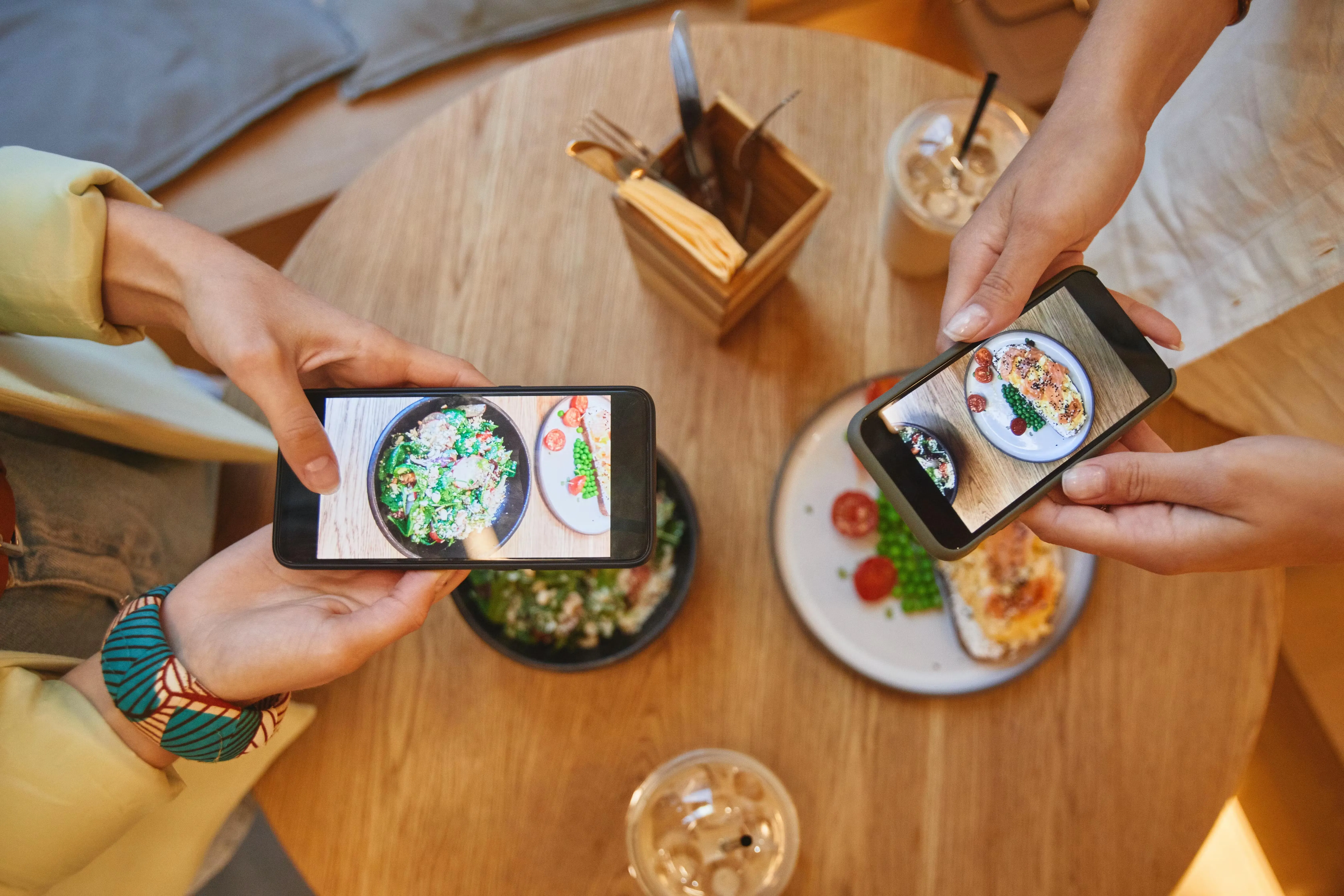
- Upload 10+ high-quality photos covering interior, exterior, food, and team. Food photography is the highest-leverage free action most operators skip: three to five strong food photos alone increase profile click-through meaningfully
- Activate messaging so guests can reach you directly from search
- Post at least once per month. GBP posts are a free ad unit indexed in search results
NAP consistency
Your Name, Address, and Phone number must be identical across Google Maps, Yelp, Facebook, Apple Maps, TripAdvisor, and every directory and delivery app listing. Even minor formatting differences ("St." vs. "Street") erode local ranking signals. NAP consistency is invisible when it's right and costly when it's wrong.
Review response hygiene
Respond to every review, positive and negative, within 48 hours. A listing with 200 reviews and a 40% response rate outperforms one with 50 reviews and a 0% response rate on the trust signals that influence click-through. Responding isn't just good manners. It's a ranking signal.
Menu accuracy
A wrong price on Yelp, an unavailable item on DoorDash, a stale seasonal menu on your restaurant website: any mismatch destroys first-visit trust and generates unnecessary chargebacks. Audit every touchpoint before you run a single marketing campaign.
If your website takes orders, check the whole path before promoting it: current menu, clear pickup or delivery options, and orders reaching your kitchen. This guide to setting up direct online ordering walks through those decisions and their costs.
How to size and allocate your restaurant marketing budget by channel
Independent restaurants typically spend 3 to 6% of gross revenue on marketing, according to industry benchmarks. If you're under $500K in annual revenue, lean toward the higher end. You need to build awareness before you can rely on retention.
One important floor: below roughly $500/month, spreading across multiple paid channels produces noise rather than results. Concentrate spend on one channel before adding a second.
Channel cost tiers for a $750 to $1,000/month indie operator
Tier | Cost | Channels |
Tier 1 | $0 | GBP optimization, organic social, review solicitation |
Tier 2 | $0 to $200/mo | Email platform, basic SMS tool |
Tier 3 | $200 to $600/mo | Delivery app promotions, targeted Facebook/Instagram ads |
Tier 4 | $600+/mo | Google Search ads, influencer partnerships, sponsored events |
Realistic cost-per-new-guest benchmarks
- Organic local SEO: roughly $0 marginal per guest
- Email win-back sequence: roughly $1 to $3 per recovered guest
- Delivery app promotion: roughly $4 to $8 per incremental order
- Paid social (5-mile radius): roughly $8 to $20 per new guest acquisition
The sequencing rule is simple: fund Tier 1 completely, then Tier 2, before allocating to Tier 3. Stacking paid spend on a weak foundation compresses margins without producing compounding returns.
One north-star metric per channel
- Email: repeat visit rate
- Delivery app promotion: week-over-week order volume lift
- Social: profile link clicks, not vanity likes
- GBP: direction requests and phone calls
Restaurant marketing automation from Otter automates delivery app ad campaigns using AI, so your promotions run and optimize without manual adjustments across platforms.
Local SEO and Google Business Profile: your highest-leverage free channel
Local SEO is the only marketing channel whose return curve steepens over time without proportional spend increases. A well-optimized GBP generates discovery traffic around the clock at zero ongoing cost.
The three signals Google weights most
- Relevance: your categories and attributes match the search intent
- Distance: proximity to the searcher at query time
- Prominence: review count, recency, engagement, and response rate
Category selection is the most important field in your GBP. "Italian Restaurant" outperforms "Restaurant" for intent-matched searches. Add secondary categories for service type (takeout, dine-in, catering) and any distinct cuisine offerings.
Review velocity matters more than total count. Ten new reviews in the past 30 days outweighs 200 reviews with the most recent one dated eight months ago in Google's freshness-weighted ranking signals.
Additional local SEO tactics
- Local citations: verify and maintain your listings across directories: Yelp, Apple Maps, Bing Places, TripAdvisor, Foursquare, and local city guides. Each verified, consistent citation is an authority signal that accumulates
- GBP Posts: use them for seasonal menu launches, limited-time offers, and event announcements. They surface on your listing and in branded search results at no cost
- Schema markup: adding LocalBusiness and Restaurant schema (menu URL, hours, price range, cuisine type, geographic coordinates) gives Google structured data to pull into rich results
- Voice search: queries like "best tacos near me open now" resolve from GBP data. Complete your hours, attributes, and Q&A section to win these zero-click answers before a competitor does
Email and SMS: your best ROI-per-dollar channels
Email marketing delivers roughly $36 returned per $1 spent, according to industry benchmarks. For a restaurant, targeted email campaigns translate to recovered lapsed guests and incremental repeat visits at a fraction of paid acquisition cost. See our full guide to restaurant email marketing for list-building templates and sequence examples.
Building your list from real guest touchpoints
Every physical and digital interaction is a list-building opportunity:
- WiFi login at point of entry
- Online ordering checkout field
- Reservation confirmation opt-in
- Loyalty program sign-up
- QR code on printed receipts
Three segments that move the needle
- Never-returned guests (win-back)
- 2 to 4 visit guests (loyalty nudge toward habit formation)
- High-frequency regulars (VIP early access, surprise and delight)
Win-back sequence structure
- Day 0: guest visits
- Day 21: "We miss you" with a specific offer tied to an item they ordered, not a generic discount
- Day 35: last-chance offer with a hard expiry date
- After Day 50: move to a quarterly low-frequency cadence to avoid unsubscribes
SMS marketing
Open rates run roughly 98% versus email's 20%, which makes SMS the most attention-getting channel in your stack. That demands restraint: 2 to 4 messages per month maximum, every message time-sensitive and specific. A flash deal tonight, a new menu item drop this week, an event reminder tomorrow.
Loyalty programs
Digital punch-card and rewards program mechanics increase visit frequency, but structure matters. A strong loyalty program also elevates customer experience: guests feel recognized rather than just tracked. Reward dollars spent rather than visit count to lift average check alongside frequency. The guest data collected through loyalty enrollment is as valuable as the repeat visits it drives.
The reward itself is only part of the decision. Review these restaurant loyalty program examples to see how brands make their programs useful to guests, then choose a structure your team can explain and run consistently.
Online reviews: the marketing channel you're already sitting on
Reviews serve two simultaneous functions. First, they are an SEO signal: Google weights review count, recency, and response rate in local pack rankings. Second, they are bottom-of-funnel conversion content. Reputation management is not a reactive task: it's an ongoing channel. A potential guest reading your online reviews has already decided to eat out and is choosing between you and a competitor.
Review solicitation that actually works
The highest-converting ask is a direct, verbal request from a staff member at the moment of a visible positive interaction. "If you enjoyed your meal tonight, a Google review would genuinely help us" converts far better than a table tent guests tune out.
Supplement with QR codes on receipts that link directly to your Google review submission form. Each extra tap in the process costs you a meaningful percentage of would-be reviewers.
Responding to positive reviews
Use the guest's name if visible, reference a specific dish or detail they mentioned, and keep the tone warm and personal. This signals to search engines that your listing is actively managed and to prospective guests that your team pays attention.
Responding to negative reviews
Respond within 24 hours. Acknowledge the specific issue without deflecting. Offer a resolution path offline, via a direct email or phone call. Other potential guests reading that exchange are judging your professionalism, not just the original complaint.
Reviews as an SEO tactic
Naturally incorporating location and dish keywords into your responses ("Thank you for trying our wood-fired margherita in [neighborhood]") adds indexable, keyword-relevant content to your GBP listing at zero cost.
Turn your own operational data into a marketing advantage
Every restaurant generates daily signals: slow periods by hour and day of week, highest-margin items by order volume, lapsed-check patterns, repeat-visit gaps. Most operators never connect these to marketing decisions. Here is how to start using this data as a source of fresh marketing ideas.
Start with a question your sales data can answer, such as which daypart needs attention or which items guests buy together. Otter’s POS analytics guide for restaurants covers the reports and measures you can use to investigate.
Slow-period targeting in practice
If your sales data shows Tuesday 5 to 7 PM consistently underperforms, that's a marketing opportunity, not just a staffing issue. A Monday evening email or SMS campaign with a Tuesday-specific offer to guests who haven't visited in 21 days is more efficient than a blanket weekly promotion with no timing logic.
High-margin item promotion
Not every menu item deserves equal marketing weight. Identify two or three items with the strongest margin-to-cost ratio and make them the hero of your social content and email marketing campaigns. You're not just driving covers. You're driving profitable covers.
Delivery app performance comparison
If you're on multiple platforms, comparing order volume, average check, item-level cancellation rates, and promotion conversion across apps tells you where to concentrate promotional spend. Platforms don't perform equally for every operator or cuisine type.
Restaurant analytics software from Otter surfaces cross-channel performance data in one dashboard, letting you compare delivery app revenue, promotion lift, and order trend data without exporting reports from five separate platform logins.
The repeat-visit gap as a predictive trigger
If your average guest visits 2.1 times before going dark, the win-back window is predictable. Reaching out at Day 25 to 30 after the last visit catches guests before they've formed a habit elsewhere. Waiting until Day 90 means you've already been replaced.
The same restaurant OS that tracks your orders, labor, and item performance is also the best marketing intelligence source you have access to.
Your 90-day restaurant marketing plan: a sequenced action calendar
If those 90 days surround a new opening, Dog Haus’s restaurant launch strategy shows how to coordinate the soft opening, local outreach, grand opening, and follow-up.
Weeks 1 to 2: foundation only, zero spend
- Complete GBP audit and fix every incomplete field
- Audit NAP consistency across all major listings and correct discrepancies
- Respond to every unanswered review currently live
- Update your online menu and replace missing or low-quality photos
- Establish your baseline: current GBP views, direction requests, review count
Weeks 3 to 4: free channels live
- Launch or revive email list-building at every touchpoint (online ordering, WiFi, receipts)
- Establish a review solicitation workflow your staff can execute consistently
- Set a 3 to 4 posts per week social calendar with content batched in advance
- Claim any unclaimed directory listings on secondary platforms
Month 2: first paid layer
- Set up your email platform with three segments loaded (new guest, 21-day lapsed, high-frequency regular)
- Launch the win-back email sequence
- Activate a delivery app promotion on your highest-volume platform
- Measure week-over-week order volume, email open rate, and GBP direction requests to establish a paid-channel baseline
Month 3: optimize and add
- Review Month 2 data and cut underperforming elements before adding anything new
- If your email list exceeds 400 to 500 contacts, add an SMS channel with a 2-per-month cadence discipline
- Test one paid social campaign with a 3 to 7 mile radius and a specific, expiring offer
- Document 30-day benchmarks for every active channel
Measurement framework across channels
Channel | KPI to Track |
GBP | Profile views, direction requests, phone calls |
Repeat visit rate, open rate, click-to-visit attribution | |
Delivery app promotion | Order volume lift percentage |
Social | Link clicks to menu or reservation page |
Reviews | New review count per month, average rating trend |
The compounding mechanism
Strong reviews lift GBP rank, which drives more profile traffic. Email builds repeat visits, which generates more reviews. More reviews drive more organic discovery. After 90 days of consistent execution, the system requires less incremental effort per unit of return. Operators who highlight sustainability practices in their posts and review responses see stronger engagement from guests who share those values.
Month 4 and beyond: run a quarterly channel ROI review, build a seasonal campaign calendar tied to your operational slow periods and high-margin items, and test one new channel: Google Ads, influencer marketing with a local food creator, or digital advertising through sponsored placements. Consistency in brand identity across all channels compounds over time. Measure each against the performance baseline you now have.
The bottom line on restaurant marketing
A restaurant marketing strategy that pays back isn't about spending more. It's about sequencing correctly: fix the foundation, fund the free channels fully, layer in paid channels one at a time, and measure KPIs per channel so you know what's actually working.
The operators who compound results over time treat their marketing budget like their food cost. Every dollar has a job, and underperforming line items get cut.
Otter Marketing automates your campaigns and optimizes spend with AI.
Frequently asked questions about restaurant marketing
How much should an independent restaurant spend on marketing?
Most independent restaurants target 3 to 6% of gross revenue. At under $500K in annual revenue, lean toward the higher end to build awareness before relying on retention. In absolute dollars, below roughly $500/month it is more effective to concentrate spend on one or two channels than to spread thinly across many.
What is the most effective restaurant marketing channel?
For most independent operators, Google Business Profile optimization delivers the strongest return relative to effort invested. It is free, compounds over time, and captures guests who are actively searching with intent to eat out. Email marketing delivers the highest paid-channel ROI, benchmarked at roughly $36 returned per $1 spent, once you have a list of at least a few hundred real guest contacts.
How do I start marketing my restaurant with a small budget?
Start with the free foundation before spending anything: complete your Google Business Profile, fix NAP inconsistencies across all listings, respond to every existing review, and update your menu photos. Only after that foundation is in place should you add paid channels, starting with email list-building and delivery app promotions before layering on paid social or search ads.
How important is Google Business Profile for restaurant marketing?
It is your single highest-leverage free marketing asset and a foundational element of your brand identity in local search. Google uses GBP data to populate local pack results and map rankings, which is where the majority of "restaurant near me" and "best [cuisine] in [city]" searches resolve. A complete, actively managed GBP with current hours, quality photos, recent posts, and consistently responded-to reviews outperforms many paid strategies in driving incremental foot traffic.
What is the ROI on email marketing for restaurants?
Industry benchmarks put email ROI at roughly $36 returned per $1 spent. For a restaurant, this shows up as recovered lapsed guests through win-back sequences and incremental repeat visits from loyalty nudges, at a cost-per-recovered-guest of approximately $1 to $3. That is well below the $8 to $20 cost-per-new-guest typical of paid social marketing campaigns targeting a tight geographic radius.
How do I get more online reviews for my restaurant?
The highest-converting approach is a direct verbal request from a staff member at the moment of a clearly positive guest interaction. Supplement with QR codes on receipts and table cards that link directly to your Google review submission form, removing as much friction as possible. Respond to every review you receive to reinforce the habit and signal to Google that your listing is actively managed.
Which social media platform works best for restaurant marketing?
Instagram is the priority for most independent US restaurants. The platform is optimized for visual content, Reels surface posts to non-followers, and the core user demographic aligns with active dining behavior. Facebook is the secondary platform for event promotion, community group engagement, and reaching audiences 35 and older. Two platforms executed consistently outperform five platforms maintained poorly.
How can I use my restaurant's own data to improve marketing?
Look at your sales reports for slow periods by day and hour. Those patterns are your best source of actionable marketing ideas. A Monday evening email promoting a Tuesday deal to guests who haven't visited in three weeks outperforms a generic weekly blast. Identify your highest-margin menu items and make them the hero of your content. Operators using a restaurant OS like Otter can surface cross-channel performance data in one place, connecting operational patterns directly to marketing decisions without pulling separate reports from multiple platforms.

Book a demo to see how Otter’s all-in-one platform can help your restaurant thrive.
Social media marketing that actually earns its keep
For most independent US restaurants, the platform priority is clear: Instagram first, Facebook second. Two platforms done well outperform five platforms done poorly. Every time. For a deeper breakdown, see our guide to social media marketing for restaurants.
Content that drives covers vs. content that gets likes
These are not the same thing. High-engagement posts (relatable humor, trending audio) often produce zero incremental visits. High-conversion content looks like this:
The UGC loop
User-generated content builds social proof more credibly than branded photography and drives word-of-mouth reach you can't buy. Make the ask easy: table cards, receipt callouts, a staff prompt after a clearly positive interaction. Repost tagged content to extend reach without a production budget, which deepens the customer relationship and signals authenticity.
Sustainable posting cadence
For a team of one, 3 to 4 posts per week on Instagram mixing feed posts and Stories outperforms daily posting that burns out and goes dark. Consistency beats volume.
When to put money behind a post
Boost only after a post has shown organic engagement above your page average. Define your target audience first: a 3 to 7 mile radius, interests in dining and food, and age brackets matching your highest-spending guest segment.
Reels and short video
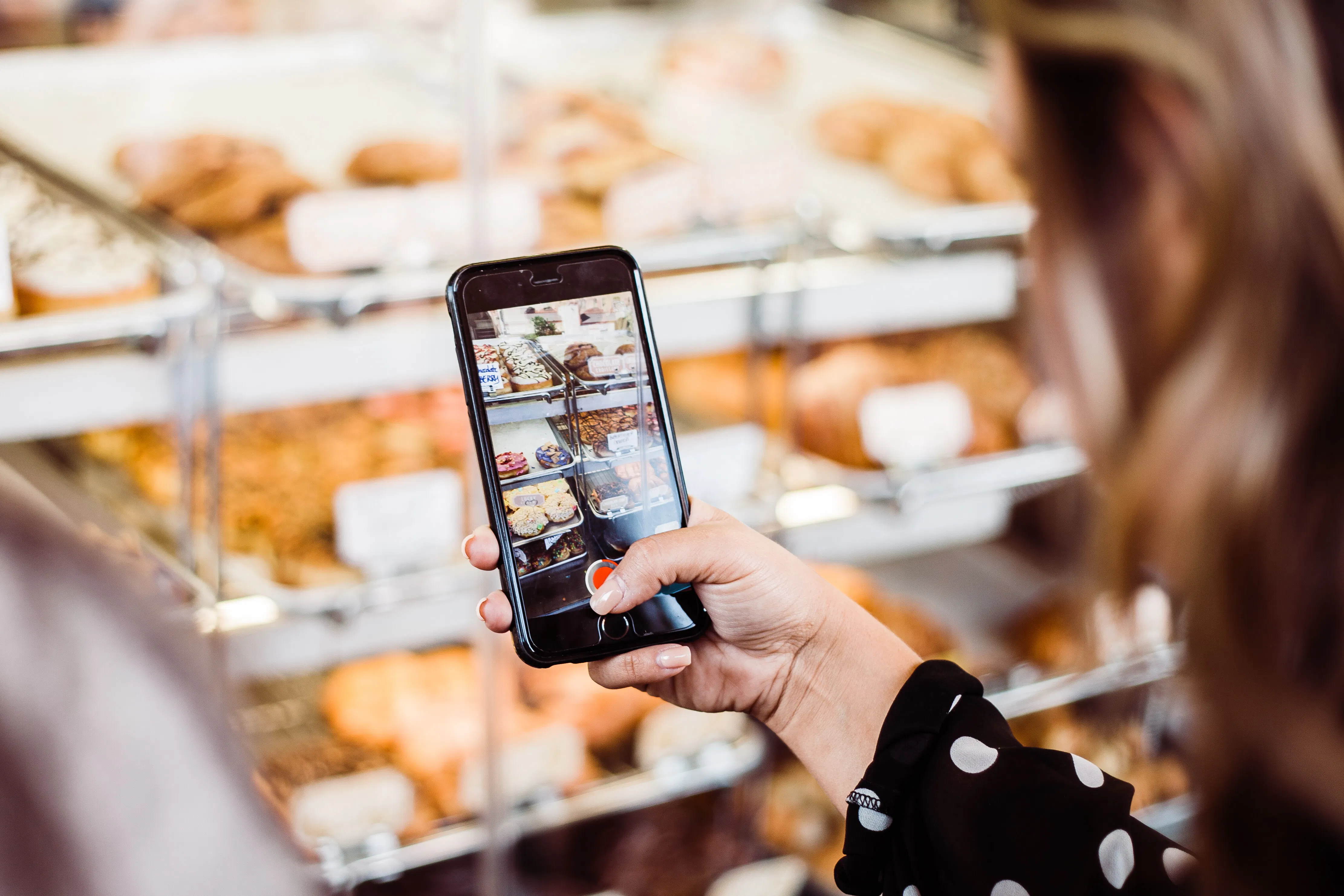
Behind-the-scenes kitchen prep, chef specials being plated, and day-in-the-life formats reach non-followers at significantly higher rates than static images on both Instagram Reels and TikTok. Phone-shot video with good natural light works. You don't need a production team.
The same kitchen prep or chef special can give you material for YouTube Shorts, too. Otter’s guide to YouTube channels for restaurant owners offers examples to watch and ideas for filming your own content.