
Table of contents
- What is Toast POS?
- Top 8 Toast POS competitors for restaurants
- Toast vs. competitors: side-by-side comparison
- Which Toast alternative is best for your restaurant?
- Key factors when evaluating Toast alternatives
- Making the switch from Toast: what to expect
- Compare the full cost before you sign anything
- Frequently asked questions about Toast POS competitors
Locked into a Toast contract, or just comparing options before you commit to one? Toast is one of the most widely used restaurant POS systems in the country, but it's not the only one built for restaurants, and it's not the cheapest or simplest fit for every operation. Below are 8 real alternatives compared on pricing, contract terms, hardware, and delivery integrations, the things that actually change month to month.
Key insights
- Toast prices through a mix of a free starter option and paid tiers that scale with a restaurant's size, with processing fees confirmed only through Toast's sales team
- Contract length is the single biggest reason operators start comparing alternatives: Toast contracts are often multi-year, while several competitors on this list (including Otter and Square) run month-to-month
- Budget-focused counter-service operations tend to land on Square or Otter; full-service and fine dining tend to land on Lightspeed or TouchBistro; large multi-location chains tend to land on NCR Aloha or Revel
- Migrating off Toast typically takes two to four weeks; the main friction points are contract cancellation fees, data migration, and staff retraining, not the new system itself
What is Toast POS?
Toast is a cloud-based point-of-sale system built specifically for restaurants and one of the most widely used restaurant POS platforms in the United States. Unlike general-purpose POS systems, Toast covers a wide range of restaurant management needs, from order management and kitchen display systems to online ordering, loyalty programs, and advanced reporting.
Where Toast excels: it's comprehensive, restaurant-specific, and scalable, with a strong ecosystem of integrations and partners. Where operators look elsewhere: higher subscription fees, processing costs, and proprietary hardware requirements can increase overall spend, and contracts are often multi-year, which limits flexibility as a restaurant's needs change. Pricing is quote-based and varies by hardware, processing volume, and add-ons; confirm current rates directly with Toast's sales team.
Top 8 Toast POS competitors for restaurants
1. Otter
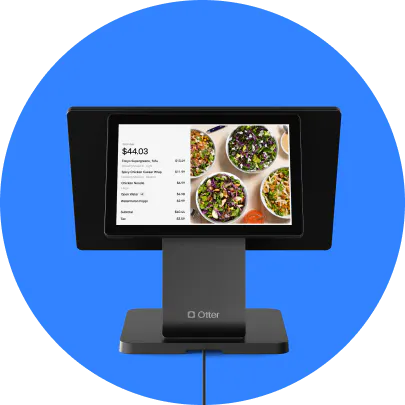
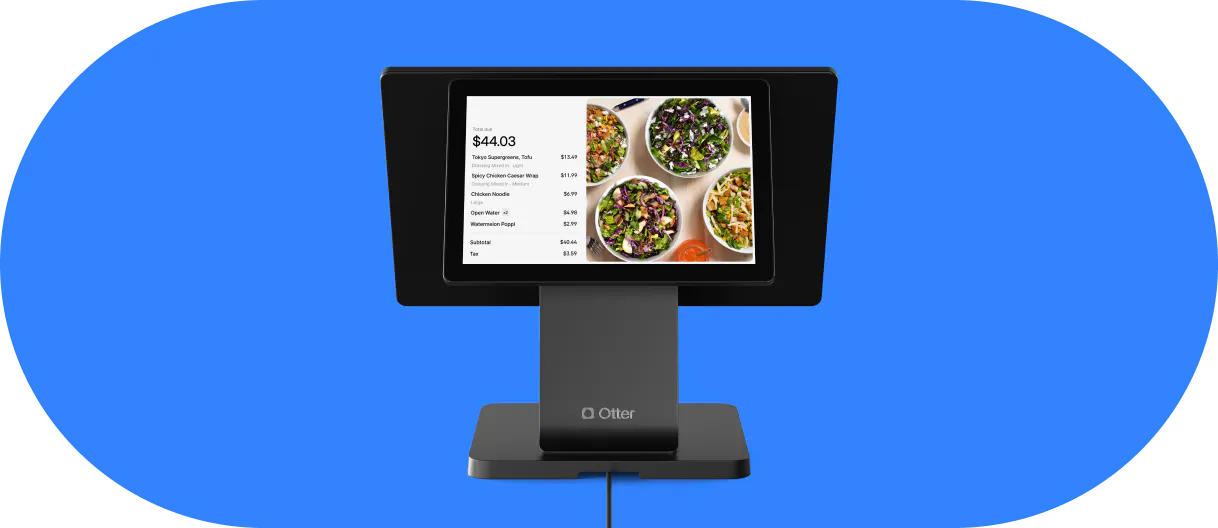
Otter is built around bundled plans rather than a quote-only process: an Advanced Bundle with hardware included covers the core POS terminal, Order Manager and delivery app aggregation, online ordering, QR ordering, a website builder, and inventory savings. Add self-service Kiosk hardware and software with the Advanced + Kiosk bundle, or pick individual modules through Build Your Own. Otter runs month-to-month with no long-term contract and includes 24/7 support and dedicated onboarding at every tier. See Otter's current pricing for exact bundle rates.
Where Otter excels: bundle-based pricing instead of a sales call, hardware included rather than a separate purchase, and a simpler feature set for independent and multi-location operators who don't need Toast's full enterprise depth. Where operators look elsewhere: less deep third-party integration ecosystem than Toast, and larger, multi-brand or franchise operations may still want Toast's or NCR's enterprise tooling.
2. Square
Square for Restaurants offers a genuinely free tier (transaction fees only, no monthly cost), plus paid Plus and Premium plans priced per location for restaurants that need table management, advanced reporting, or lower processing rates. It's a strong fit for counter-service concepts, cafes, and food trucks that want to start with zero fixed monthly cost. Contact Square directly for current Plus and Premium pricing, since published rates change by plan and location count.
3. Clover
Clover doesn't publish flat software pricing; plans are quoted through a reseller network and vary by hardware bundle and processor. It's a flexible, highly customizable platform with a large app marketplace, a common pick for hybrid retail-and-food concepts that want one system across both. Contact Clover or an authorized reseller for current pricing.
4. Lightspeed Restaurant
Lightspeed publishes tiered pricing with an entry-level Starter plan, scaling up through Essential and Premium tiers for multi-location and full-service operations, with Enterprise custom pricing above that. It's a strong match for full-service and fine dining concepts that need deep table management and reporting. See Lightspeed's current pricing for exact tier rates.
5. TouchBistro
TouchBistro publishes two starting tiers: a Point of Sale plan with hardware purchased separately, and an Essentials Bundle that includes restaurant-grade hardware and integrated payments. It's an iPad-based system built for full-service restaurants, with custom quotes available above the published tiers for larger operations. Contact TouchBistro for exact tier rates.
6. SpotOn
SpotOn is quote-based across the board, pricing depends on restaurant type, hardware, and processing volume. It's positioned as a hospitality-focused platform with strong marketing and loyalty tools bundled alongside the core POS. Contact SpotOn directly for a quote matched to your concept.
7. Revel Systems
Revel is custom-priced and built for complex, high-volume operations: multi-location groups, franchises, and concepts that need deep back-office and inventory control across locations. It's rarely the first stop for a single-location independent, but it's a serious option once you're managing several.
8. NCR Aloha
NCR Aloha is enterprise-tier, custom-priced software aimed at large chains and franchise groups that need centralized reporting across dozens or hundreds of locations. It competes for the same enterprise accounts as Oracle MICROS rather than for independent restaurant budgets.
Toast vs. competitors: side-by-side comparison
Pricing comparison
Provider | Pricing model | Processing fees | Hardware | Contract |
|---|---|---|---|---|
Toast | Free starter option plus paid tiers, scales with restaurant size | Flat-rate, confirm with Toast's sales team | Varies by configuration | Often multi-year |
Otter | Published bundles, current rates at tryotter.com/pricing | Per-order transaction fee, confirmed at signup | Included in every bundle | Month-to-month |
Square | Free tier available; paid plans priced per location | Contact for current rates | Contact for current rates | Month-to-month |
Clover | Contact for pricing | Contact for current rates | Contact for current rates | Varies |
Lightspeed | Tiered plans, entry-level Starter up to Enterprise | Contact for current rates | Contact for current rates | Often annual |
TouchBistro | Two tiers: POS-only or hardware-included bundle | Through integrated providers | Separate on entry tier, included on bundle tier | Often annual |
SpotOn | Quote-based | Quote-based | Varies | Varies |
Exact dollar figures are intentionally left out of this table, prices change often across every provider here, including Otter, so each row links to or names where to get current rates instead of a number that may already be stale by the time this publishes. Revel Systems and NCR Aloha are omitted entirely since neither publishes any pricing structure at all, custom quote only, and are covered above instead.
Feature comparison
Feature | Toast | Otter | Square | Clover | Lightspeed |
|---|---|---|---|---|---|
Cloud-based | Yes | Yes | Yes | Yes | Yes |
Mobile POS | Yes | Via Otter Go app | Yes | Yes | Yes |
Kiosk | Yes | Add-on bundle | Via integration | Via integration | Via integration |
Online ordering | Yes | Included | Yes | Via integration | Yes |
Delivery integration | Yes | Included (Order Manager) | Via integration | Via integration | Via integration |
Analytics | Yes | Yes | Basic | Basic | Yes |
24/7 support | Many plans | Yes, included | Varies by plan | Varies by plan | Varies by plan |
Multi-location management | Yes | Yes | Plan-dependent | Plan-dependent | Yes |
Loyalty | Yes | Available add-on | Yes | Via app marketplace | Yes |
Which Toast alternative is best for your restaurant?
For independent and multi-location operators who want published pricing and hardware bundled in from the start, Otter is the most direct comparison to Toast on structure. For counter-service concepts starting on a tight budget, Square's free tier is hard to beat. For full-service and fine dining, Lightspeed and TouchBistro are the closest match to Toast on features. For large multi-location chains and franchises, NCR Aloha and Revel are built for that scale in a way none of the smaller platforms are.
Key factors when evaluating Toast alternatives
Pricing structure, not just the headline number
A low monthly number means little if hardware, add-ons, and processing fees aren't included. Compare total monthly cost at your actual order volume, not just the base software price.
Contract length and exit terms
Before signing anything, get contract length, auto-renewal terms, and hardware buyout or return requirements in writing. This is where operators get surprised most often, from any provider, not just Toast.
Integration strength
A POS rarely operates in isolation. Check that delivery platforms, accounting software, and online ordering connect the way your restaurant already runs, before you switch, not after.

Making the switch from Toast: what to expect
Switching is moderately straightforward with the right support. The main friction points are contract cancellation fees, data migration, and staff retraining, most migrations take two to four weeks. Most modern POS providers, including Otter, offer migration assistance to transfer menu data, customer information, and employee records; Otter includes dedicated migration support as part of onboarding. For a closer side-by-side on a specific alternative, see Otter's restaurant POS cost guide or the Toast vs Square comparison.
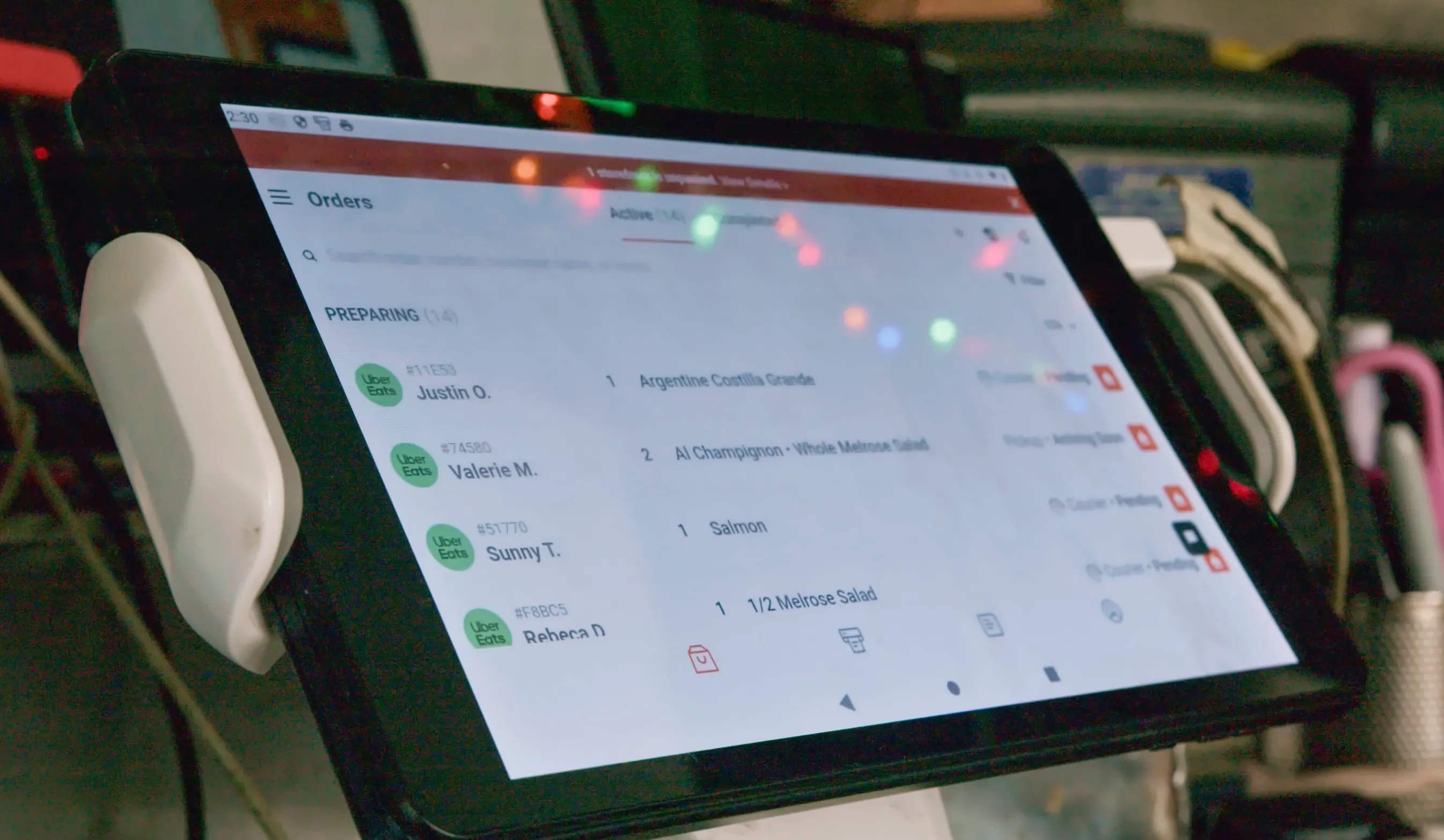
Ali Alsubai, co-owner of Yemen Cafe, described what moving off a manual, multi-tablet setup looked like once Otter was in place:
“Even with all of the features Otter has, it's still simple and easy to operate, even for old timers.”
Compare the full cost before you sign anything
Toast is a strong, comprehensive system, and for many full-service restaurants it's still the right call. But "comprehensive" and "cheapest" are rarely the same thing, and contract length matters as much as the monthly number. Get every provider's current pricing and contract terms in writing before you decide.
Otter self-service kiosks
Cut labor costs & customer wait times with self-service restaurant kiosks.
Frequently asked questions about Toast POS competitors
What are the best Toast POS alternatives?
The strongest Toast alternatives are Otter (published bundle pricing with hardware included), Square (free tier for budget-conscious counter-service), Clover (flexible and customizable), Lightspeed (full-service and fine dining), and TouchBistro (iPad-based full-service). The best choice depends on your restaurant type, size, and budget.
Who is Toast's biggest competitor?
It depends on the segment. Square leads among small restaurants and counter-service operations. Lightspeed is the closest match for full-service and fine dining. Clover competes strongly in hybrid retail-food. Otter is a compelling alternative for independent and multi-location operators focused on value and published pricing.
Who is Toast's competition?
Direct competitors include Square, Clover, Lightspeed, TouchBistro, Otter, and SpotOn. On the enterprise end, NCR Aloha and Oracle MICROS compete for large chain accounts, and Revel Systems focuses on complex multi-location and franchise operations. All compete in the restaurant POS market but largely serve different segments.
What is the number one POS system?
For all business types, Square leads by overall market share. In restaurant-specific POS, Toast leads. Satisfaction ratings vary by category: Lightspeed, TouchBistro, and Otter all rate highly for restaurants specifically. The right answer depends on your criteria: market share, features, value, or satisfaction.
How does Toast compare to other POS systems?
Toast is more expensive than budget options like Square but offers deeper restaurant-specific functionality. Compared to Otter, Toast has a broader third-party integration ecosystem, while Otter prioritizes simplicity and published bundle pricing. For full-service environments, Lightspeed and TouchBistro are closely matched with Toast on features.
Why do restaurants switch from Toast?
Most operators who switch cite some combination of high overall costs, contract lock-in, hardware limitations, and platform complexity that exceeds what their operation actually needs.
Is Toast better than Square for restaurants?
Toast is the stronger choice for full-service restaurants with complex workflows and high volume. Square is better suited for counter-service, cafes, and operators who prioritize simplicity and lower upfront cost. It depends on your restaurant type and priorities.
How much does Toast cost compared to competitors?
It depends on the provider, and on your restaurant's size and setup, so treat any flat number you see online with caution. Toast prices through a free starter option plus paid tiers that scale with restaurant size, with processing fees confirmed only through Toast's sales team. Otter prices through published bundles with hardware included, plus a per-order transaction fee confirmed at signup. Square offers a free tier plus paid plans priced per location. All pricing changes often; confirm current rates directly with each provider. See Otter's current pricing or the Toast vs Square comparison for a closer side-by-side.
Does Toast have long-term contracts?
Toast often involves multi-year commitments with potential early termination fees. Before signing, review contract length, auto-renewal terms, and hardware return or buyout requirements carefully.
What POS system is better than Toast?
It depends on your operation. For independent and multi-location operators who want published pricing and simplicity, Otter is a strong alternative. For budget-conscious counter-service operations, Square offers solid functionality at a lower starting cost. For full-service and fine dining, Lightspeed and TouchBistro are closely matched with Toast on features.
Can I switch from Toast to another POS easily?
Switching is moderately straightforward with the right support. The main challenges are contract cancellation fees, data migration, and staff retraining. Most migrations take two to four weeks. Otter includes dedicated migration support as part of onboarding.
What are the hidden costs with Toast POS?
Beyond the base subscription, costs can include contract buyout fees, hardware repair and replacement charges, integration fees, and feature add-ons. Processing fees may also increase over a contract term. Ask for a clear breakdown of all fees and add-ons before committing.
Which Toast competitor has the best customer support?
Otter includes 24/7 support and dedicated onboarding at no additional charge on every plan. Toast advertises 24/7 support on many of its restaurant plans. Lightspeed offers strong support on higher tiers. TouchBistro has generally positive reviews for phone support. Square's coverage improves on paid plans. Support quality changes over time, check recent operator reviews before deciding.
Is Otter a good alternative to Toast?
Yes, particularly for independent restaurants, multi-location operators, and operators who want published, structural pricing instead of a quote-only process. Otter covers the core functionality most restaurants need: a full restaurant POS system, analytics, menu management, inventory savings, and live monitoring, with self-service Kiosk available as a bundle upgrade. It runs month-to-month with no long-term contract and includes 24/7 support and dedicated onboarding on every plan.

Compare Otter's pricing to Toast's