
Table of contents
- What is a restaurant marketing plan, and why winging it is costing you
- Define your brand, your USP, and who you're actually trying to reach
- Audit where you stand: a simple SWOT for independent operators
- Set marketing goals that connect to real numbers, not just likes
- Choose the right channels for your budget and bandwidth
- Use your own sales data to make smarter marketing calls
- Build a marketing calendar around your restaurant's actual rhythm
- A plan you review every month outperforms a perfect plan you look at once a year
- The operators who grow treat marketing like an operation, not an afterthought
- Frequently asked questions about restaurant marketing plans
You post something on Instagram when Tuesday is dead. You run a discount when the dining room is empty. You react, and then you wonder why the same slow days keep coming back. That's not a marketing problem. It's a systems problem.
Restaurants investing in strategic social media efforts saw an average 9.9% lift in B2C revenue, according to Deloitte Digital. The word "strategic" is doing the work there. Not posting more. Not boosting randomly. Having a plan.
A restaurant marketing plan is not a 40-page document. It's a written system that tells you who you're targeting, what you're saying, which channels you're using, and how you'll know if it's working. It exists so you're making decisions six weeks ahead instead of six minutes before the dinner rush.
What follows is a step-by-step build process and, more importantly, a system for keeping that plan alive month to month so it actually moves your numbers.
Key insights
- Most restaurants have a conversion problem, not a traffic problem. Optimizing what happens after someone finds you almost always delivers more ROI than spending to get more people to find you
- Your POS transaction data is your most underused marketing asset: best-selling items, slowest dayparts, average ticket, and repeat visit frequency tell you exactly what to promote, when, and to whom
- Three channels executed consistently beat eight channels run sporadically every time. Start with your Tier 1 free channels, prove they are working, then layer in paid spend with data behind it
- A marketing plan reviewed monthly is a strategy. A marketing plan that sits in a folder is a document. The operators who grow treat the plan like a financial report: read it, make a call, adjust
What is a restaurant marketing plan, and why winging it is costing you
Most independent operators do not have a traffic problem. They have a conversion problem. People find you on Google Maps, click through to an incomplete profile, cannot find the menu, and move on. Or they visit once, have a great meal, and never hear from you again.
A marketing plan's job is to convert the attention you already have into first visits, repeat orders, and loyal customers. Not just to generate more impressions.
One concern that comes up constantly: "I do not want to waste money on coupons and promotions that only attract one-time bargain hunters." A plan prevents that by forcing you to tie every tactic to a business goal before money is spent. You are not running a discount because it is slow. You are running a specific offer to a specific audience to hit a specific target.
Define your brand, your USP, and who you're actually trying to reach
Channel strategy comes after brand clarity, not before. If you do not know what makes your restaurant the only logical choice for a specific customer, no amount of social media posts or email marketing campaigns will fix that.
Brand identity in practical terms
Your brand identity is how your restaurant looks, sounds, and feels across every surface: your menu, your packaging, your delivery app listing, your restaurant website. Pick a visual palette and a tone of voice, then apply them consistently. A logo that looks great on a sign needs to survive being compressed into a 60x60px app icon on DoorDash.
Your mission statement
Write one or two sentences explaining why this restaurant exists beyond "we serve food." A clear mission statement helps attract staff and customers who share the same values, and that alignment shows up in reviews and word-of-mouth. Sustainability commitments or community ties are worth including here if they are genuine: both have become meaningful differentiators for customers who care about where their money goes.
Your unique selling proposition
Your unique selling propositions (USPs) must be concrete: price tier, speed, sourcing story, cultural specificity, dietary specialization. "Great food and great service" is not a USP. Every competitor claims that. Your USPs are the specific reasons a target customer would choose you over the restaurant two blocks away.
Your target audience
Do not target everyone who eats. Build two or three simple customer personas using real transaction patterns from your POS: who orders most frequently, at what time of day, and through which channel (in-person, online, or delivery). That guest data already exists. You just need to look at it.
A note for ghost kitchens and virtual brands: your brand lives entirely in menu photography, concept name, and delivery app copy. Brand identity work is non-negotiable. It is your storefront.
For multi-location independents: brand consistency across locations is a competitive moat. Document it so every team member, including new hires, is marketing the same restaurant.
Audit where you stand: a simple SWOT for independent operators
Before planning where you are going, you need an honest picture of where you are. A SWOT analysis takes 30 to 60 minutes and anchors every channel and marketing goals decision that follows.
- Strengths: What do you demonstrably do better than your two nearest competitors? Speed, consistency, a loyal regular base, a signature item, catering capability, a unique location advantage
- Weaknesses: What keeps showing up in reviews that you already know is true? An incomplete Google Business Profile, no email list, inconsistent hours listed online, a slow online ordering experience
- Opportunities: Local events your current marketing isn't capturing, dayparts you're not filling, delivery zones you're not active in, catering demand you haven't built a page for
- Threats: A new competitor opening nearby, rising delivery platform fees, a demographic shift in the neighborhood, a single bad review gaining traction
For each weakness or threat, write one concrete response. A competitive analysis that generates no decisions is wasted time. Keeping an eye on what competitors are promoting on delivery platforms (prices, offers, photos) helps you decide whether to match, counter-program, or hold your margin.
Set marketing goals that connect to real numbers, not just likes
A restaurant that doubled its Instagram following and still posted a losing quarter has a marketing goals problem. Every marketing objective must trace back to revenue, covers, or customer retention. Clear marketing goals keep your restaurant marketing strategies focused so you are not chasing every new trend.
Use the SMART framework (Specific, Measurable, Achievable, Relevant, Time-bound) with real restaurant examples:
- QSR: Increase average weekly online orders by 15% in 90 days
- Fast-casual: Grow email list to 500 subscribers by end of Q2
- Ghost kitchen: Raise delivery app average rating from 4.1 to 4.4 within six months
- Multi-location independent: Reduce the slowest location's Tuesday lunch revenue gap by 20% through targeted restaurant promotion ideas in 60 days
KPIs worth tracking
- Average ticket size
- Repeat visit rate
- Online order conversion rate
- Email open and click-through rate
- Cost per new customer acquired
- Delivery app order volume by platform
- Google review average and monthly review count
If a goal can't be connected to revenue, covers, or margin improvement, deprioritize it. Awareness goals are only worth tracking when there's a downstream conversion metric attached.
For multi-location operators: set goals per location, not as blended averages. Blended numbers hide underperforming locations until it's too late.
Choose the right channels for your budget and bandwidth
Almost every marketing guide for restaurants lists eight to ten channels without telling a two-location taco shop which three to do first. Here's how to make that prioritization decision.
Tier 1: free, high-impact, do these first
Google Business Profile (Google My Business)
Complete your Google Business Profile with accurate hours, high-quality photos, a current menu link, and active review responses. Google Maps is how people find restaurants. An incomplete profile costs you direct-search traffic. Cost: zero. Local SEO starts here.
Review management
Respond to every Google, Yelp, and TripAdvisor review, positive and negative. Actively engaging with online reviews signals credibility and improves local ranking. Cost: 15 minutes per week.
A clean website with a direct ordering option
Your restaurant website with an online ordering link reduces reliance on third-party commissions. Otter's online ordering gives you a commission-free direct channel that lives on your own site, removing the friction between discovery and order.
Tier 2: low cost, high return
Email marketing
Even a list of 300 customers is a marketing asset. Use it for weekly specials, limited-time offer announcements, and loyalty program perks. Restaurant email open rates typically run 20 to 30%, outperforming most paid digital channels. There is no algorithm between you and your list. Track your open rate and click-through rates monthly to see what resonates.
SMS marketing
For time-sensitive offers (flash lunch specials, same-day promotions), SMS marketing has some of the highest open rates of any channel. Keep messages short, opt-in only, and tied to a clear offer.
Social media (one primary platform)
Choose one and be consistent rather than posting sporadically across four. For QSR and fast-casual targeting 18 to 35-year-olds: Instagram or TikTok. For family-oriented or neighborhood restaurants: Facebook. For catering-focused concepts: LinkedIn is worth testing.
Content marketing on social media works best when it is specific:
- A behind-the-scenes prep video of your top-selling item outperforms a generic "we are open" post every time.
- Use hashtags strategically (local + category: #LATacos, #SantaClaritaFood) to extend organic reach.
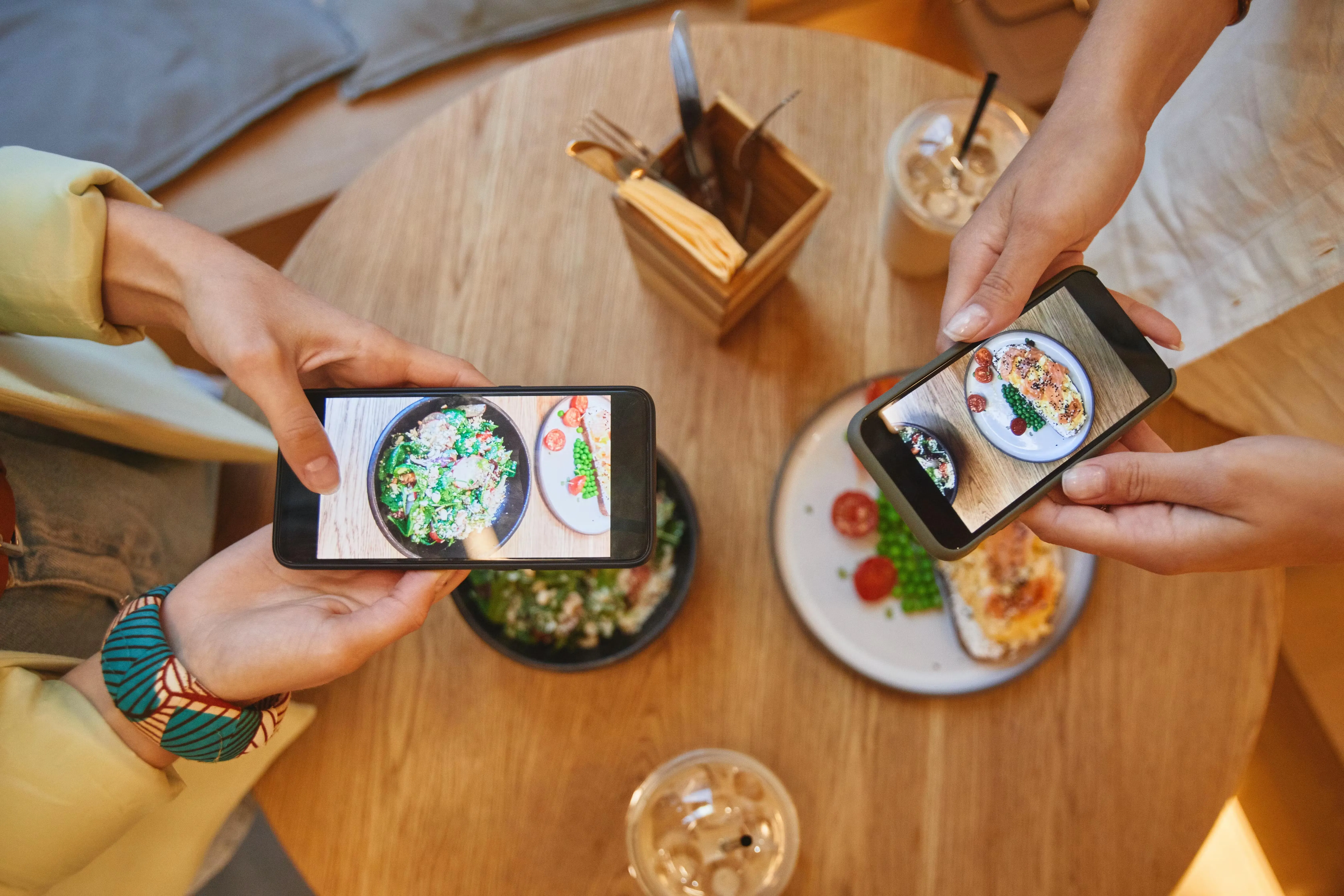
- User-generated content (photos guests tag you in, repost with credit) is free social proof and builds social media engagement with almost no effort.
Partnering with local micro-influencers (1,000 to 20,000 followers in your city) can extend reach to a targeted local audience for the cost of a few meals. Negotiate a clear deliverable (one post, two stories) before you host them.
Loyalty program
A loyalty program rewards repeat behavior rather than discounting to strangers. The owner of Bangkok BBQ Bowl in West LA made the switch to digital loyalty through Otter and noticed the difference immediately: "We use Otter Loyalty. We like it a lot. We used to use a paper loyalty card, but now customers can use digital. They seem happy, and they come back more. They enjoy the points and the rewards."
Tier 3: paid spend, only after Tiers 1 and 2 are working
Delivery platform promotions
If you're on DoorDash, Uber Eats, or Grubhub, paid promotions on those platforms can move volume. But only when they're managed with data. Otter's Marketing product automates promotions on delivery apps and lets you compare performance across channels side by side. Operators using it report revenue increases of up to 17% from optimized delivery promotions.
See how Otter Marketing automates delivery app promotions and tracks channel performance
Paid social and Google Ads
Add paid spend behind organic content that is already performing. A post that earned strong social media engagement organically is a better candidate for boosting than content you have to pay to make work at all.
Press releases and direct mail
For openings, major menu changes, or community events, a press release to local outlets and direct mail to nearby households can build brand awareness in your immediate trade area. These work best layered on top of a strong digital foundation, not as a substitute for one.
Community engagement
Sponsoring a local event, partnering with a school, or joining a neighborhood business association costs relatively little and builds the kind of trust that online ads cannot buy. Community engagement is especially valuable for restaurants in tight-knit neighborhoods where word-of-mouth still drives significant volume.
Budget reality check: if your monthly marketing budget is $300 to $500 and you have five hours per week, Tier 1 plus email plus one social platform is the right answer. Add paid spend only when you have proof that organic is working.
Once those basics are working, you may need help running more campaigns than your team has time for. Our restaurant marketing agency hiring guide can help you decide whether to hire, which type of support fits, and how to measure the results.
Use your own sales data to make smarter marketing calls
Your best marketing research isn't a trend report or a competitor analysis. It's the transaction data already sitting in your POS, and most operators aren't using it deliberately.
Research from TechSci Research shows that restaurants adopting online ordering platforms see a 15 to 30% increase in takeout profits. But capturing that lift requires knowing which items and channels are actually driving orders, and that starts with your own data.
What your sales data tells you
- Best-selling items: worth featuring in social content and delivery promotions
- Slowest daypart: the specific problem to target with a time-limited offer
- Average ticket size: tells you whether an upsell campaign is realistic
- Repeat visit frequency: tells you whether your loyalty program is actually driving repeat customers back through the door
Practical example: if your POS shows Tuesday lunch is consistently your lowest-revenue daypart, that's the specific problem to solve with a targeted promotion. Not a broad discount that also erodes margin on your busiest Friday night.
Menu mix analysis
Identify items with both high margin and strong sales volume. Those are the items to feature in social content, push in email campaigns, and promote on delivery platforms. Items with high margin but low sales are candidates for a targeted offer to test whether the issue is price, position, or awareness.
Otter Analytics surfaces order volume, channel performance, and menu data across all your locations, giving you specific numbers to back each marketing decision.
Build this habit: review your weekly sales report before writing next week's email or planning next week's social content. Marketing and operations should run on the same numbers.
Using Google Analytics alongside your POS data gives you a fuller picture: you can see which website traffic sources are actually converting into online orders, and which pages are losing visitors before they reach checkout.
Build a marketing calendar around your restaurant's actual rhythm
A marketing calendar is where strategy becomes execution. Without one, you are reacting to every holiday and slow day instead of planning for them six weeks ahead.
Start with your restaurant's own rhythm: peak seasons, known slow periods, local events that predictably drive foot traffic, and your own menu rotation schedule. Then layer in national moments worth activating (Valentine's Day, Mother's Day, Super Bowl, back-to-school season), but only the ones that genuinely fit your concept.
Monthly structure
For each planned promotion or campaign, define four things in the calendar entry:
- The offer or message
- The marketing channels it will run on
- The goal it is tied to (from your SMART goals)
- Who is responsible for executing it
Email marketing calendar: send at minimum twice per month. One announcement or offer email and one relationship email (behind-the-scenes, team spotlight, sourcing story). Frequency above four per month risks unsubscribes for most restaurant email lists. Track open rate and click-through rates for each send.
Social media calendar: batch-create content one week ahead. Use your menu data to decide what to feature. A high-margin, underordered item deserves a post. Your bestselling item deserves a customer testimonial or a 15-second prep video. Align hashtags with your local market.
Loyalty program integration: plan promotions that specifically reward repeat customers rather than discounting to strangers. A "double points on Tuesday" offer drives repeat visits and fills your slowest daypart simultaneously, without training first-time customers to expect a discount every time they order.
Community engagement: block time on the calendar for local events, sponsorships, and neighborhood tie-ins. These are easy to skip when operations get busy, but they are often your highest-ROI brand awareness investment.
For multi-location operators: maintain a shared master calendar but allow each location to add hyper-local events and neighborhood tie-ins that do not belong in the brand-wide plan.
Opening a new location? See how Dog Haus plans marketing before, during, and after a restaurant opening.
A plan you review every month outperforms a perfect plan you look at once a year
The value of this plan is not in writing it. It is in treating it as a living operational document the same way you treat your P&L or your labor schedule.
Monthly review (30 minutes): which campaigns ran last month? Did they hit the marketing goals? Kill or adjust what is not performing. Double down on what is. Do not keep running a promotion for four months just because you already built the graphic.
Weekly check-in (10 minutes, Monday morning): review last week's sales vs. goal. Decide whether to adjust the current week's promotion or social content based on what you are seeing.
Metrics to review monthly
- Online order conversion rates
- Email open rate and click-through rates
- Google review average and volume
- Social reach vs. social media engagement ratio
- Delivery platform order count and revenue per channel
- Customer acquisition cost (CAC)
When to cut a channel: if you have been consistent on a platform for 90 days and there is no measurable lift in website traffic, orders, or engagement, reallocate that time to a channel that is working. Consistency is necessary, but the data gets the final vote.
Quarterly deep review: revisit your SWOT analysis, update your marketing goals if you have hit them, and add the next 90 days to the marketing calendar. This is also when you evaluate whether to move a channel from Tier 2 to Tier 3 by adding paid spend behind organic content that is already performing.
Keep the plan in a shared document your manager and team can access. That is how you scale it across locations and survive staff turnover without losing what is working.
The operators who grow treat marketing like an operation, not an afterthought
The restaurants that consistently fill their slowest dayparts, build loyal customer bases, and survive new competition are not necessarily the ones with the biggest budgets. They are the ones who made a plan, put it on a calendar, and looked at the numbers every month.
That is the whole idea. Not a 40-page document. A system you actually use.
Ready to build your marketing plan on a system made for operators? Get started with Otter.
Frequently asked questions about restaurant marketing plans
What should a restaurant marketing plan include?
A complete restaurant marketing plan covers brand identity and USPs, a SWOT analysis or competitive analysis, SMART marketing goals tied to revenue or covers, a prioritized list of marketing channels, a marketing calendar, and a monthly review cadence. The review cadence is the piece most operators skip, and it is the reason most plans end up in a drawer.
How much should an independent restaurant spend on marketing?
Most guidance puts restaurant marketing spend at 3 to 6% of gross revenue. On $500K in annual sales, that is $15,000 to $30,000 per year. But many high-impact tactics (Google Business Profile, review management, email marketing, SEO) cost almost nothing. Spend money on paid channels only after your free and low-cost channels are fully built out and performing.
What are the most effective restaurant marketing strategies for independent operators?
For most independents, the highest-ROI restaurant marketing strategies in order are: Google Business Profile for local SEO and online presence; email marketing for high open rates and no algorithmic interference; one primary social media platform used consistently; and delivery platform promotions if you are doing third-party delivery. Build in that order before spending on paid ads.
How do I use my POS data to improve restaurant marketing?
Your POS shows which items sell best, which dayparts are slowest, your average ticket size, and how often customers return. Use that guest data to decide what to promote, when to run offers, and whether your loyalty program is actually driving repeat customers back. Marketing decisions made from your own sales data outperform guesswork every time.
How often should I update my restaurant marketing plan?
Review it monthly. A 30-minute check to see what worked, what did not, and what to adjust. Do a deeper review quarterly to update marketing goals, revisit your SWOT analysis, and plan the next 90 days. A plan reviewed monthly is a strategy. A plan updated once a year is a document.
What is the difference between a restaurant marketing strategy and a restaurant marketing plan?
Your marketing strategy is the "why and who": your brand identity, target customers, and the value you are promising. Your marketing plan is the "what, when, and how": the specific marketing channels, campaigns, marketing calendar, and marketing budget that execute the strategy. Strategy without a plan stays abstract. A plan without strategy is random activity.
How do I build a restaurant marketing plan with no marketing background?
Start with four questions: Who are my best target customers? What do I want them to do (visit more often, order online, leave a review)? Where do they spend time online? What is my monthly marketing budget and available hours per week? Answering those four questions gives you 80% of what you need to pick your channels, set a goal, and build a 30-day marketing calendar.
Do restaurant loyalty programs actually increase revenue?
Yes, when they reward repeat behavior rather than discount to new customers. A loyalty program that gives points for every visit increases frequency among customers who already like you, which costs far less than acquiring new ones through paid channels. The key is activating loyalty members with targeted promotions during your slowest dayparts so the program fills gaps in your marketing calendar instead of cannibalizing peak revenue.

Build your restaurant marketing plan with Otter