Table of contents
- What a dark kitchen is, and how it differs from ghost kitchens and cloud kitchens
- Why the dark kitchen model exists: the economics behind delivery-only
- Dark kitchen unit economics: what the P&L actually looks like
- How to set up a dark kitchen: space, equipment, and staffing
- Running multiple virtual brands from one kitchen without losing your mind
- The technology stack your dark kitchen actually needs
- Third-party delivery apps: how to use them without being owned by them
- How to choose the right location and market for a dark kitchen
- Dark kitchens reward operators who design the operation, not just launch it
- The bottom line on dark kitchens
- Frequently asked questions about dark kitchens
You keep hearing "dark kitchen," "ghost kitchen," and "cloud kitchen" used like they mean the same thing, and you're trying to figure out if this business model is actually worth building. The U.S. ghost kitchen market is projected to grow at a 62.5% CAGR through 2033, which tells you real money is moving into this space. But a growth forecast doesn't tell you whether the math works for your concept, your market, or your kitchen.
What follows breaks down what the dark kitchen model actually is, what the P&L looks like with real numbers, how multi-brand operations work in practice, and where the real risks live, so you can make a clear-eyed decision before you sign a lease or launch a virtual brand.
Key takeaways
- Delivery commissions, not rent, are typically the largest cost line in a dark kitchen, running 15–30% per order every day; menu pricing and platform strategy matter more than finding the cheapest kitchen space
- Running multiple virtual brands from one kitchen only improves margins if menus share 60–80% of core ingredients upfront; adding brands without ingredient architecture adds prep complexity and waste that erases the fixed-cost advantage
- Platform dependency is the dark kitchen model's most underestimated risk: if you source 100% of orders from a single delivery app, you have one revenue point of failure, no customer data, and no ability to retarget without the platform's permission
- The low barrier to entry in dark kitchens creates intense competition on delivery apps; the operators who build durable businesses design ticket routing, packaging, pricing, and a direct ordering channel deliberately. They do not simply list a menu and wait for volume
What a dark kitchen is, and how it differs from ghost kitchens and cloud kitchens
A dark kitchen is a licensed commercial kitchen that prepares food exclusively for delivery orders. No dine-in space. No customer-facing storefront. No walk-in access. The term originated in the UK before "ghost kitchen" became the dominant U.S. term. For practical purposes, dark kitchen and ghost kitchen describe the same operation: delivery-only food production.
Cloud kitchen is different. It refers to a multi-tenant shared kitchen facility — think CloudKitchens or Kitchen United — that rents prep space to multiple operators under one roof. It describes the real estate model, not the restaurant concept; our full guide on what a cloud kitchen is breaks down the business model in detail. You can run a ghost kitchen inside a cloud kitchen facility, or in your own dedicated kitchen space.
Virtual brand is the brand layer, the menu identity that lives on delivery apps like Uber Eats, DoorDash, Grubhub, or Deliveroo. (For the fundamentals, start with what a virtual brand is.) A virtual brand can operate out of any kitchen type, including an existing restaurant running extra concepts during off-peak hours.
The short version: dark kitchen equals ghost kitchen (what the operation is). Cloud kitchen equals the shared facility type (where it lives). Virtual brand equals what customers see on the apps.
Why the dark kitchen model exists: the economics behind delivery-only
Traditional restaurants carry a heavy cost structure: premium visible real estate, front-of-house labor, furniture and décor capital, and expensive build-outs. A dark kitchen eliminates or sharply reduces all of that.
Consumer behavior has shifted structurally. Food delivery customers are largely indifferent to where the food is cooked. They care that it arrives correct, hot, and fast. That shift created the conditions for delivery-only operations to exist at scale.
Here's the honest framing: dark kitchens don't eliminate cost pressure. They reallocate it. You swap high rent and front-of-house labor for delivery commissions, packaging costs, and food cost discipline. Understanding that trade upfront shapes every decision that follows, especially pricing.
Dark kitchen unit economics: what the P&L actually looks like
Most content about dark kitchens says "lower overhead" and stops there. Here's what you actually need to calculate before committing.
Lease cost: A shared kitchen facility typically runs $500–$3,000 per month depending on city and hours used. A dedicated kitchen build-out costs $50–$100 per square foot in capital plus monthly rent. A 600 sq ft space could easily run $30,000–$60,000 in build-out capital before you cook a single order.
Commission reality: Uber Eats, DoorDash, and Grubhub typically charge 15–30% per order in delivery commissions. This is almost always your largest cost line, not rent.
Contribution margin illustration: At a $25 average order value with a 25% platform take, net revenue is $18.75. Subtract food cost at ~30% ($7.50) and packaging at ~$0.75, and your contribution margin per order is roughly $10.50. To cover a $2,000/month kitchen lease at that margin, you need approximately 191 orders per month, about 7 per day. That's achievable, but it leaves no room for labor, utilities, or slow weeks.
The multi-brand lever: Running two virtual brands off one prep line spreads fixed kitchen costs across more orders, but only if ingredient overlap is engineered deliberately. A burger brand and a wings brand sharing proteins, produce, and sauces cuts prep complexity and waste. Two brands with no ingredient overlap doubles your purchasing and prep without improving margin.
Food cost discipline matters more here than in dine-in. There's no beverage margin, no upsell opportunity, no table turns to pad revenue. Otter’s Inventory Savings connects you to distributor pricing that can reduce food costs over time, though those savings typically take around 90 days to materialize. Price your menu with delivery commissions already factored in, not applied afterward. A $12 item that costs you $10 to produce and deliver is not a $12 item. It's a loss.
How to set up a dark kitchen: space, equipment, and staffing
Two setup paths:
- Shared kitchen facility: lower upfront cost, shared utilities, faster launch, flexible lease terms, better for testing a new concept or market
- Dedicated kitchen space: more control, higher capital and fixed cost, higher volume ceiling, better suited to established high-demand concepts
Equipment priorities for delivery-only:
- High-throughput cooking equipment matched to your specific menu and food preparation volume
- Hot-hold capability to manage order timing for driver pickup
- A dedicated packing and labeling station (not optional)
Design your kitchen layout for order throughput. Stations should flow from prep to assembly to packing to driver pickup.
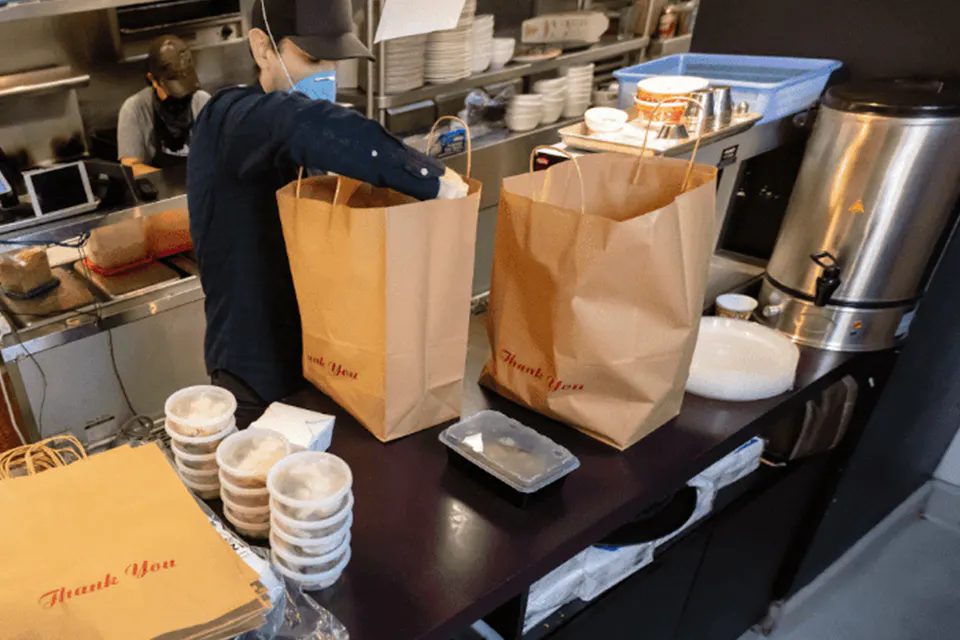
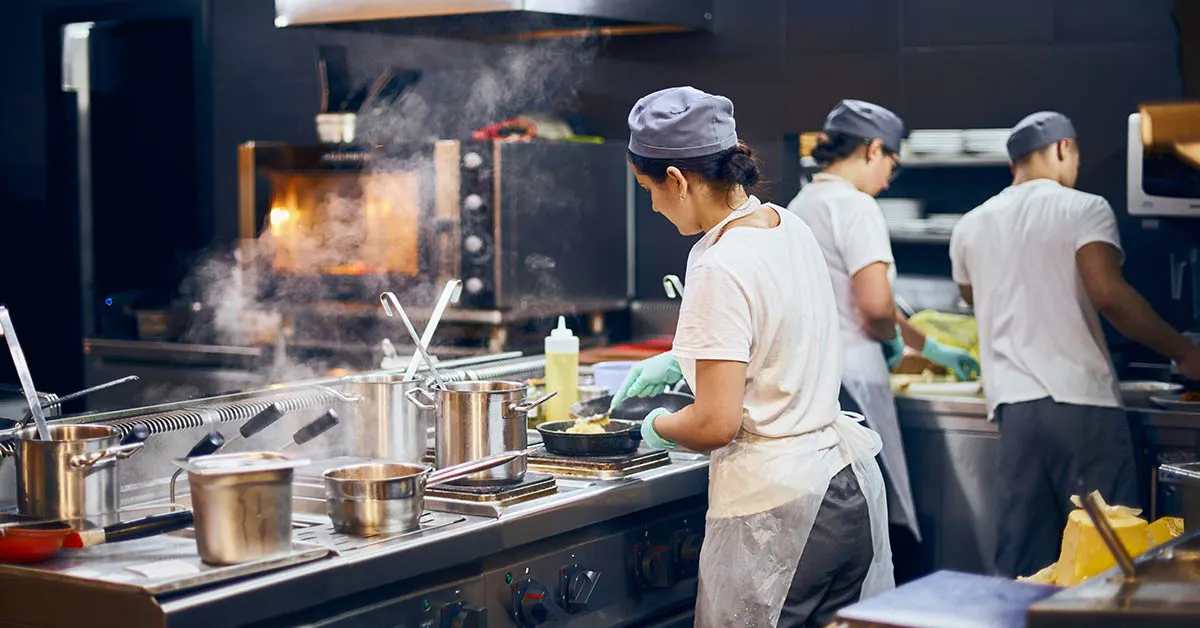
Lean staffing model: No servers, no hosts, no bussers. A typical crew runs 3–6 people per shift: kitchen staff, a dedicated expeditor/packer (critical for delivery accuracy), and a shift manager.
Packaging is your dining room. Your bag and container are the entire customer-facing experience. Branded packaging, clear labeling, and spill-proof containers directly affect ratings and repeat orders.
Permitting: A dark kitchen requires the same health inspections, food handler certifications, and commercial kitchen zoning as any traditional restaurant. Shared kitchen facilities typically hold facility-level permits. Dedicated spaces require full independent permitting. Verify before you assume anything is covered.
Running multiple virtual brands from one kitchen without losing your mind
Every competitor lists "run multiple virtual brands" as a benefit and stops there. Here's how it actually works on a live line. If you're still deciding whether a virtual brand makes sense for your operation, Otter's virtual restaurant brands guide is a good place to start.
Ingredient architecture first
Before launching a second brand, map your existing ingredient list. Build the new menu so 60–80% of core items overlap with what you're already prepping. This is menu engineering in practice: a burger brand and a sandwich brand sharing proteins, produce, and bread dramatically cuts prep complexity. Random brand additions that share nothing with your existing mise en place add purchasing complexity, waste, and prep time without improving margin.
Ticket routing
When orders from Brand A and Brand B hit simultaneously, your POS must route each ticket to the correct station automatically. Without that logic, you're triaging by hand during peak hours and errors spike. This is not a nice-to-have. It's the operational requirement for running multiple brands without chaos — and a cornerstone of solid day-to-day restaurant operations.
Otter POS consolidates orders from every delivery channel and every brand into one interface, with configurable routing logic so each kitchen station sees only the tickets relevant to it. That's the architecture multi-brand dark kitchens need.
Menu 86ing across brands
If chicken thighs run out, that item must be deactivated on every platform and every brand using them, simultaneously. Manual platform-by-platform updates during a rush create order errors and bad reviews. Centralized menu management solves this.
Packaging and labeling accuracy
Every bag leaving your kitchen must be clearly identified by brand, order contents, and customer name before it reaches the driver. Mislabeled bags are the leading driver of wrong-order complaints and platform rating drops in multi-brand operations.
Operational rule: Don't launch a third brand until the second is consistently profitable. Complexity scales faster than revenue in a small kitchen.
The technology stack your dark kitchen actually needs
Minimum viable stack
- A POS built for delivery volume
- Order aggregation that pulls all platform orders into one stream
- A KDS or organized ticket system
- Centralized menu management
The tablet sprawl problem
Operating three delivery platforms without aggregation means three tablets, three separate menus to update, three notification streams. One missed alert is one missed order. At volume, this is not manageable.
KDS vs. printed tickets
A KDS allows priority-based routing by urgency, fulfillment type, or brand, relevant when you're running multiple concurrent order streams. Printed tickets work at low volume but create sorting overhead as orders scale.
Menu management at scale
Price updates, item 86ing, and hours changes pushed across all platforms from one place. This is not optional when you're running multiple virtual brands on multiple platforms.
Reporting
Per-platform revenue visibility shows you which channels are profitable after delivery commissions and which are subsidizing losses. Otter's Financials feature surfaces this without manual spreadsheet reconciliation.
What you probably don't need on day one
A loyalty platform, reservation system, or any front-of-house technology.
Third-party delivery apps: how to use them without being owned by them
Uber Eats and DoorDash own the customer data, the repeat-purchase notification, and the algorithm that controls your visibility. You are a supplier in their marketplace, not a business with a direct customer relationship.
Delivery commission math at scale: At $10,000 per month in platform revenue, you're paying $1,500–$3,000 per month in fees before rent, food cost, or labor. Every month.
Algorithm risk: A ranking drop from a bad review batch, a competitor's promotional push, or a unilateral commission change can reduce your revenue without warning. If you source 100% of orders from one platform, you have one point of failure with no customer data to fall back on.
Direct ordering as a structural hedge: Building a direct ordering channel captures the customer relationship, eliminates delivery commissions on those orders, and gives you data to market to repeat buyers. Otter supports commission-free direct online ordering alongside third-party platform consolidation, so you run both from the same system.
Practical platform strategy: Use third-party apps to acquire new customers. Use direct ordering and repeat-purchase incentives to retain them. Shifting even 10–20% of volume to direct channels meaningfully improves margin over time.
How to choose the right location and market for a dark kitchen
No foot traffic requirement, but delivery zone density is the most important location variable. You need to be within 3–5 miles of a dense residential or office cluster to rank well in platform algorithms. A back-alley industrial unit in a dense neighborhood outperforms a high-visibility location in a low-density suburb.
Use platform data before signing a lease. DoorDash Merchant Portal and Uber Eats Manager both publish demand heat maps by category and ZIP code. Validate that demand exists for your food type in the target area before you commit.
Competition audit: Search your concept on every target platform in your delivery zone. If 40 burger brands are already operating within a 3-mile radius, margin pressure will be severe from day one.
Dark kitchens reward operators who design the operation, not just launch it
The model's low barrier to entry is real. But low barriers mean high competition. The operators who build durable dark kitchen businesses design every variable deliberately rather than defaulting to whatever the platforms suggest.
The four levers that separate profitable dark kitchen operations from struggling ones:
- Ingredient architecture and menu engineering that enable multi-brand efficiency
- Menu pricing that accounts for delivery commissions before setting a price, not after
- A tech stack that eliminates manual touchpoints
- A direct ordering channel that reduces platform dependency over time
Who this model fits best:
- QSR and fast-casual operators testing new markets or dayparts without full build-out risk
- Existing restaurants launching virtual brands on off-hours kitchen capacity
- Delivery-native concepts with no legacy dine-in infrastructure
- Multi-concept operators maximizing revenue per square foot
Who should think carefully before committing:
- Concepts where food quality degrades significantly during transit
- Operators not prepared to actively manage platform relationships, reviews, packaging, and delivery logistics simultaneously
The bottom line on dark kitchens
The dark kitchen model transfers cost from real estate to logistics. Whether that trade works depends entirely on whether you design the operation. Operators who treat it as "cheaper rent plus delivery apps" hit margin problems quickly. Operators who engineer ingredient overlap, price for commissions from day one, route tickets without manual intervention, and build even a small direct ordering channel tend to find the math workable.
The entry barrier is low, which means competition is high and margins are thin. The operators who build lasting businesses in this space do so through operational precision, not by listing a menu and waiting.
If you're testing a new concept or market, dark kitchens are one of the lowest-risk environments to validate demand before committing to a full build-out. If you're an existing operator with underused kitchen capacity, launching a virtual brand on off-peak hours is nearly all upside. If you're starting from zero with a complex menu and no delivery infrastructure, get the unit economics on paper before you sign anything.
Building or running a dark kitchen? Otter's restaurant pos system is built for delivery volume and multi-brand operations: one screen for every order, every brand, every platform.
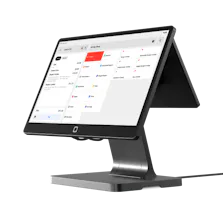
Otter POS for restaurants
The all-in-one platform that enhances operations across your entire business. Consolidate orders, increase sales, and make your days easier.
Frequently asked questions about dark kitchens
What is the difference between a dark kitchen, a ghost kitchen, and a cloud kitchen?
Dark kitchen and ghost kitchen are largely interchangeable. Both describe a delivery-only food operation with no dine-in and no customer-facing storefront. Cloud kitchen refers to a multi-tenant shared kitchen facility that rents prep space to multiple operators. A virtual brand is the menu identity that lives on delivery apps and can operate out of any of these kitchen types.
How much does it cost to start a dark kitchen?
Renting space in a shared kitchen facility can run $500–$3,000 per month with minimal build-out cost. A dedicated kitchen with a full commercial build-out typically costs $50–$100 per square foot in capital plus monthly rent. Either way, budget for a POS and tech stack, branded packaging, initial food cost, and at least two to three months of operating capital before delivery volume reaches breakeven.
How do dark kitchens make money when delivery commissions take 15–30% per order?
Profitability requires tight food cost, lean staffing, and menu prices set with commissions already factored in. The math works when kitchen volume is high enough to cover fixed lease costs and menus are built around high-margin items. Running multiple virtual brands from one kitchen can spread fixed costs across more orders, but only if those brands share core ingredients.
Do I need special permits or licenses to operate a dark kitchen?
Yes. A dark kitchen requires the same licensing, health inspection, food handler certification, and commercial zoning as any traditional restaurant kitchen. Shared kitchen facilities typically hold facility-level permits. If you lease your own dedicated space, you are responsible for securing all permits independently.
Can an existing restaurant add a virtual brand and operate it as a dark kitchen?
Yes, and this is one of the most common entry points. An existing QSR or fast-casual operator can launch virtual brands out of their current kitchen during off-peak hours or alongside their primary concept. The requirement is that your POS can handle simultaneous order streams from multiple brands without creating ticket confusion on the line.
What technology does a dark kitchen need to run efficiently?
At minimum: a pos system for delivery restaurants built for volume, order aggregation that consolidates all platform orders into one stream, a KDS or organized ticket system, and centralized menu management that lets you update pricing and 86 items across all platforms from one place. Managing each delivery platform on a separate tablet is one of the most common efficiency killers in early-stage dark kitchen operations.
What are the biggest risks of the dark kitchen model?
Platform dependency is the most significant structural risk: you don't own the customer relationship, and a ranking change or delivery commission increase can reduce revenue without warning. Other real risks include margin compression, food quality degradation during transit for certain menu types, and operational chaos when running multiple brands without proper ticket routing and menu management in place.
See how Otter handles multi-brand order routing from one interface