Table of contents
Trend lists are easy to write and hard to use. Most of what gets published about food trucks each year is a description of things that are already happening, which is useful for a magazine and useless for an operator deciding what to buy this quarter.
This one is organized around a different question: which of these shifts actually changes a decision you are about to make. The market data is in one table near the top so you can check the numbers without reading around them, then each trend covers what is changing, whether it applies to your operation, and what it costs you to ignore.
Key insights
- The clearest growth in this category is not in the trucks. It is in the systems around them: ordering, payments, and the data that tells you which hours are worth working.
- Ghost kitchen and commissary partnerships are letting trucks test concepts and expand service areas without buying a second vehicle.
- Sustainability has moved from a marketing position to an operating cost question, as electric and solar equipment gets cheaper and city regulations tighten.
- The trends worth acting on are the ones that change your cost per order or your orders per hour. Most of the rest is decoration.
The food truck industry in numbers
Every figure in this article is in this table, all from Mordor Intelligence's United States food truck market report, published January 2026.
Figure | Value |
|---|---|
US food truck market, 2026 | USD 1.16 billion |
US food truck market, projected 2031 | USD 1.59 billion |
Projected growth rate, 2026 to 2031 | 6.53% CAGR |
Share of the market held by independent operators, 2025 | 85.6% |
Largest regional share, 2025 | South, 35.8% |
Fastest-growing region to 2031 | West, 6.70% CAGR |
Operators reporting 5pm to 8pm as their peak hours | 63.6% |
Fastest-growing menu application to 2031 | Vegan and plant-based, 11.10% CAGR |
One caveat before you quote any of that elsewhere: market-size estimates for this category vary enormously depending on how each research firm defines mobile food service, and whether trailers, carts, and mobile catering are counted. Published figures for the US market range from roughly one billion dollars to over four. Treat any single number as directional, and compare like with like.
The direction is steady rather than dramatic: a market growing at mid-single digits, dominated by independent operators rather than chains. That matters for how you read everything below. This is not a category being transformed overnight, and it is not one where scale is the advantage. The trends worth your attention are the ones that improve a working truck's economics rather than the ones that promise a new kind of business.
10 food truck trends for 2026
1. Ordering and payment technology has become the baseline
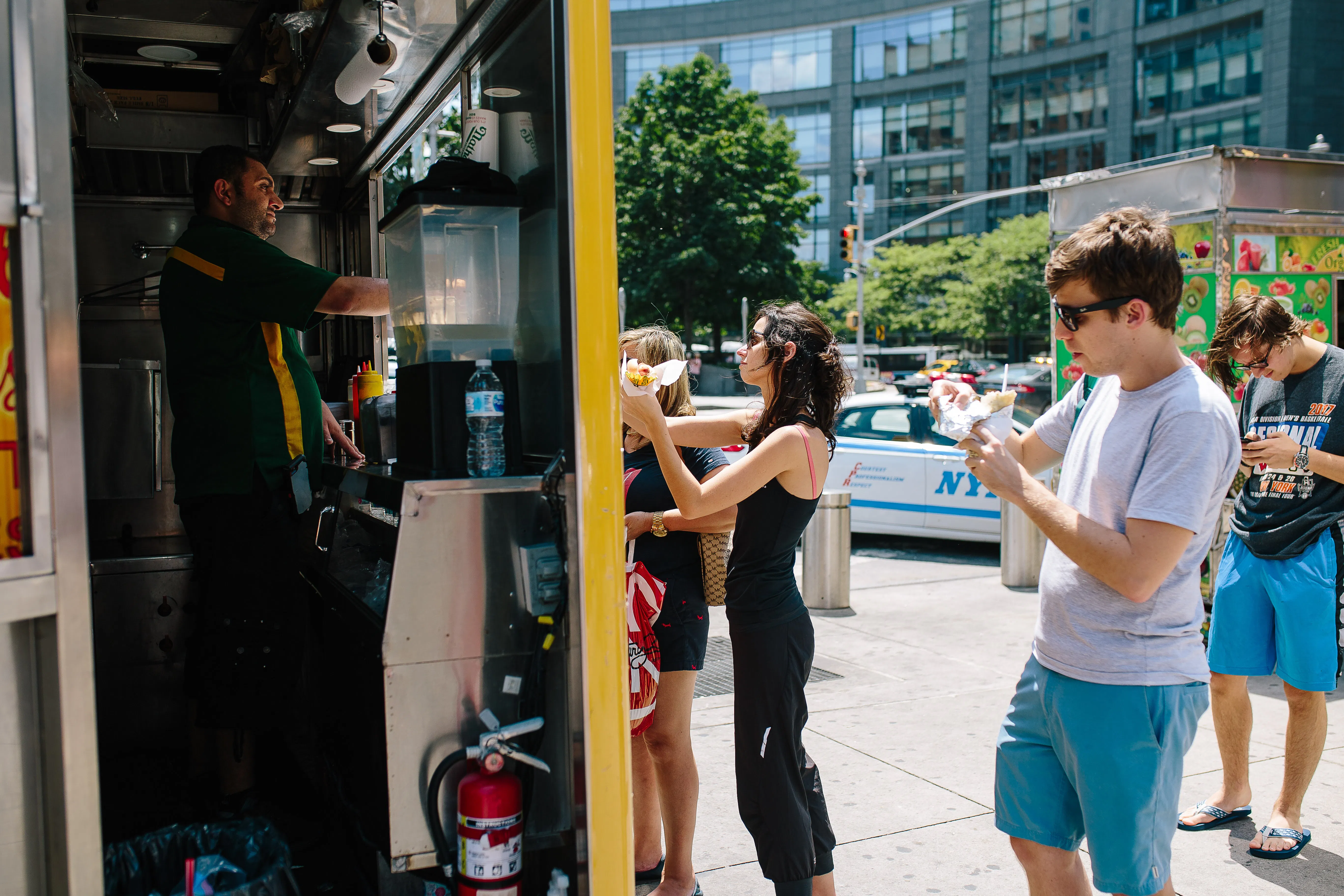
Contactless payment, QR menus, and mobile ordering stopped being differentiators and became table stakes. A truck that only takes cash and card at the window now loses orders to the one down the row that takes them ahead of time.
The practical shift is pre-ordering. Orders placed before a customer arrives smooth your prep, cut the queue at the window, and let you serve people who would not have waited. A point of sale built for a truck that keeps working when the connection drops matters more here than any individual feature, because a parking lot is not an office.
"We get our direct orders and our delivery app orders in the same tablet, with the same procedure."
Karina Carmona, Operations Manager, Taqueria La Estrella, San Francisco Bay Area
2. Pricing and menu decisions are moving to the data
The interesting use of analytics on a truck is not dynamic pricing, which is hard to do well and easy to annoy people with. It is knowing which items earn their place. Most operators can name yesterday's total and cannot name the three items that produced it.
Item-level and hour-level reporting tells you what to cut, what to push, and which hours are worth the fuel to work. Otter Analytics reports by product mix and peak hour rather than handing you a daily number, which is the difference between a menu you chose and a menu that earns.
3. Sustainability became a cost question, not a marketing one
The framing has changed. Biodegradable packaging and waste reduction used to be things you advertised. Now they are things you budget for, because packaging regulations are tightening in more cities each year and waste is a direct cost line on a truck with limited cold storage.
The operational version of this trend is unglamorous: order closer to actual demand, track what gets thrown away, and build a menu where ingredients overlap so trim gets used rather than binned.
4. Ghost kitchen and commissary partnerships
Trucks are increasingly pairing with shared commissary space and ghost kitchens to prep at scale, test a concept before committing to it, or serve a delivery radius the truck cannot reach. It is a cheaper form of expansion than a second vehicle and reverses cleanly if it does not work.
If you are weighing it, Otter's explainer on what a ghost kitchen is covers the model and its economics.
5. Local and hyper-regional sourcing
Farm-to-table language has reached the truck window, and regionally specific menus are performing well against generic ones. The honest operator caveat: local sourcing usually raises your food cost, so it works when you can charge for it and hurts when you cannot. Test the price before you rebuild the supply chain.
6. Guided ordering and upselling at the screen
Where trucks run a customer-facing screen, prompted add-ons do consistent work that a busy crew cannot. A screen never forgets to offer the drink, never rushes the customer, and never gets self-conscious about suggesting a second item.
Self-service kiosks are still uncommon on trucks because of space and power, but they are appearing at food truck parks, festivals, and fixed-pitch trucks where a permanent setup is possible.
7. Fusion and cross-cultural cooking keeps outperforming
Trucks remain the format where unusual combinations get tested, because the cost of being wrong is a slow week rather than a failed restaurant. Cross-cultural cooking continues to draw both customers and the social attention that brings them.
The constraint is operational, not creative. A menu that combines two cuisines needs two prep lists unless you design the overlap deliberately, and prep space on a truck is the scarcest thing you have.
8. Trucks as event and community anchors
Breweries without kitchens, pop-up markets, private events, and municipal food truck zones are all reliable bookings, and they share a property that street trading does not have: known headcount and guaranteed footfall. Fixed-fee event work is the most predictable revenue a truck can get, which is why more operators are building their calendars around it. Otter's overview of catering trends covers the adjacent opportunity.
9. Health-conscious and dietary-specific menus
Plant-based, gluten-free, and high-protein options have moved from special request to expected availability, particularly at office and event bookings where one dietary requirement can decide a booking for twenty people. The practical move is not a separate menu. It is making sure two or three existing items can be made to meet a common restriction without a separate prep line.
10. Short-form video is doing the marketing
A truck's location changes, which makes it the business type most dependent on people knowing where it is today. Short-form video on TikTok, Reels, and Shorts has become the default answer, and it suits the format: the cooking is visible, the queue is visual, and the truck itself is a set.
Geotargeted posting matters more than production quality. Otter's food truck marketing guide covers the mechanics.
Where the industry is heading next
These are further out than the ten above. They are worth watching rather than budgeting for.
Electric and solar-powered trucks
Generator noise, fuel cost, and emissions rules are all pushing the same direction. Adoption is currently limited by upfront cost and by how much power a full kitchen actually draws, but both are moving.
Smart city integration
Digital permitting, designated power hookups, and municipal food truck zones are expanding in larger cities. Where they exist they lower the administrative overhead of trading legally, which is one of the least discussed costs of running a truck.
Delivery-only and virtual brand expansion
Some operators are running a delivery-only brand out of the same kitchen that supplies the truck, using spare capacity to reach customers the truck never parks near. Otter Order Manager is what makes that manageable, since it puts every delivery platform's orders into one queue instead of one tablet each.
Rising costs as the constant
Underneath all of it, input costs remain the pressure that decides which trucks survive. Otter's breakdown of restaurant inflation covers where the increases are landing and what operators are doing about them.
How food truck trends compare to the wider restaurant industry
Most of what is happening to trucks is happening to quick service generally, just faster and with less capital at risk. Ordering technology, channel consolidation, and data-led menu decisions are the same three forces, and trucks adopt them earlier because the cost of changing is lower. Otter's rundown of quick service restaurant trends covers the same shifts at restaurant scale, and it is worth reading alongside this one if you operate both.
Judge every trend by cost per order or orders per hour
The useful filter for anything on this list is narrow. Does it lower what it costs you to serve one customer, or does it let you serve more customers in the hours you are already open? Ordering technology and item-level reporting clear that bar. Electric trucks and smart city integration will, eventually. Some of the rest is interesting without being actionable, and there is no shame in reading a trend and deciding it is not for you this year.
Pick the one or two that change a number you actually track, and ignore the rest until next year's list. If you want to see what the ordering and reporting side looks like on a real system before committing, you can book a demo with Otter and walk through it against your own setup.
Frequently asked questions about food truck trends
What are the biggest food truck trends in 2026?
The shifts with the most operational impact are pre-ordering and contactless payment becoming standard, item-level sales data driving menu decisions, ghost kitchen and commissary partnerships used as low-risk expansion, sustainability moving from marketing into budgeting, and short-form video replacing most other marketing. Electric trucks and smart city integration are real but further out.
Is the food truck industry growing?
Yes, steadily rather than explosively. Mordor Intelligence puts the US market at USD 1.16 billion in 2026, growing at a 6.53% compound annual rate to a projected USD 1.59 billion by 2031. That is healthy mid-single-digit growth, not a boom, and it is spread across independent operators rather than concentrated in chains.
Are food trucks losing popularity?
No. The market data shows continued growth, and the format's core advantages have not changed: far lower startup and operating costs than a fixed restaurant, the ability to move to where demand is, and low risk in testing a new concept. What has changed is that operating one well now requires the same ordering and reporting technology a small restaurant needs.
How big is the food truck market?
Mordor Intelligence values the US food truck market at USD 1.16 billion in 2026, projecting USD 1.59 billion by 2031. Be careful comparing that against other published figures: estimates for this category range from roughly one billion dollars to over four, depending on whether a firm counts trailers, carts, and mobile catering alongside trucks. Always check what a number includes before setting it next to another one.
What type of food trucks are most successful?
The pattern is economic rather than culinary. The concepts that hold up combine a low food cost base, a short ticket time, and ingredients that overlap across several menu items, so a slow day costs little and a busy hour serves more people. Beyond that, the trucks that do best are usually the ones filling a gap in their market rather than repeating what the trucks around them already sell.
What technology do food trucks use in 2026?
At minimum, a point of sale that handles card and contactless payment and keeps working offline. Increasingly also online ordering for pre-orders, delivery platform integration where the truck has a fixed pitch, and reporting that breaks sales down by item and hour. Kiosks appear at food truck parks and fixed pitches, though space and power still limit them on mobile setups.
How much does it cost to start a food truck?
It varies enormously with whether you buy new, buy used, or convert a vehicle yourself, and with the equipment your concept needs. A fryer-and-griddle menu needs far less than one built around a smoker or a pizza oven. Beyond the vehicle, budget for permits, commissary fees, insurance, and initial inventory, all of which vary by city more than most first-time operators expect.
Are food trucks still a viable business in 2026?
Yes, with the same caveat as any restaurant format: the concept and the cost control decide it more than the trend cycle does. Trucks retain a genuine structural advantage in startup cost and flexibility. What has tightened is the margin for sloppiness, since customers now expect the ordering convenience they get everywhere else and competitors are using data to work the profitable hours.

Equip your truck for what's coming next