Table of contents
The U.S. caterers industry generated an estimated $15.7 billion in 2026, growing at a 6.7% average annual rate over the past five years, according to IBISWorld, with return-to-office mandates pushing more employers toward catered lunches and events as a way to reinforce in-person culture. That kind of growth usually means more competition too, more caterers chasing the same corporate accounts and weddings, which makes it worth knowing which shifts are actually changing how clients book and what they expect once they do.
This isn't a list of buzzwords. Each trend below comes with what it actually looks like in practice and what to do about it, so you can decide which ones are worth acting on now versus which ones can wait.
Key insights
• Mobile ordering is now mainstream across food service: 57% of adults recently used it, per the National Restaurant Association, which is reshaping how caterers expect clients to place and manage orders.
• Personalization has moved from a nice-to-have to a default expectation, driven by dietary accommodation needs and clients who want a menu that feels built for their event, not picked off a set list.
• AI and automation are showing up in catering operations mainly as scheduling, demand prediction, and order management, the unglamorous back-office work, not just flashy client-facing features.
• Sourcing and sustainability claims are getting more scrutiny from corporate and event clients, which rewards caterers who can be specific about where food comes from rather than vague about it.
10 catering trends currently defining the industry
1. Sustainable catering practices
Food waste and single-use packaging are drawing more scrutiny from corporate clients booking catering, some of whom now ask directly about waste-reduction plans before signing a contract. Caterers responding to this are portioning more precisely, switching to biodegradable or reusable serviceware, and sourcing from local farms partly to cut down on transport waste.
2. Personalized and customizable menus
Dietary accommodation has gone from a special request to a default expectation, vegan, gluten-free, halal, and allergen-conscious options are now assumed rather than asked for. Digital ordering tools that let each guest customize their own plate, rather than forcing one fixed menu on an entire event, are becoming a differentiator. Otter's Menu Management tools make it easier to maintain multiple dietary variations of the same menu without managing them as entirely separate documents.
3. AI-powered catering management
The more useful AI applications in catering right now are operational, not customer-facing: automating order intake, predicting staffing and food needs based on event size and history, and flagging scheduling conflicts before they become a problem on event day. Otter's Otter Catering product handles this kind of order intake and scheduling automation directly.
4. Health-conscious, wellness-focused menus
Nutrient-dense options, plant-based mains rather than a single token vegetarian dish, and clear allergen labeling are increasingly standard requests, especially for corporate catering where a wider range of dietary needs is guaranteed across any group large enough to matter.
5. Experiential and interactive catering
Live cooking stations, build-your-own bars, and chef-attended carving or plating stations turn catering into part of the entertainment rather than a background service. This costs more in staffing, so it tends to show up first at higher-budget corporate and wedding events, but it is trickling down to smaller events as a differentiator caterers can charge a premium for.
6. Hybrid and flexible event formats
As remote and hybrid work stuck around, so did the need to feed people who aren't all in the same room, individually packaged meal kits shipped to remote attendees, smaller in-office spreads paired with a virtual component, and flexible headcounts that can scale up or down closer to the event date without renegotiating the whole contract.
7. Global flavors and creative fusion cuisine
Roy Choi's Kogi BBQ truck popularized Korean-Mexican fusion street food in Los Angeles, Korean short rib tacos and kimchi quesadillas, in the late 2000s, and that same appetite for cross-cultural mashups has since worked its way into catering menus, as NPR's profile of Choi documents. Clients increasingly want a menu that reflects a specific chef's or region's point of view rather than a generic banquet spread.
8. Tech-enhanced guest experiences
QR code menus, digital RSVPs, and event-specific apps let guests browse, order, and give feedback without flagging down staff, the same contactless ordering pattern that's reshaping dine-in service more broadly. Otter's QR Ordering brings this same self-service model to catered events.
9. Elevated beverage and mocktail programs
Curated mocktail menus, craft cocktail pairings, and health-conscious drink options are showing up in catering proposals as their own line item rather than an afterthought next to the food, partly driven by the same wellness expectations reshaping the menu side.
10. Hyperlocal and seasonal sourcing
Blue Hill at Stone Barns has built its reputation on farm-to-table sourcing, drawing produce, meats, and dairy from its own on-site farm and other local partners for both its restaurant and its off-site catering arm. It's an extreme version of a trend most caterers are adopting in smaller ways: naming the actual farm or region a dish came from, rather than just calling something “local” without specifics.
What these trends mean for your catering operations
Reading a trends list is easy. Acting on it usually means treating catering as its own operation with its own reporting, not an overflow of your regular dining-room business. That distinction matters more as a catering arm grows, since the ordering patterns, lead times, and staffing needs are genuinely different from walk-in service. Otter's what restaurant operations management actually covers breaks down what that separation looks like in practice.
Telly's Charburgers runs its catering arm as one of three separate storefronts alongside its restaurant and bake shop, specifically so it can track each one's performance on its own:
“I also really like the different storefronts. We have three: the bake shop, catering, and the restaurant. I get to keep everything separate so I can read reports for different stores.”
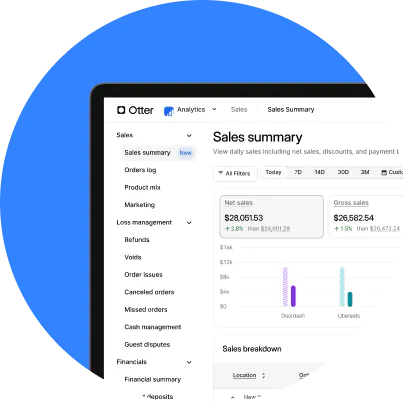
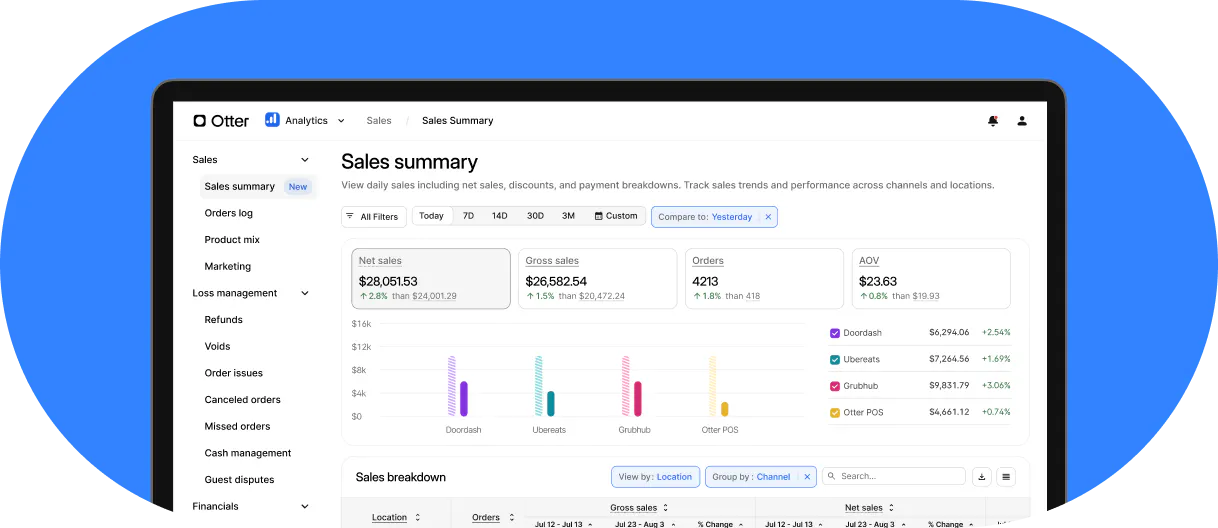
That kind of separation is what makes it possible to actually see whether a new trend, a mocktail program, a sustainability push, a hybrid-event option, is paying off for catering specifically rather than getting lost in blended numbers. Otter's Analytics and Order Manager tools support that kind of per-channel reporting.
If catering is one piece of a bigger operation
Catering rarely happens in isolation, most caterers are also running a dining room, a food truck, or a quick-service concept alongside it, and the trends don't always overlap. Otter's food truck trends and QSR trends rundowns cover what's shifting in those formats specifically, worth a look if catering is one piece of a larger operation rather than the whole business.
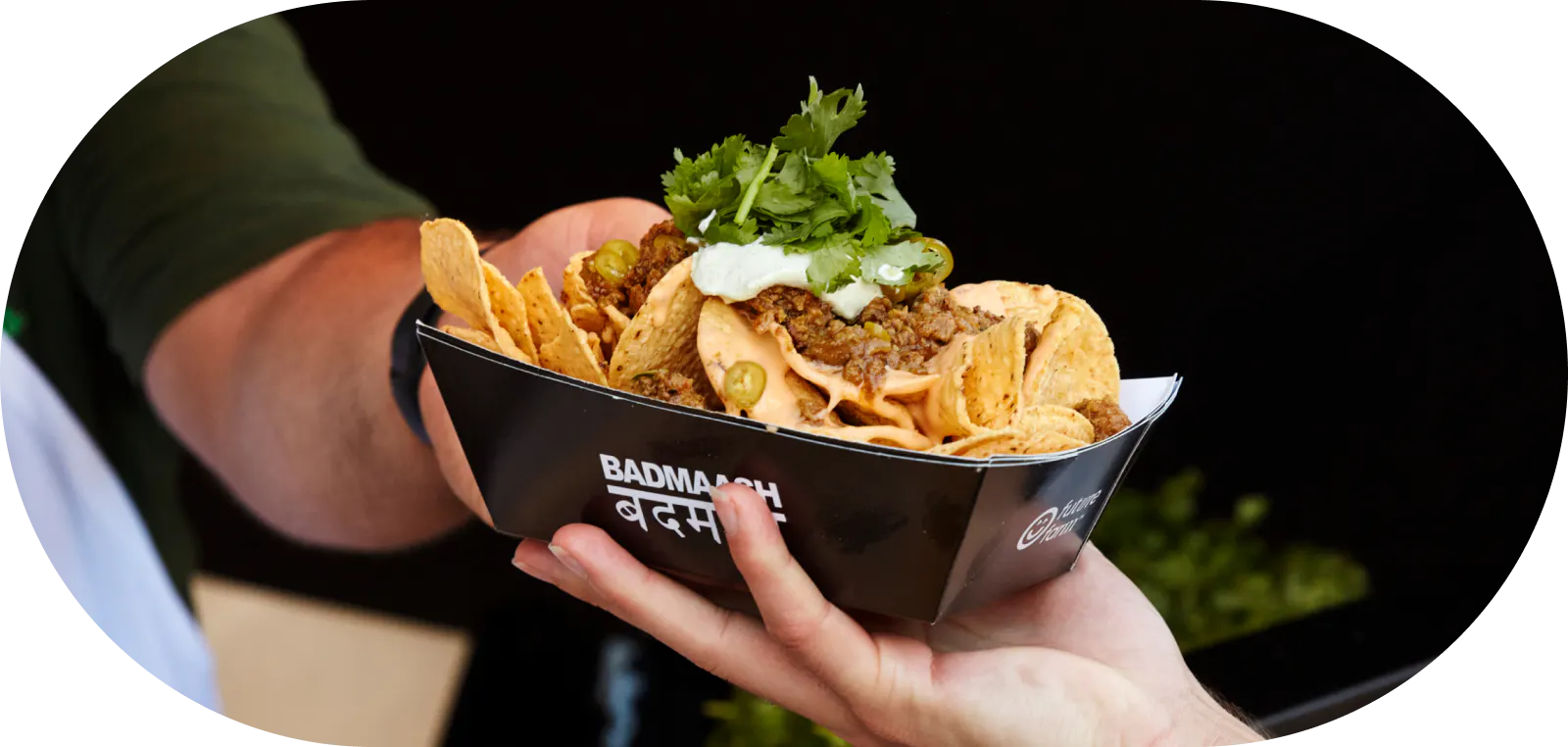
Catering trends worth watching are ones you can act on this quarter
Not every trend on this list deserves equal attention. Sustainability and personalization are already table stakes for most corporate clients; AI-powered scheduling and per-channel reporting are the ones most likely to save real time; experiential add-ons and elevated beverage programs are the ones worth testing on a single event before rolling out everywhere. Book a demo with Otter to see how catering-specific order management and reporting fit into the rest of your operation.
Frequently asked questions about catering trends
How is AI changing catering operations in 2026?
Mostly behind the scenes: automating order intake, predicting staffing and food quantities based on event size and history, and flagging scheduling conflicts. It's less about client-facing chatbots and more about cutting down the manual coordination work that catering managers currently do by hand.
What role does sustainability play in catering right now?
It's shifted from a marketing angle to a client requirement in some segments, particularly corporate accounts, some of whom now ask about waste-reduction and sourcing practices as part of the vetting process before booking, not after.
Is it realistic for a smaller catering business to adopt these trends?
Yes, selectively. Full experiential setups and elaborate beverage programs are easier to justify at higher price points, but personalization, digital ordering, and sourcing transparency are achievable at any size and often cost less in staff time than the manual alternative once they're set up.
Which catering statistics are actually worth tracking?
Order volume and revenue by event type, repeat-client rate, and average lead time between booking and event date tell you more about where your catering business stands than any industry-wide statistic. Track your own numbers by channel, not just blended with your regular dining-room sales.
How can caterers handle hybrid and remote-friendly events well?
Plan for flexible headcounts that can shift closer to the event date, individually packaged options for guests attending remotely, and clear communication with the client about what changes if attendance shifts. Treat the hybrid format as its own event type rather than a smaller version of an in-person one.
How does Otter support catering businesses specifically?
Otter's Otter Catering product handles order intake, scheduling, and menu management built specifically for catering, rather than a dining-room POS repurposed for large orders.
Is Otter suitable for catering businesses with multiple locations?
Yes. Otter's guide to multi-location POS systems covers what to look for when catering is running out of more than one kitchen or alongside other storefronts, which is common once a catering arm grows past a single location.

Book a demo with Otter
It’s time to enhance your operations with Otter’s all-in-one restaurant platform. Book time with our sales team to learn more.

Serve up catering with Otter