Table of contents
- What is restaurant franchise management software?
- Top 8 restaurant franchise management software platforms
- How to choose the best franchise software for your restaurant
- Key benefits of using franchise software for restaurants
- Why franchises choose Otter
- Match franchise software to how fast you're actually growing
- Frequently asked questions about restaurant franchise management software
US franchising is on track to grow from 832,521 to 845,000 establishments this year, a 1.5% increase, per the International Franchise Association's 2026 economic outlook. Every one of those new units is another location running its own menu, its own reporting, and its own version of the brand standard, unless the software behind it is built to keep all of that in sync.
That's the real test of restaurant franchise management software: not whether it can run one great location, but whether it keeps ten or a hundred of them consistent without a home-office team manually checking each one. Some of the platforms below are built for exactly that job. Others are general POS or payroll tools that happen to scale, worth knowing the difference before you sign a multi-year contract.
Key insights
- Franchise management software earns its name by doing three things a single-location POS doesn't: centralized menu and pricing control across every store, standardized reporting that lets you benchmark one location against another, and built-in enforcement of brand standards and SOPs
- Pricing across this category is mostly quote-based. Of the eight platforms below, only a couple publish a real starting number, most gate pricing behind a sales call once they know your unit count, so compare what's actually bundled (hardware, onboarding, integrations) rather than a sticker price
- Otter's angle in this category is real-time operational visibility: its Live Alerts feature flags a store going offline or a channel disconnecting the moment it happens, closer to a monitoring layer than a franchise-CRM platform like FranConnect
- Otter connects with dozens of third-party restaurant tools, not the "100+" figure some older content repeats, so check the specific integrations your franchise stack actually needs rather than assuming a round number covers your case
What is restaurant franchise management software?
Restaurant franchise management software gives a multi-unit brand one dashboard for the things that get harder every time you add a location: menu and pricing updates, performance reporting, labor, and brand compliance. It sits above the day-to-day POS work of any single store and answers a different question: is every location actually running the business the way it's supposed to. If you're earlier in the process, still deciding whether to franchise at all, Otter's guide to how to franchise a restaurant is the better starting point.
Key modules and features
- Centralized menu and pricing management, so a price change or a new item publishes to every location at once instead of location by location
- Cross-location reporting and analytics, built to compare stores against each other, not just track one store over time
- Labor and scheduling tools that hold up across multiple sites and multiple managers
- Compliance and standard operating procedure tracking, so brand standards are enforced rather than assumed
- Communication tools that connect corporate, franchisees, and individual store staff without everything routing through email
How franchise software differs from general POS or scheduling tools
A standard restaurant POS system is built to run one location well: take orders, process payments, manage a shift. It was never built to answer 'how is store 14 doing compared to store 3' or 'did every location actually roll out the new menu on time'. Franchise management software adds that layer on top, sometimes bundled with a POS, sometimes as a separate system that plugs into whatever POS each location already runs. Otter's guide to the best POS systems for restaurants is the right comparison if you're choosing the POS layer specifically, this page is about what sits above it.

Top 8 restaurant franchise management software platforms
Eight platforms worth knowing in this category, ranging from restaurant-native order management to general franchise-CRM and payroll tools that happen to serve restaurant franchises well. Pricing is described by style rather than dollar figures below, since most of these vendors quote by unit count and a listed number rarely applies to a real footprint. Check each provider's own pricing page for a quote.
Quick comparison chart
Platform | Built for | Pricing style | Best fit |
|---|---|---|---|
Otter | Restaurant order management, POS, and multi-store operations | Tiered bundles, hardware included, quote for exact pricing | Multi-unit and delivery-heavy restaurant brands |
Toast | Restaurant POS with franchise-tier plans | Entry tier publishes a starting price, custom quotes above it | Franchises that want POS and franchise reporting from one vendor |
FranConnect | Franchise development, royalties, and operations CRM | Fully quote-based, no published pricing | Brands managing franchise sales and compliance, not just restaurant ops |
Revel Systems | Enterprise iPad POS with a separate implementation fee | Quote-based, plus a one-time setup cost | Larger multi-location operators with an IT team to manage rollout |
Crunchtime (formerly Zenput) | Operations checklists and food-safety compliance | Quote-based | Brands whose biggest pain point is SOP and food-safety enforcement |
Xenia | Facility and task management for frontline teams | Published tiers, including a free plan | Smaller multi-unit brands wanting a lighter, self-serve tool |
Gusto for Franchises | Payroll and HR across locations, not full operations | Published, tiered pricing | Franchises that specifically need multi-location payroll and HR |
HungerRush | Restaurant POS with franchise operations features | Quote-based, hardware bundled on some plans | QSR and delivery-focused multi-unit brands |
- Otter is built restaurant-first, with order management, POS, and live operational monitoring in one system rather than bolted-on modules. Hardware is bundled into the subscription rather than billed separately. It's the strongest fit for a franchise that's delivery-heavy or managing several channels per location, less built for brands whose biggest need is franchise-sales CRM or royalty tracking specifically.
- Toast pairs its restaurant POS with franchise-tier reporting and a franchise-specific onboarding path, a reasonable single-vendor option if you want POS and multi-location reporting from the same provider rather than stitching two systems together.
- FranConnect is a franchise operations and development platform first, not a restaurant POS. It's built for the corporate side of running a franchise system, royalty collection, franchisee onboarding, compliance, more than for what happens at the register.
- Revel Systems is an enterprise iPad POS with a real implementation process and fee, worth it for a larger brand with the internal resources to manage a bigger rollout, heavier than what a smaller franchise typically needs.
- Crunchtime (the platform most people still know as Zenput, before Crunchtime acquired and renamed it) focuses on operational checklists and food-safety compliance across locations rather than order-taking or POS.
- Xenia is a lighter facility and task-management tool, one of the few in this category with a published pricing page and a free tier, worth a look for a smaller multi-unit brand that doesn't want a sales-call-gated enterprise tool.
- Gusto for Franchises covers payroll and HR across locations specifically. It's not a franchise operations platform on its own, but it's worth pairing with one if multi-location payroll is the actual pain point.
- HungerRush combines restaurant POS with franchise operations features and bundles hardware on some plans, a reasonable option for QSR and delivery-focused multi-unit brands wanting one vendor for both.

How to choose the best franchise software for your restaurant
1. Start With Your Goals
Decide what problem you're actually solving first, inconsistent menus, slow reporting, compliance gaps, or all three, since that changes which platform on this list fits best.
2. Audit Your Current Tech Stack
List what each location already runs (POS, scheduling, payroll) before adding a new system on top. A franchise platform that replaces three tools is a different decision than one that adds a fourth.
3. Evaluate Integration Capabilities
Confirm the platform actually connects to the POS, delivery apps, and payroll systems your locations already use, not just that it claims to integrate broadly.
4. Assess Scalability
Ask how the platform performs at 5 locations versus 50, some tools that feel simple early get expensive or clunky at real franchise scale. Otter's guide to multi-location POS systems covers this specifically for the POS layer if that's the piece you're evaluating.
5. Prioritize Customer Support and Onboarding
A rollout across multiple locations lives or dies on onboarding quality, ask what training and support actually look like for franchisees, not just for corporate.
6. Test Usability and Reporting
Run a real demo with the reports you'd actually pull weekly, not the vendor's canned dashboard. If it takes a spreadsheet export to answer a basic question, that's a real cost later.
7. Consider Compliance and Security
Ask directly how the platform handles data security and how it supports the specific compliance and SOP requirements your brand already has in its franchise agreement.
8. Understand Each Platform's Pricing Model
Since most of this category is quote-based, ask for the full fee schedule in writing, hardware, onboarding, per-location fees, before comparing any two vendors. A published starting price rarely reflects what a real multi-unit footprint ends up paying.
Key benefits of using franchise software for restaurants
Operational Visibility
A single dashboard for every location means catching a problem, a store that's slow to open, an item that's out of stock everywhere, before it shows up as a bad review.
Consistency Across Locations
Centralized menu and pricing control means a promotion or a price change goes live everywhere at once, instead of depending on each manager to update it manually.
Labor Management
Scheduling and labor tools that work the same way across every location make it easier to compare labor cost as a percentage of sales store by store, and to move staff or resources where they're actually needed.
Advanced Reporting and Analytics
Franchise-wide reporting turns individual store numbers into a real benchmark, which store is outperforming, which is falling behind, and why, rather than six separate spreadsheets.
Compliance and Standard Operating Procedures
Built-in SOP tracking makes brand standards enforceable rather than aspirational, useful both for day-to-day quality and for franchise-agreement compliance.
Improved Communication and Collaboration
A shared system gives corporate, franchisees, and store staff one place to communicate operational issues, instead of routing everything through email or group texts
Why franchises choose Otter
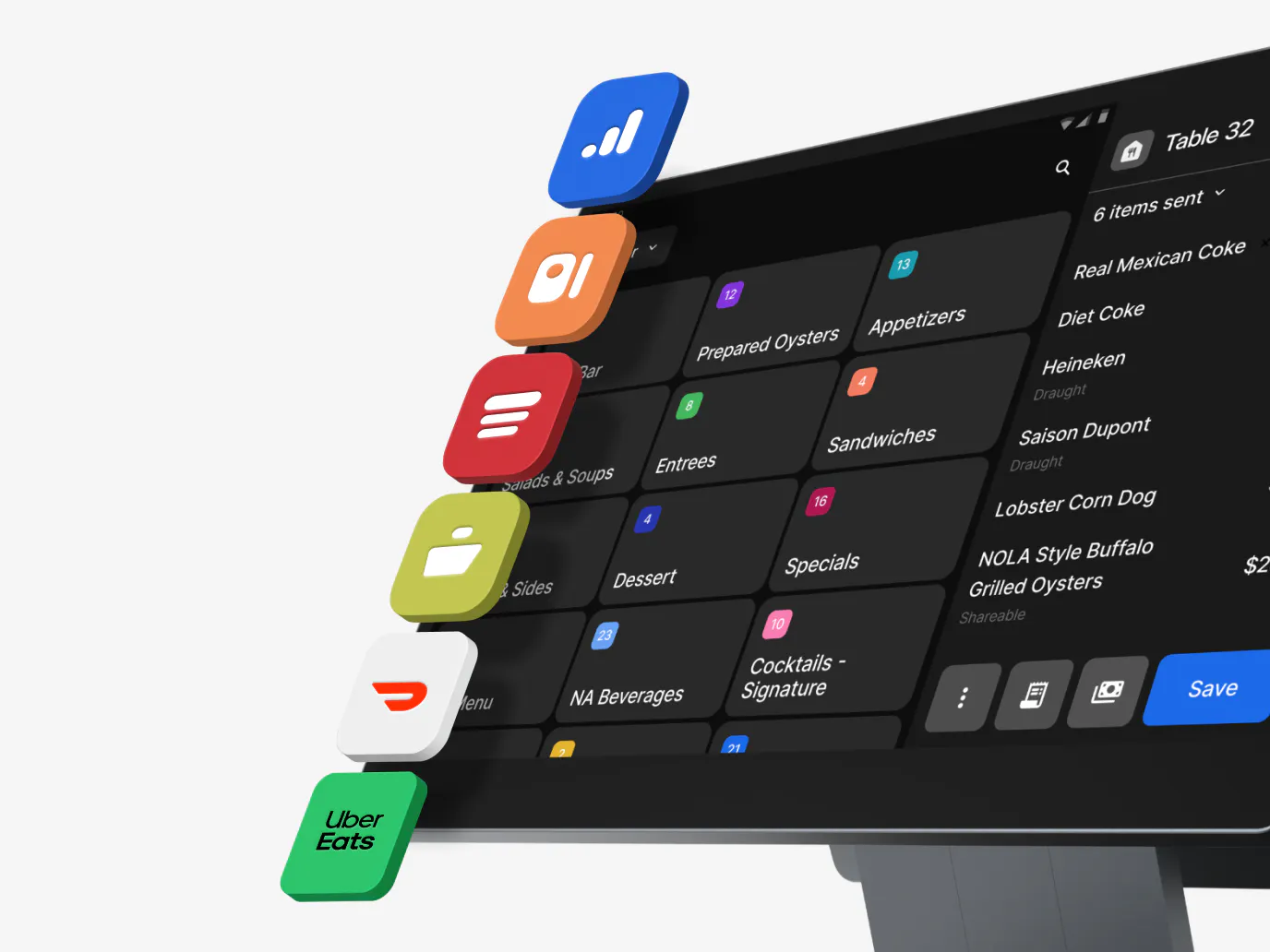
Otter's case in this category is real-time visibility plus order consolidation, not a franchise-CRM feature set. Order Manager pulls every channel, dine-in, delivery apps, and direct online ordering, onto one screen per location, and Menu Management pushes menu and pricing updates to every location at once rather than store by store.
Live Alerts is the piece built specifically for multi-unit operators: it flags a store going offline, a channel disconnecting, or a missed order the moment it happens, rather than a manager finding out from a customer complaint. Analytics rolls performance up across every location into one dashboard, so comparing stores doesn't mean stitching together separate reports.
Hardware is bundled into the subscription rather than billed separately, and Otter's higher tier adds Loyalty, gift cards, and a branded ordering site on top of the core bundle. Otter connects with dozens of third-party restaurant tools, delivery apps, payment processors, and back-office systems, worth confirming your specific stack is covered rather than assuming broad support means everything. See the current Otter POS pricing for a quote matched to your location count.
Justin Scott, Director of Operations Excellence at Skyline Chili, described what manual order entry was costing the multi-unit chain before switching:
“Manually inputting delivery orders was not only a huge drain on our staff's time but also introduced errors that impacted our customers' satisfaction.”
After switching to Otter, Skyline Chili saw a 57% decrease in order cancellations and a 66% reduction in order issues, the kind of chain-wide consistency gain that's the actual point of franchise-grade software: not a feature list, but fewer errors repeating at every location. Otter's guide to restaurant franchises that chose Otter covers more stories like this one.
If you're still deciding whether franchising is the right move at all, Otter's roundup of restaurant franchise opportunities is a useful earlier-stage read.
Match franchise software to how fast you're actually growing
The eight platforms above solve different problems: some are POS-first, some are pure operations and compliance tools, some are payroll specifically. The right one depends less on feature count and more on where your franchise actually feels friction today, menu consistency, reporting, compliance, or all three at once. Get a real quote, not a published number, before comparing any two seriously, and weigh what's bundled (hardware, onboarding, support) as heavily as the monthly cost.
Frequently asked questions about restaurant franchise management software
What's the difference between franchise management software and restaurant POS software?
Franchise management software is built for multi-location oversight: centralized menus, pricing, and reporting across every store. A standard restaurant POS is built to run a single location well and typically doesn't give you network-wide analytics or brand-consistency tools on its own.
Can I manage menus and pricing centrally for all locations?
Yes, with the right platform. Otter's Menu Management, for example, lets you update menus, pricing, and promotions across every location from one dashboard, with changes reflected instantly at each site.
How does Otter support franchise compliance?
Otter centralizes operational data across locations and gives franchises the reporting they need to support standard operating procedures, rather than enforcing compliance rules itself. Pair it with your own SOP process for full compliance coverage.
Will this software help improve franchise-wide sales reporting?
Yes. Otter's Analytics rolls up performance across every location into one dashboard, making it easier to track metrics, benchmark stores against each other, and spot an underperforming location early.
Is onboarding hard across multiple locations?
It depends on the platform. Otter offers training resources, live support, and a straightforward interface aimed at smooth onboarding across multiple franchisees, but any multi-location rollout takes real planning regardless of vendor.
Can Otter help reduce operational costs for franchises?
It can, mainly by cutting manual work and catching problems faster. Automating order flow and consolidating data reduces manual entry errors, and Live Alerts flags downtime or disconnected channels immediately rather than after a customer complains, both of which show up as fewer lost orders over time.
What's the best Otter plan for multi-location chains?
Otter's plans scale from core order management and POS up to a bundle that adds loyalty, gift cards, and a branded ordering site, with hardware included at every tier. The right plan depends on your channel mix and location count, so get a quote from the Otter team rather than assuming one tier fits every franchise.

Scale your franchise with Otter