
Table of contents
- What restaurant procurement actually is, and why winging it costs you money
- How procurement decisions show up in your menu margins
- The restaurant procurement process: step by step
- How to find and vet suppliers when you're not a chain
- Getting better prices without chain-level buying power: co-ops, GPOs, and distributor programs
- The most common procurement breakdowns, and how to prevent them
- What to do when a supplier fails you
- Buying discipline is what separates profitable independents from ones that struggle
- FAQ about restaurant procurement
Food costs are eating your margins alive, and you already know it. According to the International Foodservice Distributors Association's 2025 operator survey, 89% of operators cite food costs as a top challenge, and the average restaurant now buys from 3.1 distributors, up from 2.8 pre-pandemic. Yet most are still placing orders by gut feel, missing price creep on invoices, and leaving real money on the table every single week. Food and beverage costs typically consume 28-35% of restaurant revenue, making purchasing the single largest cost line you can actually control. Unlike rent or labor, purchasing decisions are renegotiable. Every dollar you protect here drops straight to net income.
What follows is a practical restaurant procurement process, from demand planning to supplier backup plans, built for independent operators who don't have a dedicated procurement manager or purchasing department.
Key Insights
- At a 4% net margin, $1,000 in monthly procurement savings is the profit equivalent of generating $25,000 in additional revenue. Smarter buying is more efficient than chasing more covers
- Undetected supplier price increases are a quiet but common procurement challenge. Spot-checking your top 10 SKUs against last month's invoice at every delivery catches price creep before it compounds into a margin crisis
- Independent operators can access near-chain-level pricing through GPO and distributor discount programs without changing their suppliers or ordering habits. Savings take roughly 90 days to materialize, so evaluate over a full quarter
- Qualify a backup supplier for every critical ingredient before you need one. A no-show delivery is only a crisis if you have no plan, and a plan costs nothing but an afternoon to build
What restaurant procurement actually is, and why winging it costs you money
Restaurant procurement is not just placing orders. It is a managed business process covering every step from identifying what your kitchen needs to verifying the invoice before you pay it. That process includes selecting and vetting reliable suppliers, negotiating contracts and pricing, issuing purchase orders, receiving and inspecting deliveries, matching invoices against what you actually ordered, and logging supplier performance over time. Larger operators in the foodservice industry assign this to a procurement manager; most independents run it themselves, one delivery at a time.
Most independent operators run this informally: a call to the rep, a gut-feel order quantity, a quick glance at the invoice. That reactive approach leaks money in three specific ways:
- Rush-order premiums when you run short and need product fast
- Undetected price creep when suppliers quietly raise invoiced prices after giving you a lower verbal quote
- Over-ordering that spoils before it's used, turning food waste into a dumpster expense
Procurement is also broader than food. Beverages, packaging, paper goods, and cleaning supplies all carry negotiable prices. If you only manage food spend, you miss meaningful cost-saving opportunities in every other category.
Before you can engage your supply chain, you need the vocabulary. Here are the terms that come up constantly in food service:
- Broadliner: a large distributor that delivers across categories, often selling in bulk orders
- Wholesalers and cash-and-carry: buying in person at a warehouse like Restaurant Depot, useful for one-off bulk orders outside your regular delivery schedule
- Market basket quote: a price list on your specific SKUs requested from multiple distributors simultaneously
- RFP (request for proposal): a formal process for getting competing bids from three or more suppliers
- Vendor scorecard: a simple log tracking supplier reliability, invoice accuracy, and quality control over time
- Par level: the minimum quantity of an item you need on hand before placing a reorder
Once you have the language, you can run the process. And once you run the process consistently, the savings are real and repeatable.
The restaurant procurement process: step by step
A structured procurement process is a set of standard operating procedures your team can execute consistently, even when you're not in the building. Good restaurant inventory management starts here, before product ever hits your shelves. Here is what each step looks like in practice.
Step 1: demand planning and needs assessment
Use your POS sales data to build sales forecasts for how much of each key ingredient you sell per day and per week. Set par levels based on actual usage, not gut feel. Account for seasonal menu changes and upcoming events before placing orders. Reliable delivery schedules depend on you sending accurate, predictable order quantities.
Step 2: supplier research and selection
Qualify at least two suppliers per critical ingredient category. Never single-source your top proteins, produce, or dairy. Evaluate each supplier on five criteria: delivered price on your specific SKUs, on-time delivery rate, minimum order size, lead time, and substitution policy for out-of-stock items. Consistent quality standards and quality control across deliveries should be a baseline requirement, not a bonus. For specialty categories like coffee or chocolate, ask whether fair trade or other ethical-sourcing certifications matter to your brand and your guests before you shortlist a supplier.
Step 3: contract and pricing agreements
Issue a formal market basket RFP to at least three broadliners for your top 30-50 SKUs. Ask for their best delivered price per unit and require written confirmation of any price change at least 14 days before it takes effect. Negotiating contracts in writing, not over the phone, is what gives you standing later if a supplier doesn't hold up their end.
Step 4: purchase orders
Issue a written PO for every order placement, even with suppliers you've worked with for years. A PO creates the paper trail you need for invoice matching and dispute resolution. Verbal orders are unenforceable when something goes wrong.
Step 5: receiving and inspection
Count every case before signing the delivery receipt. Check quantity against the PO, inspect temperature for proteins and dairy as a food safety check, and reject non-conforming product on the spot. Confirm items match the product specifications on your PO, not just the total case count. Issue a written shortage or refusal claim at the time of delivery, not the next day.
Step 6: invoice verification and three-way match
Compare the invoice against your original PO and your receiving record. Any discrepancy in price, quantity, or item gets flagged and resolved before payment. This is the step that catches price creep and protects your restaurant inventory value.
Step 7: supplier performance records and quarterly review
Log every delivery's on-time rate, invoice accuracy, and quality rejection rate. Review the scorecard quarterly to renegotiate terms with underperforming suppliers or replace them, and factor in market trends, like a produce category running higher across the board, before you assume a single supplier is the problem. A vendor scorecard also gives you objective leverage when a supplier pushes back on a credit request.
How to find and vet suppliers when you're not a chain
You don't have a purchasing department. The goal is a lean vetting process you can run yourself in under a day.
Start with a market basket RFP. Build a spreadsheet of your top 30-50 SKUs with your typical weekly order quantity per item. Send it to three competing broadliners simultaneously and ask for their best delivered price per unit, minimum order requirement, and standard lead time. Comparing responses tells you exactly where you're overpaying right now.
Five supplier evaluation criteria every independent should use:
- Delivered price on your specific SKUs
- On-time delivery percentage (ask for it in writing)
- Minimum order size versus your typical order volume
- Lead time from order to delivery
- Substitution policy for out-of-stock items
Build a simple vendor scorecard: a one-page spreadsheet tracking on-time delivery rate, invoice accuracy rate, and quality rejection incidents per supplier. Suppliers who know you track performance negotiate differently than those who don't.
Negotiate beyond price. Delivery windows that fit your prep schedule, extended payment terms, and price-change notice requirements all matter as much as the unit price. Push for all of them.
Don't overlook local and regional specialty suppliers for high-visibility menu items where freshness and consistent quality matter most, and where guest-facing claims like fair trade or single-origin sourcing can support a premium price point. They often offer smaller minimums and more flexibility than broadliners on produce, proteins, or artisan items.
Define quality standards in writing before signing: acceptable temperature ranges at delivery, expected yield percentages on proteins, and packaging specifications. Written standards give you standing to reject product and claim credit, and they're the foundation of any real quality assurance program. Verbal expectations don't hold up the same way.
Getting better prices without chain-level buying power: co-ops, GPOs, and distributor programs
National chains typically negotiate meaningfully lower per-unit pricing than independents because they buy at volume. As a single-location or small multi-unit operator, you cannot match that volume on your own. But you can join a structure that pools volume for you and still captures real cost-saving impact.
Group purchasing organizations (GPOs) aggregate purchasing volume across hundreds or thousands of independent restaurants to negotiate chain-level pricing with distributors and manufacturers, then pass those discounts to members. You keep your existing distributor relationships. The discount is applied at the program level.
Co-ops are member-owned buying groups, often regional, where independent operators pool orders to hit volume thresholds together. Co-ops give you more control and transparency than a GPO but require more active participation.
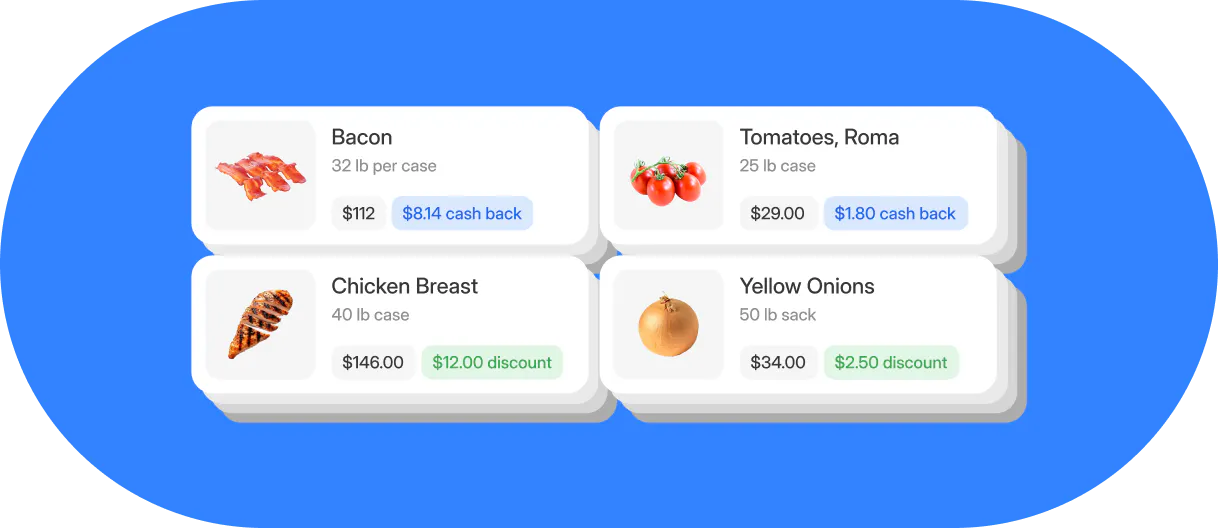
How GPO programs work in practice: connect your existing food distributors to the program, continue ordering as you normally do, and discounts or cash back are unlocked on qualifying items. Savings typically materialize over a 60-90 day window. Set realistic expectations before evaluating ROI.
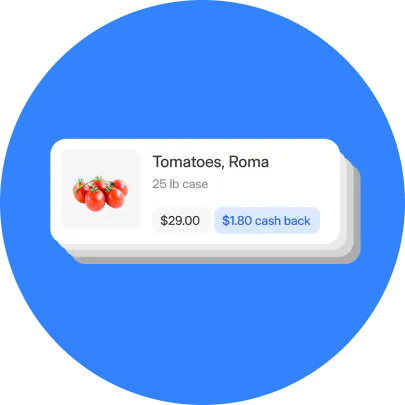
Otter's Inventory Savings product works on this model. Connect your existing food distributors, keep ordering as you normally do, and Otter unlocks distributor discounts and cash back on qualifying items. It also surfaces sourcing recommendations, equivalent-quality products at lower prices, so you're not just discounting existing spend but identifying smarter substitutions. Savings build over roughly 90 days, so evaluate results over a full quarter.
See how Otter's distributor program works for restaurants like yours.
What to evaluate when choosing a GPO or distributor program:
- Is the procurement fee clearly disclosed, and do your expected savings exceed it?
- Does the program require exclusivity, or can you keep your existing distributors?
- How transparent is the discount calculation? Can you see item-level savings on your invoices?
A practical step to calculate fit: run your top 30-50 SKUs through a market basket quote with your current distributor, then compare the cost of those same items after 90 days under a GPO or discount program. That gives you an apples-to-apples ROI picture before you commit to anything long-term.
Even at $15,000-$25,000 per month in food spend, GPO-level pricing can close a meaningful share of the chain-versus-independent pricing gap. Operators who don't explore this option are paying a solo-operator premium every single month.
For a deeper look at building supplier relationships and delivery reliability beyond the discount programs themselves, Otter's guide to restaurant supply chain management covers lead times, safety stock, and how to structure vendor relationships so a single disruption doesn't stall service.
The most common procurement breakdowns, and how to prevent them
Most procurement errors are process failures, not supplier failures. A written PO, a delivery count at receiving, and a three-way invoice match eliminate the vast majority of costly mistakes without requiring additional staff.
Delayed deliveries
Your Tuesday morning produce window is missed and you're short for the lunch rush. Prevention: maintain a 1-2 day buffer stock on high-velocity perishables. Agree on a make-good policy (replacement delivery, credit, or discount) in writing before the first missed window, not after. Reliable delivery schedules are something you negotiate upfront, not something you hope for.
Order inaccuracies
You ordered 20 cases of chicken thighs and received 14. Prevention: count every case before signing the delivery receipt. Issue a written shortage claim at the door. Unsigned receipts and verbal disputes are nearly impossible to resolve in your favor.
Price creep
The invoice line for tomato paste is 8% higher than last month with no notice. Prevention: spot-check your top 10 SKUs against the prior invoice at every delivery. Most distributors will apply a credit if you catch the discrepancy within 30 days and have documentation.
Invoice mismatches
The PO says $3.40/lb for ground beef; the invoice says $3.74/lb. Prevention: require your distributor to confirm the unit price in writing before shipping, then run a three-way match (PO, delivery receipt, invoice) before approving any payment.
Stockouts during peak service
You thought you had three cases of fry oil but find one during the dinner rush. Prevention: run a physical count of your top 20 critical items every Monday morning before placing weekly orders. Procurement discipline upstream prevents service failures, and the customer satisfaction hit that comes with them, downstream.
Over-ordering and food waste
Buying to a gut feel instead of actual weekly usage leads to spoilage and cash tied up in product you'll throw away. Prevention: calculate usage rates from your POS data and build par levels from that number. Reorder only what you'll use before the next delivery.
Ordering discipline is only half the fix, Otter's breakdown of what's actually causing your restaurant's food waste digs into the prep, menu, and storage habits that drive spoilage even when your purchase orders are exactly right.
What to do when a supplier fails you
Every operator eventually faces a supplier crisis: a no-show delivery, a sudden out-of-stock on your top protein, a mid-week price spike, or a supplier going out of business. Broader supply chain disruptions, a regional weather event or a recall, can hit several suppliers at once. The operators who recover cleanly are the ones who planned for it before it happened.
- Never single-source your top five most-used ingredients. Qualify and set up an account with at least one backup supplier for each critical category before you need them. Negotiate pricing, verify minimum order requirements, and place one small test order so you know the relationship works. A cold account is nearly impossible to activate in an emergency.
- Build substitution logic into your recipes in advance. If your salmon supplier is out, what does your kitchen pivot to? Documenting the alternative protein, the prep adjustment, and the menu language change turns a potential 86 situation into a manageable pivot.
- Set reorder triggers for critical items. When a core ingredient hits a specific par level (say, two days of remaining usage), place an order immediately, even if your normal order day is still two days out. Don't wait until you're at zero and paying rush rates.
- Know your nearest cash-and-carry and wholesalers (Restaurant Depot, Costco Business, local restaurant supply) for emergency buys. The per-unit cost will be higher than your negotiated distributor pricing, but it protects your menu and your guest experience when a planned delivery doesn't arrive.
- After any supplier failure, document it in writing: what failed, the timestamp, what it cost you in rush purchases, 86'd menu items, and extra labor. That number becomes your leverage at the next contract negotiation or quarterly supplier review.
- Treat backup supplier relationships like your primary ones. Place small, occasional orders to keep the account active and the relationship warm. A supplier who only hears from you in a crisis has less incentive to prioritize your emergency order.
Buying discipline is what separates profitable independents from ones that struggle
You cannot out-buy chains on volume. But you can out-process them.
A disciplined procurement system covering demand planning, written POs, three-way invoice matching, quarterly supplier reviews, and qualified backup suppliers closes more of the margin gap than any one-time price negotiation. The math makes this concrete: at a 4% net margin, $1,000 in monthly procurement savings is equivalent to generating $25,000 in additional revenue. That should change how seriously you treat this process.
The core habits, in plain language:
- Know your top 30-50 SKUs and their per-unit costs cold
- Run a market basket RFP against at least three distributors at least once a year
- Spot-check invoices against quoted prices every delivery cycle
- Qualify a backup supplier for every critical ingredient before you need one
- Set par levels from POS sales data and real sales forecasts, not gut feel
Tools like Otter's Inventory Savings and restaurant inventory management software in general accelerate these habits by surfacing cheaper sourcing alternatives and unlocking distributor discounts on your existing orders. Modern inventory management systems perform best when built on a process you already understand. The tool rewards discipline that already exists; it doesn't create it.
Set a 90-day evaluation window for any new procurement program or supplier relationship. Food cost percentages move slowly. Week-over-week variance is noise; month-over-month trends are the signal.
Every dollar you protect through smarter restaurant operations is a dollar you keep, not a dollar you have to earn back at the pass. Build the process once, refine it quarterly, and it pays you back every week your restaurant is open. For the accounting side of that payoff, from COGS to prime cost, Otter's guide to restaurant accounting walks through how these procurement numbers flow into your financial statements.
Ready to put a procurement process in place that actually protects your margins? See what Otter can do for your restaurant.
FAQ about restaurant procurement
What is restaurant procurement?
Restaurant procurement is the managed process of identifying what your restaurant needs, selecting and vetting suppliers, negotiating pricing, placing purchase orders, receiving and inspecting deliveries, and verifying invoices before payment. It covers food ingredients, beverages, paper goods, packaging, and cleaning supplies. A structured procurement process, as opposed to informal ad hoc ordering, is the primary way independent operators control food costs and protect their margins.
How do restaurants control procurement costs?
The most effective tactics: run a formal market basket RFP across your top 30-50 SKUs against at least three distributors once a year to find where you're overpaying; spot-check invoices against last month's prices every delivery cycle to catch price creep before it compounds; use your POS sales data to set par levels and avoid over-ordering; and explore GPO or distributor discount programs that give you access to group pricing without requiring chain-level volume. Savings from those programs typically realize over 60-90 days.
What is a procurement fee in a restaurant context?
A procurement fee is a charge some GPOs or purchasing platforms collect in exchange for access to negotiated supplier discounts. Before committing, evaluate the fee against the actual savings projected for your specific SKU mix and request an itemized market basket comparison. The fee is only justified if net savings (discounts minus the fee) are clearly positive and predictable. Transparent programs will show you item-level savings so you can verify the math yourself.
What causes the most costly errors in restaurant procurement?
The biggest drivers are placing verbal orders with no written purchase order, skipping the delivery count before signing the receipt, and not qualifying a backup supplier before a primary one fails. Most procurement errors are process failures, not supplier failures. A written PO, a physical count at receiving, and a three-way match of PO, delivery receipt, and invoice eliminate the majority of costly mistakes.
Can independent restaurants access the same pricing as chain restaurants?
Not directly, but GPO and distributor discount programs significantly close the gap. These programs pool purchasing volume across many independent operators to negotiate chain-scale pricing, then pass the discounts to members. You keep ordering through your existing distributors. The discount or cash back is applied at the program level. Savings typically take 60-90 days to appear on invoices, so evaluate any program over a full quarter rather than a single billing cycle.
What should I do when a supplier misses a delivery or goes out of stock?
First, document the failure in writing immediately: time, items missing, and the operational impact. Then activate your pre-qualified backup supplier for the affected items. After service, calculate what the failure actually cost you in rush purchases, 86'd menu items, and extra labor. That number becomes your leverage at the next contract negotiation or quarterly supplier review. The operators who recover fastest are the ones who set up backup supplier accounts before any crisis, not during one.
What is a market basket quote and how do I use it to negotiate?
A market basket quote is a price list you request from a distributor for a defined set of your most frequently ordered items, typically your top 30-50 SKUs. Send the same standardized spreadsheet to at least three distributors simultaneously and ask for their best delivered price per unit, minimum order requirement, and standard lead time. Comparing responses shows you exactly where you're overpaying and gives you competitive bids to bring back to your current supplier when renegotiating.
When does a distributor discount program make sense for a small restaurant?
When manual invoice checking, price tracking, and reorder decisions are consuming multiple hours per week and errors are still slipping through, a structured tool pays for itself quickly. For most independents, the lowest-friction entry point is a distributor discount or GPO program that layers onto your existing ordering workflow. You don't change how or where you order; you just start capturing savings you're currently leaving on the table. Evaluate over 90 days using your monthly food cost percentage as the benchmark.

Lock in smarter procurement with Otter