
Table of contents
- What Is Restaurant Operations Management?
- Back-of-House Restaurant Operations
- Front-of-House Restaurant Operations
- Restaurant Operations Metrics Operators Rely On
- How to Standardize Operations Across Multiple Locations
- How Otter Streamlines Restaurant Operations
- Frequently Asked Questions About Restaurant Operations
Two restaurants, same neighborhood, same concept, similar menus. One thrives while the other folds. What's the difference? In most cases, it has nothing to do with the food.
Restaurant owners who consistently profit have one thing in common: they run tight operations. Restaurant operations management is the framework of processes, procedures, and systems that govern how a restaurant runs day to day, from the kitchen to the counter.
When that framework breaks down, you feel it everywhere. In the back of house, it shows up as an increase in food cost and inconsistent prep. In the front of house, it surfaces as order errors and lapsed regulars.
This guide covers the full picture: BOH and FOH fundamentals, eight strategies to improve daily performance, the key metrics every operator should track, how to standardize across multiple locations, and how technology fits into a modern operation. While it’s been specifically created for fast-casual and QSR operators, including those managing multiple locations or franchise concepts, it’s of use to restaurant owners everywhere.
If you're new to the category, these quick service restaurant examples show what best-in-class operations look like.
What Is Restaurant Operations Management?
Restaurant operations management is the framework of processes, procedures, and systems that govern a restaurant's day-to-day activities. This ranges from inventory and staffing to service delivery and financial oversight. Done well, quality is consistent, costs are controlled, staff is productive, and the business remains compliant. It also gives operators visibility into where they’re making money and where they’re losing it.
The goal is consistency. A well-run restaurant doesn't deliver a reliable experience by chance. Processes should be designed to produce repeated outcomes across every shift and every team member.
For fast-casual and QSR concepts, the stakes are higher. Thin margins, high order volumes, and the growing complexity of delivery and digital channels leave little room for improvisation. When systems hold, operation scales. When they don't, every problem is amplified.
Restaurant operations management breaks into two core areas:
- Back of house (BOH): inventory, food cost, kitchen workflow, prep, health, food safety, and compliance
- Front of house (FOH): guest experience, order management across channels, and labor scheduling
The sections below break down each area in detail, covering the standards, workflows, and oversight each one requires.
Back-of-House Restaurant Operations
The back of house is a restaurant's engine room. It determines food cost, builds food quality standards, and protects the entire business through safety compliance.
Inventory Management and Food Cost Management
Food cost is one of the largest controllable expenses in any restaurant. According to VantaInsights, which draws on U.S. Census Bureau and Bureau of Labor Statistics data, the average restaurant food cost percentage falls between 28% and 35% of revenue, though that range shifts depending on format, menu complexity, and supplier pricing.
Keeping food cost in check requires tracking what you use, what you waste, and where the gaps between the two appear.
Core inventory practices:
- Track stock and reconcile regularly: Conduct daily or weekly counts and compare purchases against sales to catch discrepancies before they become significant losses.
- Set par levels: Minimum stock thresholds for each ingredient prevent both over-ordering and running short mid-service.
- Log waste by category: Tracking spoilage, over-portioning, and prep errors systematically helps identify patterns and fix them at the source.
- Stabilize supplier pricing: Where possible, negotiate pricing agreements to reduce exposure to ingredient cost fluctuations.
Kitchen Workflow and Food Prep
A well-organized kitchen reduces ticket times, minimizes errors, and keeps service moving during peak hours.
Practices that support consistent kitchen performance:
- Prep schedules tied to projected volume: Plan prep around historical sales data, not guesswork, to avoid both under-preparation and excess waste.
- Clear station assignments: Every kitchen staff member should know their role before service begins.
- Standardized recipes and portions: Document preparation steps and portion sizes and follow them consistently, regardless of who is cooking.
- Logical ticket flow: Orders should move through the kitchen in a trackable sequence, whether through a kitchen display system or printed tickets.
Health, Safety, and Compliance
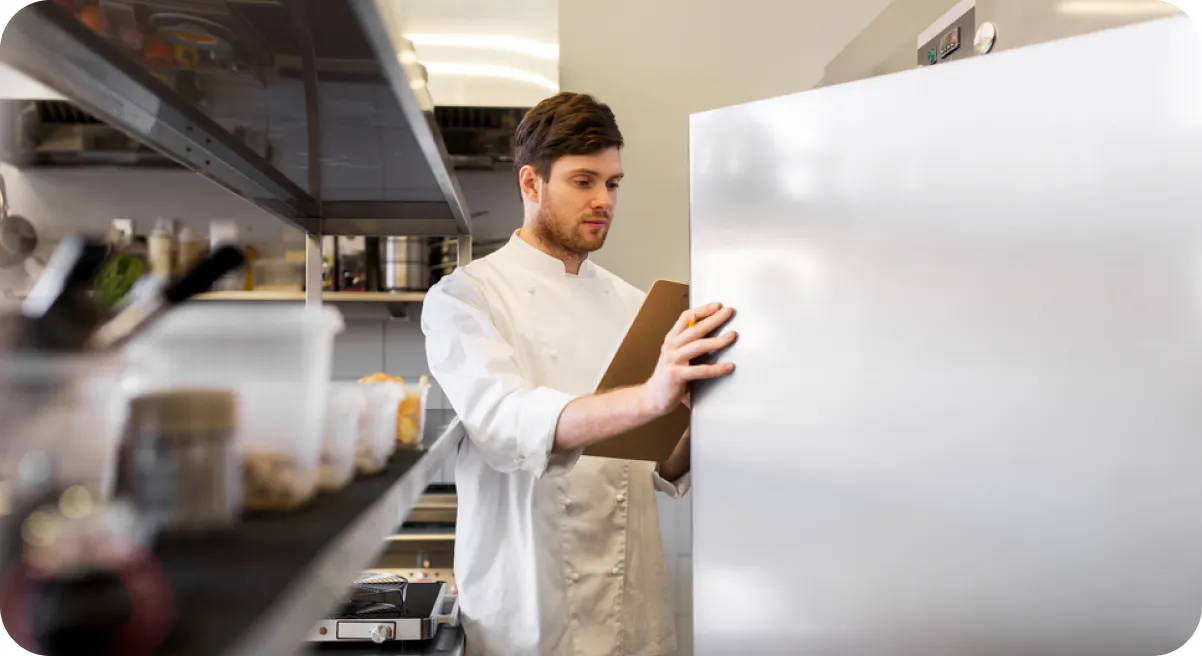
A failed inspection or foodborne illness incident can close a location and damage a brand far beyond the immediate event. Compliance requires daily discipline, not inspection-day scrambling.
BOH compliance essentials:
- Food handling and storage: Temperature control, FIFO rotation, and allergen separation should be embedded in daily routine.
- Digital checklists and automated logging: Replacing paper logs with digital tools reduces human error, creates an auditable record, and makes inspection prep significantly less stressful.
- Staff certifications: Food handler and food manager certifications should be tracked and kept current for all relevant team members.
- Sanitation schedules: Cleaning tasks should be assigned, logged, and verified consistently throughout each shift.
Front-of-House Restaurant Operations
The front of house shapes guest perception and drives revenue. Every BOH system either supports or undermines what plays out here.
Guest Experience and Service Flow
In fast-casual and QSR formats, guest experience is built on speed, accuracy, and consistent service standards. When BOH runs well, FOH can focus on delivery. When it doesn't, it’s the guest that feels it first.
SOPs should cover every service touchpoint, from arrival and ordering to payment and pickup.
Practices that support a strong service flow:
- Define the guest journey: Set a clear standard for each touchpoint and make sure every team member knows it.
- Train to the standard, not just the task: Staff who understand the why behind each step make better decisions when things go off-script.
- Reduce friction at the counter: Signage, menu layout, and ordering flow should guide guests naturally, especially during peak hours.
- Act on guest feedback: Reviews and direct comments should feed back into operations on a regular cadence.
Order Management Across Channels
Managing orders across dine-in, takeout, and multiple delivery platforms creates real operational drag. Without a unified system, tablets multiply, the kitchen loses visibility, and errors increase — a problem operators often call "tablet chaos."
A strong order management setup:
- Consolidates all channels into one screen: A single view across every platform keeps the kitchen from toggling between devices and missing orders.
- Syncs with the kitchen display system: Orders should reach the kitchen immediately and in sequence, regardless of channel.
- Flags exceptions in real time: Issues should surface before they reach the guest, not after.
- Maintains accurate wait time estimates: Guests who order digitally expect transparency on timing.
Staff Scheduling and Labor Efficiency
Labor is consistently one of the largest expenses in the operation. According to the National Restaurant Association's 2025 Restaurant Operations Data Abstract, labor costs among limited-service operators represented a median of 31.7% of sales in 2024. Scheduling decisions made days in advance play out in real dollars on the floor.
Scheduling practices that support labor efficiency:
- Schedule to projected volume: Use historical sales data to build schedules around expected demand, not habit.
- Track labor as a percentage of sales: This gives you a comparable metric across periods and locations, rather than a raw dollar figure that can mislead.
- Cross-train staff across roles: Flexibility in coverage reduces scrambling when someone calls out.
- Review scheduled vs. actual hours regularly: Patterns like chronic overstaffing or understaffing during peaks compound quickly if left unaddressed.
Restaurant Operations Metrics Operators Rely On
Tracking the right metrics turns daily activity into actionable intelligence. The numbers below give operators a clear picture of where the business stands financially, how efficiently it runs, and how guests experience it. Pulling these into a unified analytics platform, rather than scattered reports, is what allows operators to spot trends in real time instead of discovering problems at month-end.
Financial Metrics
Metric | What It Measures | Benchmark |
Food Cost Percentage | Cost of ingredients as a percentage of revenue | Typically 28–35% industry-wide; your target shifts based on concept, menu item mix, and location |
Labor Cost Percentage | Salaries, wages, and benefits as a percentage of sales | Often in the low-30% range for limited-service operators, per NRA 2025 data; not a universal target |
Prime Cost | Food cost + labor cost combined | 55–65% is a healthy range; NRA data places limited-service operators at a median closer to 65% |
Net Profit Margin | What remains after all expenses | Varies significantly by format, market, and cost structure |
Revenue Per Available Seat Hour (RevPASH) | Revenue generated per seat per hour | Helps identify how effectively seating capacity is being used across different dayparts; benchmark against your own historical data |
Food cost and labor cost are the two largest controllable expenses in the operation. Together, they form prime cost — the single most important financial metric for fast-casual and QSR operators to monitor consistently.
Operational Efficiency Metrics
Metric | What It Measures | Why It Matters |
Ticket Time | Average time from order placement to fulfillment | In high-volume formats, even small increases compound across hundreds of daily orders |
Order Accuracy Rate | Percentage of orders fulfilled without errors | Errors cost money twice: in remakes and in lost guest trust |
Table or Order Turnover Rate | How quickly guests or orders cycle through | Directly affects revenue capacity during peak hours |
Waste Percentage | Food waste as a percentage of total food cost | Tracks where food cost variance originates |
Actual vs. Theoretical Food Cost | Variance between what you spent and what you should have spent | Surfaces shrinkage, over-portioning, and receiving discrepancies |
Guest and Retention Metrics
- Customer Satisfaction Score (CSAT): Measures guest satisfaction at a specific touchpoint, useful for pinpointing where the experience breaks down.
- Net Promoter Score (NPS): Tracks how likely guests are to recommend the restaurant, a reliable indicator of overall experience quality.
- Repeat Visit Rate: The percentage of guests who return within a defined period, one of the clearest signals of operational consistency.
- Online Review Rating: Aggregate score across review platforms, often the first impression a new guest has of the restaurant business.
- Loyalty Program Engagement: Active participation in rewards programs, which reflects both guest satisfaction and the strength of your retention strategy.
Guest metrics are often the last to be tracked and the first to signal a problem. A declining NPS or repeat visit rate rarely appears overnight. It reflects an accumulation of small operational failures that went unaddressed. Tracking these consistently gives operators early warning before the impact shows up in revenue.
How to Standardize Operations Across Multiple Locations
Scaling a restaurant concept is an operations challenge as much as a growth one. Additional locations add complexity, distance, and the risk that quality drifts the further you get from your original unit. Growing brands are increasingly reliant on a unified tech stack, one platform covering in-store, mobile, and third-party channels.
Start with documented SOPs across every function
Every process that drives quality in your best-performing location should be documented and replicable across every unit. That includes:
- Opening and closing checklists
- Food prep guidelines
- Service standards
- Training playbooks
Digital SOPs and training modules make this easier, ensuring every location follows the same standard regardless of tenure or turnover.
Centralize menu management
When menus are managed location by location, inconsistencies multiply. Prices drift, items appear on some platforms but not others, and updates take longer to roll out. A centralized menu management tool pushes updates to all locations and channels simultaneously from a single source of truth. This enables every guest to see the same offering regardless of how or where they order.
Use unified reporting to monitor performance across units
Multi-location operators need a single analytics view that surfaces unit-level performance across the portfolio in real time, not at month-end. Comparing food cost, labor, ticket times, and sales by location makes it possible to identify outliers quickly: the units running above food cost targets, the locations where order accuracy is slipping, the shifts where labor spend spikes without a corresponding sales lift.
Standardize your tech stack
Consistency in technology is as important as consistency in process. Running the same POS, order management, and reporting tools across every location eliminates data fragmentation. It also simplifies new hire training and provides operators with an apples-to-apples view of performance metrics across the portfolio.
Build accountability into the structure
Every location needs a designated owner accountable for operational standards. For most growing brands, that's a regional manager or area director. Regular audits, whether internal or third-party, keep locations aligned and catch gaps early. When an audit surfaces an issue, it needs an owner and a deadline.
How Otter Streamlines Restaurant Operations
Otter is an all-in-one platform built for fast-casual and QSR operators who are done managing their business across a dozen disconnected tools.
Order Management: All Orders, One Screen
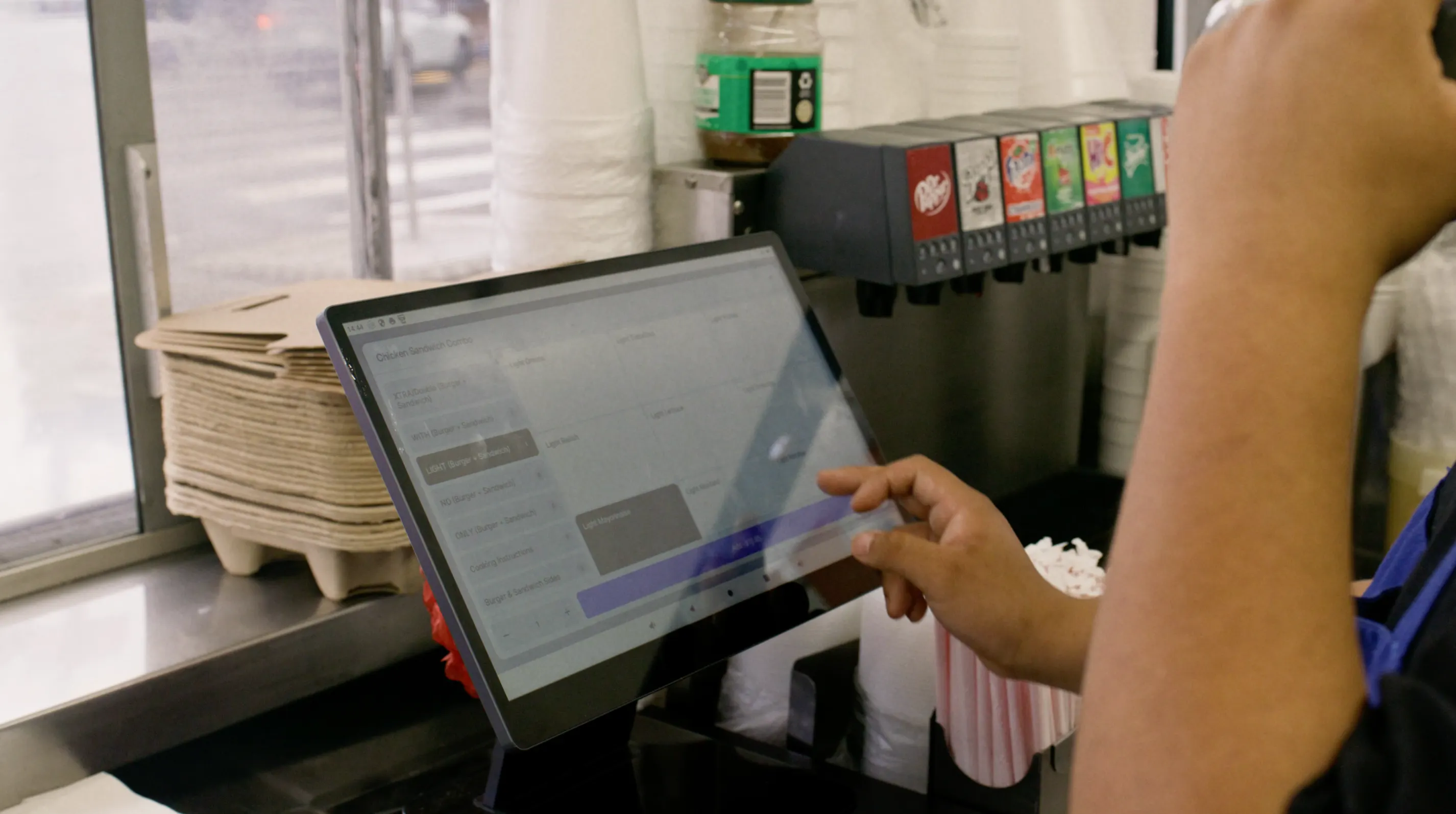
Consolidate every order from every channel into a single view with Otter's order management platform. Dine-in, takeout, and third-party delivery flow together, eliminating tablet chaos and giving the kitchen accurate visibility into incoming demand. Fewer missed orders, fewer errors, faster ticket times. Front-of-house tools count too — knowing how to use a kiosk machine properly keeps the counter moving as fast as the kitchen.
Real-Time Analytics
Otter's analytics platform gives operators access to performance data across every location in real time. Track sales by channel and labor against targets, and compare unit performance across the portfolio without waiting for month-end reports.
Centralized Menu Management
With Otter's menu management tool, operators automate menu updates once and push changes across every platform and location simultaneously. One change, everywhere, instantly.
Kitchen Display System
Otter's KDS replaces printed tickets with a clear digital order flow that keeps the kitchen organized during peak hours. Orders route automatically, priority is visible at a glance, and ticket times are tracked so operators can identify and address bottlenecks quickly.
Built for Multiple Locations
Otter is built for operators running more than one unit. Multi-location reporting, centralized menu control, and a consistent tech stack across every location — anchored by a restaurant POS system built for scale — give growing brands the visibility and standardization they need to grow without losing quality.
Transparent Pricing, No Hidden Fees
Otter operates on straightforward pricing with no hidden fees, so operators know exactly what they're paying and what they're getting.
See It for Yourself
The best way to understand what Otter can do for your operation is to see it in action. Book a demo and find out how operators are consolidating their tech stack, reducing errors, and gaining real-time visibility across their business.

Book a demo with Otter
It’s time to enhance your operations with Otter’s all-in-one restaurant platform. Book time with our sales team to learn more.
Frequently Asked Questions About Restaurant Operations
What is restaurant operations management?
Restaurant operations management is the framework of processes, procedures, and systems that govern a restaurant's day-to-day activities, from inventory and staffing to service delivery and financial oversight. The goal is quality consistency, cost control, team productivity, compliance, and the visibility to make decisions based on data rather than gut feel.
What are the metrics operators focus on most?
On the financial side — the numbers any restaurant accounting setup should surface — food cost percentage, labor cost percentage, and prime cost. On the operational side: ticket time and order accuracy. Guest metrics like repeat visit rate and NPS round out the picture and often provide early warning that something in the operation is slipping before it shows up in revenue.
What is the difference between BOH and FOH operations?
Back-of-house covers inventory, food prep, cost control, and health and safety compliance. Front-of-house covers guest dining experience, order management, and staff scheduling. The two are interdependent: BOH consistency is what makes FOH performance possible.
How do multi-location restaurant operators maintain consistency?
Consistency across locations comes from documented SOPs, centralized menu management, unified reporting, and a standardized tech stack. Operators who manage each location independently tend to see quality and cost drift over time. Consolidating onto a single platform covering order management, analytics, and menu management is one of the most reliable ways to maintain standards at scale.
What technology do fast-casual and QSR operators need?
The core tech stack for most fast-casual and QSR operators includes a POS system (point-of-sale), an order management platform that consolidates all channels, a kitchen display system, menu management tools, and an analytics platform. Many operators are consolidating these onto a single platform to reduce data fragmentation and simplify daily operations across locations, though the right setup will vary by concept and scale.
How can restaurants reduce food cost?
The highest-impact strategies are conducting regular inventory counts — a daily restaurant inventory routine makes this stick — tracking actual versus theoretical food cost to identify variance, standardizing recipes and portion sizes, and reducing waste through better food preparation planning. Monitoring food cost on a weekly cadence gives operators time to course-correct before losses compound.
How can restaurants improve labor efficiency?
The three main levers are scheduling to projected volume using historical sales data, cross-training staff across roles to build flexibility into coverage, and tracking labor as a percentage of sales rather than as a raw dollar figure. Reviewing scheduled hours against actual hours worked regularly surfaces patterns that are easy to miss shift by shift. Large group orders complicate that math, so if you take event business, a catering ordering system helps you see that demand coming.

Book a demo to see how Otter can streamline your restaurant operations