Table of contents
- What does QSR mean?
- QSR vs fast casual vs full service
- Quick service restaurant examples: 7 QSR brands and what each does well
- Why operators choose the QSR model
- What running a QSR actually demands
- Pick one thing to be great at, then build the counter around it
- Frequently asked questions about QSR meaning
QSR stands for quick service restaurant: a restaurant built around speed, a limited standardized menu, and counter, drive-thru, kiosk, or digital ordering instead of table service. If you have heard the acronym in an industry article or a job listing and were not sure what it covered, that is the whole definition.
The reason the category matters more every year is where its orders go. Nearly 75% of all restaurant traffic now happens off-premises, according to the National Restaurant Association. Quick service is the format that was designed for exactly that, decades before delivery apps existed. This guide covers what defines a QSR, how the category differs from the ones next to it, seven examples worth studying, and what the model actually demands from an operator.
Key insights
- QSR stands for quick service restaurant, a format defined by speed, a limited standardized menu, and service without a server.
- The line between QSR and fast casual is preparation, not price: fast casual assembles food to order, quick service largely dispenses what is already prepped.
- QSR is the most replicable restaurant format, which is why it dominates franchising and multi-unit growth.
- The operational challenge has shifted from counter throughput alone to handling counter, drive-thru, kiosk, app, and delivery orders in one queue without slowing any of them down.
What does QSR mean?
QSR means quick service restaurant. It is the industry term for what most people call fast food, and it covers any restaurant where the guest orders without a server, the menu is limited and standardized, and the operation is built to move a high volume of low-check orders quickly.
You will also see the same segment called limited-service restaurant, particularly in industry research and government statistics, where it is grouped with fast casual. In everyday operator conversation, QSR and fast food are used interchangeably.
The five traits that define a QSR
- Service without a server. Guests order at a counter, a drive-thru window, a kiosk, or in an app. There is minimal or no table service, which is the single biggest labor difference from other formats.
- A limited, standardized menu. A core set of items that can be prepared fast and identically at every location.
- Speed as the operating metric. The whole design of the kitchen, the menu, and the counter exists to shorten the time between order and handoff.
- Accessible pricing. Checks sit at the low end of the restaurant market, below fast casual and well below full service.
- Consistency across locations. Standardized recipes, procedures, and training so a guest gets the same thing in two different cities.
QSR vs fast casual vs full service
The distinctions get blurred constantly, including by people in the industry. The clearest way to separate them is by how food gets made and who brings it to you.
| Quick service (QSR) | Fast casual | Midscale and family dining | Full service |
|---|---|---|---|---|
Ordering | Counter, drive-thru, kiosk, app | Counter or kiosk | Table service or hybrid | Table service |
Food preparation | Largely pre-prepped, assembled fast | Made to order from fresher ingredients | Cooked to order | Cooked to order, broader menu |
Typical check | Lowest | Low to moderate | Moderate | Moderate to high |
Menu size | Tight | Moderate, often customizable | Broad | Broad |
Labor model | Counter crew | Counter crew, more prep | Servers or hybrid | Trained servers, bar staff |
Alcohol | Rare | Sometimes | Sometimes | Usually |
The QSR-versus-fast-casual line is the one people get wrong most often, and it is not about price. A fast casual concept charges more because it assembles your food after you order it, from ingredients prepped that morning. A quick service concept charges less because most of the work happened before you walked in. Both take your order at a counter.
For the segment one step up, Otter's guide to midscale and family dining restaurants covers where the table-service formats begin.
Quick service restaurant examples: 7 QSR brands and what each does well
These are the QSR examples most often used as reference points, and more usefully, the specific thing each one is unusually good at.
1. McDonald's (burgers, global)
The world's largest quick service brand, operating in more than 100 countries, mostly through franchisees.
What it does well: operational consistency at a scale nobody else has matched, paired with a genuine appetite for technology. Digital menu boards, app ordering, and drive-thru automation all rolled out across a franchise base that is famously hard to change in unison.
The transferable lesson: consistency at scale is a systems problem, not a training problem. You get it from standardized processes and the technology to enforce them, not from asking staff to try harder.
2. Chick-fil-A (chicken, U.S.)
The largest chicken-focused QSR in the United States, with a franchise model unusual for limiting most operators to a single location.
What it does well: service culture inside a quick service format, which is supposed to be impossible. A deliberately narrow menu frees staff attention for hospitality, and the single-location operator model keeps owners on the floor.
The transferable lesson: a smaller menu is not just a cost decision. It buys back attention that can go into service, and service is what lets a counter-service brand charge more than its neighbors.
3. Starbucks (coffee, global)
Tens of thousands of stores worldwide, blending quick service throughput with cafe atmosphere through a mix of company-owned and licensed locations.
What it does well: mobile ordering at scale, earlier and more completely than the rest of the category, plus menu customization that would break most kitchens.
The transferable lesson: order-ahead changes your operation before it changes your revenue. Handling a queue of pre-placed orders alongside a walk-in line is a different job, and it needs to be designed rather than absorbed.
4. Subway (sandwiches, global)
One of the largest chains in the world by unit count, with a franchise model built for locations other brands cannot use: gas stations, airports, campuses, hospitals.
What it does well: operational simplicity that travels. An assembly-line build with no fryer and a small footprint fits almost anywhere, and the lower entry cost opens franchising to first-time owners.
The transferable lesson: a format that fits unusual real estate finds growth where competitors cannot follow. If you want the numbers behind that route, Otter's breakdown of what it costs to open a franchise restaurant covers the line items.
5. In-N-Out Burger (burgers, regional U.S.)
Family-owned, company-operated, and deliberately confined to the western United States after decades of opportunity to expand.
What it does well: quality control through vertical integration. It runs its own distribution, keeps the menu tiny, and pays above the category average, which shows up in retention and consistency.
The transferable lesson: slower growth is a strategy, not a failure. Per-location performance and brand loyalty can beat unit count, and franchising is not the only path.
6. Panda Express (Asian, U.S.)
The largest Asian quick service chain in the United States, mostly company-owned, which is what makes its consistency possible.
What it does well: wok cooking inside quick service time constraints. The kitchen is designed so genuinely made-to-order food comes out at counter-service speed, and signature items created for the American market became category-defining.
The transferable lesson: an operational constraint can be designed around rather than accepted. If the format seems to rule out your food, the kitchen layout is usually the variable.
7. Taco Bell (Mexican-inspired, global)
Thousands of locations worldwide, built on menu experimentation and a late-night daypart most of the category ignores.
What it does well: limited-time offers as a marketing engine, brand collaborations, and capturing revenue in hours when competitors are closed or empty.
The transferable lesson: dayparts are the cheapest growth available. Filling hours you already pay rent on beats adding locations.
QSR examples at a glance
Brand | Category | Ownership model | Standout strength |
|---|---|---|---|
McDonald's | Burgers | Mostly franchised | Consistency and technology at global scale |
Chick-fil-A | Chicken | Franchised, single-unit operators | Service culture in a counter format |
Starbucks | Coffee | Company-owned and licensed | Mobile ordering and customization |
Subway | Sandwiches | Franchised | Fits non-traditional real estate |
In-N-Out | Burgers | Company-owned only | Vertical integration and quality control |
Panda Express | Asian | Mostly company-owned | Made-to-order cooking at QSR speed |
Taco Bell | Mexican-inspired | Mostly franchised | Menu innovation and late-night daypart |
The pattern across all seven: each one picked a single thing to be unusually good at and built the whole operation around it. None of them is best at everything, and none of them tries to be.
Why operators choose the QSR model
Quick service is the most replicable format in the restaurant industry, and that is the real reason it dominates franchising.
Lower operational complexity
No servers, no floor plan, no coursing, no wine program. A tighter menu means shorter training, faster onboarding, and a manager who can be productive in weeks rather than months. Fewer moving parts is the whole proposition.
More predictable food costs
Standardized portions across a limited menu make food cost forecastable in a way a broad scratch menu never is. That predictability is what makes the unit economics legible enough to franchise.
Easier to replicate
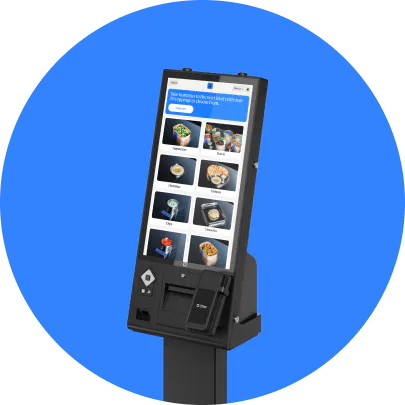
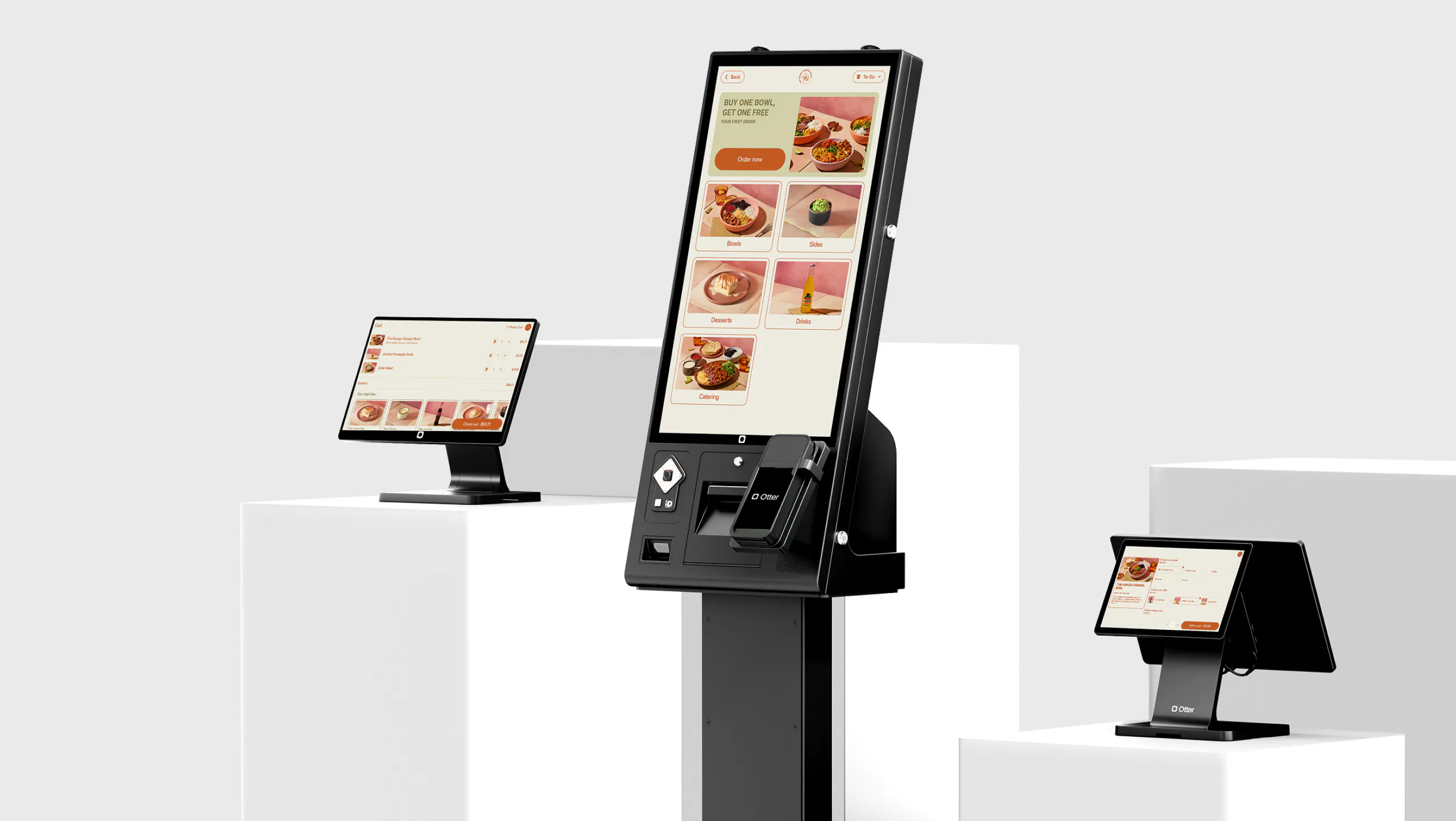
Because the operation is uniform, the second location is genuinely easier than the first, and the tenth is easier than the second. Kiosks reinforce that: they take the ordering step off your staff entirely, which is why they spread fastest in exactly this segment. Otter's roundup of self-ordering kiosk systems covers what to look for.
"With the kiosk, we think it helps us because we have a smaller team. Customers can order themselves, and our crew can make the food right away, so they get the food faster. And customers can take their time to look at the pictures and add-ons. What they see, they want to try more."
Owner and founder, Bangkok BBQ Bowl, West Los Angeles

What running a QSR actually demands
The category's reputation for simplicity is a little out of date. The kitchen is still simple. The order flow is not.
Speed at the counter
Everything else is downstream of this. The point of sale has to handle modifiers and payment without adding steps, because seconds compound across hundreds of transactions a day. A restaurant point of sale built for counter throughput is a different product from one built for table management, and using the wrong one is a recurring and expensive mistake in this segment.
Self-service kiosks attack the same constraint from the other side, moving the ordering step to the guest and freeing crew for production. If you are comparing options, Otter's guide to POS systems for quick service restaurants breaks down what matters at this scale.
Consolidating orders from every channel
This is the part that has genuinely changed. A modern QSR takes orders from the counter, the drive-thru, kiosks, its own app or website, and three or four delivery platforms. If those arrive on separate screens, someone is transcribing between them during the rush, which is where the errors come from.
Otter Order Manager puts orders from every delivery platform into one chronological queue with automatic printing to the kitchen. Commission-free direct online ordering is the other half of that: moving even a modest share of volume off marketplace commissions matters more at a low check than at a high one, because the commission is a bigger slice of a smaller ticket.
Menus that stay in sync
At five channels, a single price change is five edits, and one of them gets missed. At two locations it is ten. Otter Menu Management makes the change once and pushes it everywhere, and 86s an item across every channel at the same time instead of one platform at a time.
Knowing which channel is actually working
Most quick service operators can tell you their daily total and cannot tell you what the drive-thru did versus the app. Otter Analytics reports by channel, product mix, and hour, which is the only way to see that a channel is quietly underperforming before a quarter goes by. For where the category is heading next, Otter's overview of QSR trends covers what operators are investing in.
Pick one thing to be great at, then build the counter around it
The seven brands above have almost nothing in common except this: each one chose a single strength and organized everything else in service of it. McDonald's chose consistency. Chick-fil-A chose service. In-N-Out chose quality over growth. Taco Bell chose novelty.
What none of them did was try to be good at all of it. If you are opening or running a quick service concept, the useful question is not how to copy McDonald's operations or Chick-fil-A's culture. It is which single advantage you can execute better than the restaurant across the street, and then whether your counter, your menu, and your systems are actually built to deliver it.
Frequently asked questions about QSR meaning
What does QSR stand for?
QSR stands for quick service restaurant. It is the industry term for the segment most people call fast food: restaurants where guests order at a counter, drive-thru, kiosk, or app rather than from a server, the menu is limited and standardized, and the operation is designed for speed and a low average check.
What is an example of a QSR?
McDonald's is the most widely recognized example. Others commonly cited include Chick-fil-A, Starbucks, Subway, Taco Bell, In-N-Out Burger, and Panda Express. What qualifies them is the service model rather than the food: no table service, a limited standardized menu, and an operation built around throughput.
Is Chick-fil-A a QSR?
Yes. Chick-fil-A is a quick service restaurant. Guests order at a counter or drive-thru rather than from a server, the menu is deliberately limited, and the operation is built for speed. It is often described as premium within the category because of its service standards, but the format is quick service, not fast casual.
What is the difference between QSR and fast casual?
Preparation, not price. Fast casual assembles food to order from fresher ingredients and charges more for it, while quick service largely serves food that was prepped before the guest arrived. Both use counter ordering with no server, which is why the two get confused. Chipotle is fast casual; Taco Bell is quick service.
Is a QSR the same as a fast food restaurant?
In practice, yes. QSR is the term the industry, analysts, and trade press use, while fast food is the term guests use. Some operators prefer QSR because fast food carries associations they would rather avoid, but both describe the same segment.
What is a limited-service restaurant?
Limited-service restaurant is a broader classification used in industry research and government statistics that covers both quick service and fast casual: any restaurant where guests order without a server. If you see the term in a report, it usually includes concepts that would call themselves fast casual as well as traditional fast food.
What are QSR brands?
QSR brands are the chains operating in the quick service segment, including McDonald's, Chick-fil-A, Starbucks, Subway, Taco Bell, Wendy's, Burger King, KFC, Domino's, Dunkin', and Panda Express. Many are franchised, which is a direct consequence of the format: a standardized limited menu with no table service is the easiest kind of restaurant to replicate consistently across owners and markets.
Why is the QSR model so common in franchising?
Because it is the most replicable restaurant format. No servers, a tight menu, standardized portions, and uniform procedures mean lower operational complexity, more predictable food costs, and shorter training. Those three things make unit economics legible enough for a franchisee to underwrite, which is why quick service dominates restaurant franchising worldwide.

Speed up your counter with Otter POS