Table of contents
- 1. Optimize your platform listings like a search result, not a menu
- 2. Consolidate tablets and manage multi-brand / virtual brands from one screen
- 3. Do the commission math before you scale third-party volume
- 4. Engineer your menu for delivery, not the dining room
- 5. Use limited-time offers to spike orders during slow dayparts
- 6. Build a loyalty program that works without a custom app
- 7. Bundle and upsell at the right moment in the order flow
- 8. Build social proof that converts on delivery platforms and off them
- Every direct order you capture is an asset platforms can never take back
- Frequently Asked Questions About Increasing Restaurant Delivery Sales
Delivery platforms promise growth. What they actually deliver, for ghost kitchens and virtual brands running on thin profit margins with no dining room to fall back on, is a 15–30% commission that turns every incremental order into a math problem you're slowly losing.
The U.S. online food delivery market hit $34.88 billion in 2025 and is projected to reach $75.36 billion by 2034, according to IMARC Group, and that growth is real. But capturing a profitable share of it requires a different playbook than simply "be on more apps."
These are the specific tactics that move delivery order volume, protect margin, and build the kind of customer base that food delivery services can't take away from you.
Key Insights
- Platform rank on DoorDash and Uber Eats is driven by prep time accuracy, review velocity, and acceptance rate. Ghost kitchen operators who optimize for these signals outperform those who treat their listing like a static menu
- Tablet consolidation, routing every brand and every platform into a single order stream, is one of the highest-leverage operational moves available to multi-brand operators. Missed notifications and delayed tickets directly depress ratings and algorithmic placement
- Scaling third-party delivery volume without a direct online ordering system is a margin trap: every incremental order at 25–30% commission makes growth less profitable, not more, and the customer relationship stays with the platform
- Repeat customers are the highest-ROI growth lever in delivery. A simple SMS marketing reorder prompt 5 to 7 days after a first order costs almost nothing and consistently outperforms promotional spend when you have no in-person touchpoint
2. Consolidate tablets and manage multi-brand / virtual brands from one screen
What it is
Running multiple virtual brands simultaneously is a proven way to grow delivery revenue from a single kitchen. But it commonly means two to five separate tablets, all pinging at once during a Friday dinner rush.
Why tablet consolidation matters
Missed order notifications, delayed acknowledgment, and manual input errors all trigger lower platform ratings. Lower ratings mean worse algorithmic placement. Worse placement means fewer orders. The cost of tablet sprawl isn't just one bad night. It's a structural drag on every brand you run.
The operational fix and the revenue fix are the same thing
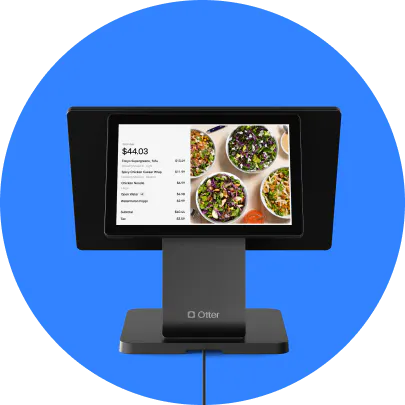
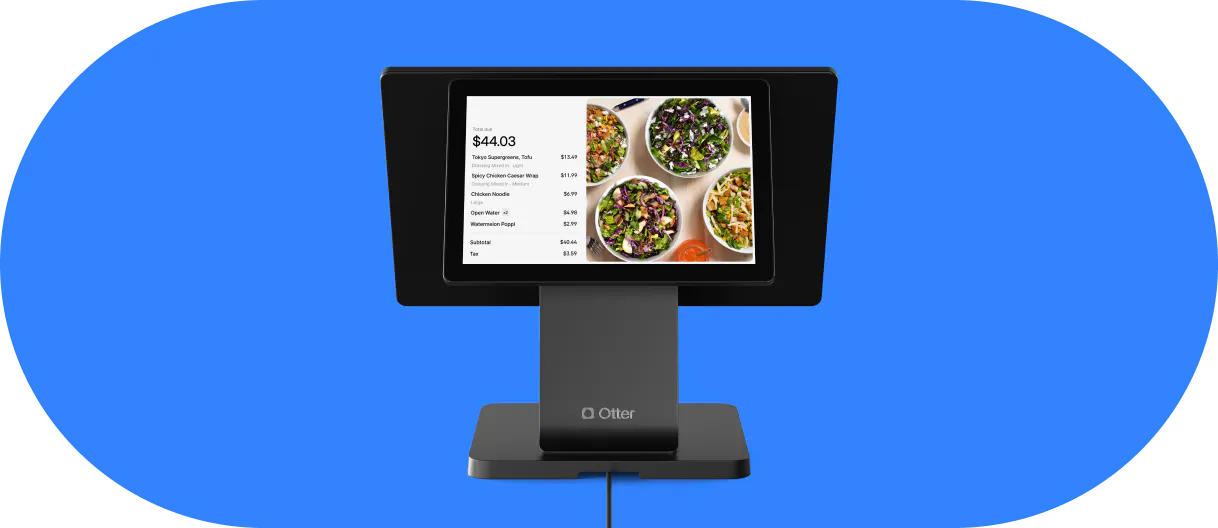
The fix: consolidate tablets into a single order stream that prints automatically to the kitchen line. Otter POS routes every brand and every platform into one screen, so your team sees all orders in one place without switching between devices.
Scott, co-owner of Bred Hot Chicken, described what that consolidation did for his team: "With Otter, having one dashboard to manage all the third-party platforms, to allow them to be integrated into one system and have that same control within just one platform, has been a tremendous help, not only for myself but also for my team members to control what's in and out of stock on the fly."
Capacity-aware brand management:
- During slow mid-afternoon dayparts, push the brand with the highest margin and simplest prep
- During peak hours, throttle or pause a complex brand before ticket times blow out and ratings drop
- Track each brand's platform rating separately. A single underperforming concept can pull down your overall operator score on some platforms
Missed and delayed orders compound. Each bad rating lowers rank, which reduces future order volume. Tablet consolidation isn't a convenience upgrade. It's a revenue decision.
See how ghost kitchens use Otter POS to manage every brand and every platform from one screen.
3. Do the commission math before you scale third-party volume
What it is
Third-party delivery service commissions typically run 15–30% per order. For a ghost kitchen with no dine-in revenue to offset it, that rate defines whether growth is profitable or not.
The math
A $20 order at 28% commission nets $14.40 before food cost, labor, and packaging. Add a 30% food cost ($6.00) and you're at $8.40 gross contribution before any other line item. Scaling volume on platforms alone can mean growing revenue while shrinking total profit.
Direct ordering changes the unit economics
A direct ordering channel typically costs 2–5% in payment processing fees versus 20–30% on platforms. On 100 orders per week at a $20 average order value (AOV), that's a $300–$500 weekly margin difference on identical volume, roughly $15,000–$26,000 per year on the same sales.
The operator-smart model:
- Use third-party delivery platforms for discovery and customer acquisition. They're exceptional at it
- Use a direct channel to retain repeat buyers. That's where delivery volume becomes delivery profit
Platforms are legitimate channels. The mistake is treating them as the only channel, which creates a hard ceiling on profitable growth. For a closer look at when each approach makes sense, see Otter’s breakdown of third-party vs. in-house delivery.
Otter's Online Ordering gives ghost kitchens a direct channel where individual and group orders come in without the 20–30% platform cut.
5. Use limited-time offers to spike orders during slow dayparts
What it is
Limited-time offers (LTOs) on Uber Eats and DoorDash don't just attract customers. Running an active promotion can trigger placement on the app homepage or a featured shelf, boosting organic visibility as a secondary effect. A well-timed free delivery window can do the same.
Why it works
Time your LTOs to match idle kitchen capacity, not the calendar. A 15%-off offer at 2 PM on a Tuesday uses underutilized labor and costs far less than the same promo on a Friday at 7 PM when you're already near max throughput.
LTO mechanics that work
- Percentage-off (15–20%) tends to outperform dollar-off in app feeds because the value signal is legible at a glance
- Bundle promotions and combo deals ("Meal for 2, $24") lift AOV while using the same promotional slot and the same kitchen capacity. More effective on margin than single-item discounts
- Track LTO performance by platform, daypart, and brand. If a Thursday lunch promo drives more orders than you can cook, it's a review risk, not a win
- For multi-brand operations: stagger LTO windows across concepts so you're not running concurrent peak demand on all of them at once
6. Build a loyalty program that works without a custom app
What it is
For ghost kitchens where there's no in-person relationship, customer retention requires a deliberate, low-friction system. Acquiring a new delivery customer costs more than keeping one. A loyalty program doesn't need to be complicated to work.
Why it works
The simplest retention loop: capture a phone number or email at checkout on your direct ordering channel, then send a single follow-up 5 to 7 days later with one reason to reorder. This consistently outperforms promotional spend for operators with no physical touchpoint.
SMS marketing outperforms email marketing for delivery reorder prompts. Open and response rates run far higher for text than for email, and the action (tapping a link to reorder) is frictionless on a mobile app.
Loyalty mechanics that don't require a custom app
- A simple "order five times, take $5 off your sixth order" mechanic embedded in a direct ordering flow drives measurable reorder rates
- For operators running multiple virtual brands, cross-sell offers build total customer lifetime value. "Love our wing brand? Try our taco concept, 20% off your first order" is a one-message campaign that extends LTV across your whole operation
- Packaging inserts with a QR code and a reorder offer are the most reliable way to convert third-party platform customers (where you don't own the contact data) into direct channel customers
- Push notifications through your direct ordering app give you a second no-cost channel to reach customers who opted in
SMS capture at checkout is the single highest-ROI retention move available to a ghost kitchen. It costs almost nothing and compounds with every new customer.
7. Bundle and upsell at the right moment in the order flow
What it is
The highest-leverage moment to increase AOV is at checkout. Upselling prompts shown just before a customer confirms their order converts at higher rates than items featured on the menu page.
Why it works
Modifier prompts ("Add a side for $2.99?") outperform standalone upsell items because they feel like a natural completion of the order, not a separate sales push. They lower the psychological barrier to spending more.
Quick tips
- Offer two to three meal bundles per brand (entrée + side + drink at a small discount to à la carte pricing). Decision fatigue at checkout kills conversion just as reliably as a bad photo
- Cross-sell your highest-margin sides by pairing them with your top-selling entrées in order history. DoorDash and Uber Eats surface "Frequently Ordered Together" pairings automatically based on that data
- Track modifier attach rate as a KPI. A low rate means the prompt is positioned wrong or offering the wrong item, not that customers don't want add-ons
Every direct order you capture is an asset platforms can never take back
Third-party platforms own the customer relationship. When someone orders from your DoorDash listing, DoorDash keeps the contact data, the order history, and the marketing channel. You receive only the commission-reduced payout.
A direct ordering channel transfers that relationship to you: the contact info, the reorder history, and the ability to market directly without paying for access to your own customers. It also gives you control over the online ordering experience, from payment options to takeout scheduling.
The compounding math: 100 direct orders per week at roughly 3% processing cost versus 28% commission on a $20 ticket is approximately $500 per week in margin on the same order volume. That compounds to roughly $26,000 per year on identical sales.
Otter's Online Ordering gives ghost kitchens and virtual brands a direct channel where customers place individual or group orders at processing-fee economics, not platform-commission economics.
The practical migration playbook:
- Use platforms to acquire first-time customers. They're exceptional discovery engines
- Use your direct channel to retain repeat buyers. That's the model where delivery volume and delivery profit move in the same direction
- Treat every packaging insert, every SMS capture, and every direct order as a step toward a customer list that platforms can't take away
The operators who grow delivery profitably aren't the ones with the most platform listings. They're the ones building a customer base they actually own.
Ready to turn delivery volume into delivery profit? Start with Otter today.
Frequently Asked Questions About Increasing Restaurant Delivery Sales
How do I increase delivery sales without cutting prices?
Volume and ticket size can both grow without discounting. Reliability is the lever: hit your quoted prep times, keep acceptance rates high, and generate steady reviews so the algorithm ranks you higher. Pair that with a delivery-first online menu and checkout add-ons, and you lift orders and AOV at the same time. None of that requires giving margin away.
What determines where my virtual brand ranks on DoorDash or Uber Eats?
Ranking is driven by operational reliability more than menu content. Quoted-versus-actual prep time, acceptance rate, review count and recency, photo quality, and whether you have an active promotion all feed the algorithm. Because these signals reset with each new brand, the first 30 days after launch carry outsized weight, so it pays to nail the basics before you scale.
How much does third-party commission actually cost a ghost kitchen?
Commissions in the 15–30% range come straight off the top of every order, before food, labor, or packaging. In a kitchen with no dine-in sales to spread fixed costs across, that percentage can be the difference between a profitable order and a break-even one. This is why most profitable operators run platforms and a lower-fee direct channel side by side rather than relying on apps alone.
Should I run multiple virtual brands to increase delivery revenue?
More brands can mean more revenue from the same kitchen, but only if throughput holds. When a second or third concept pushes ticket times past what the line can handle, missed orders and slipping ratings drag every brand down in the rankings. Consolidating all brands and platforms onto one screen is what makes multi-brand operation sustainable rather than a rating risk.
How do I earn repeat delivery customers without building a full loyalty app?
The contact information you capture at checkout is the foundation. A single well-timed text a few days after the first order, plus a light punch-card style reward inside your direct ordering flow, drives measurable reorders at almost no cost. For platform customers whose data you don't own, a packaging insert with a QR code and reorder offer is the most reliable bridge to your direct channel.
What kinds of menu items perform best for delivery?
The best delivery items hold texture and temperature through a 20-to-30-minute ride, carry healthy margins, and prep consistently under a rush. Dishes that need precise plating or have fragile components tend to arrive degraded and generate complaints, no matter how well they sell over a counter. Curating toward travel-durable, high-margin items protects both ratings and profit.
How do I increase average order value on delivery platforms?
The checkout step is where AOV is won. Modifier prompts and bundles presented just before order confirmation convert better than anything on the menu page because they complete a decision the customer has already made. Grouping an entrée, side, and drink at a small discount, and pairing high-margin sides with popular entrées, nudges ticket size up without feeling like a hard sell.
Is it worth building a direct ordering channel as a ghost kitchen or virtual brand?
For most delivery-first operators, yes. Platforms keep your customers' contact data, order history, and remarketing access, while a direct channel hands all of that back to you at a fraction of the fee. The margin gap between processing-fee and commission economics compounds week over week, and it grows as your repeat customer base and loyalty program mature.

Start taking direct orders