Table of contents
- What a third-party delivery service actually is
- Why restaurants partner with third-party delivery services
- Uber Eats, DoorDash, and Grubhub: how the major platforms structure their partnerships
- How to choose which delivery platforms to partner with
- Setting up your restaurant on a third-party delivery platform
- Managing delivery operations once you are live
- In-house delivery vs. third-party delivery vs. a hybrid model
- How Otter helps restaurants manage third-party delivery partnerships
- Mistakes that undermine a third-party delivery partnership
- Should a restaurant eventually move away from third-party delivery apps?
- Frequently asked questions about partnering with a third-party delivery service
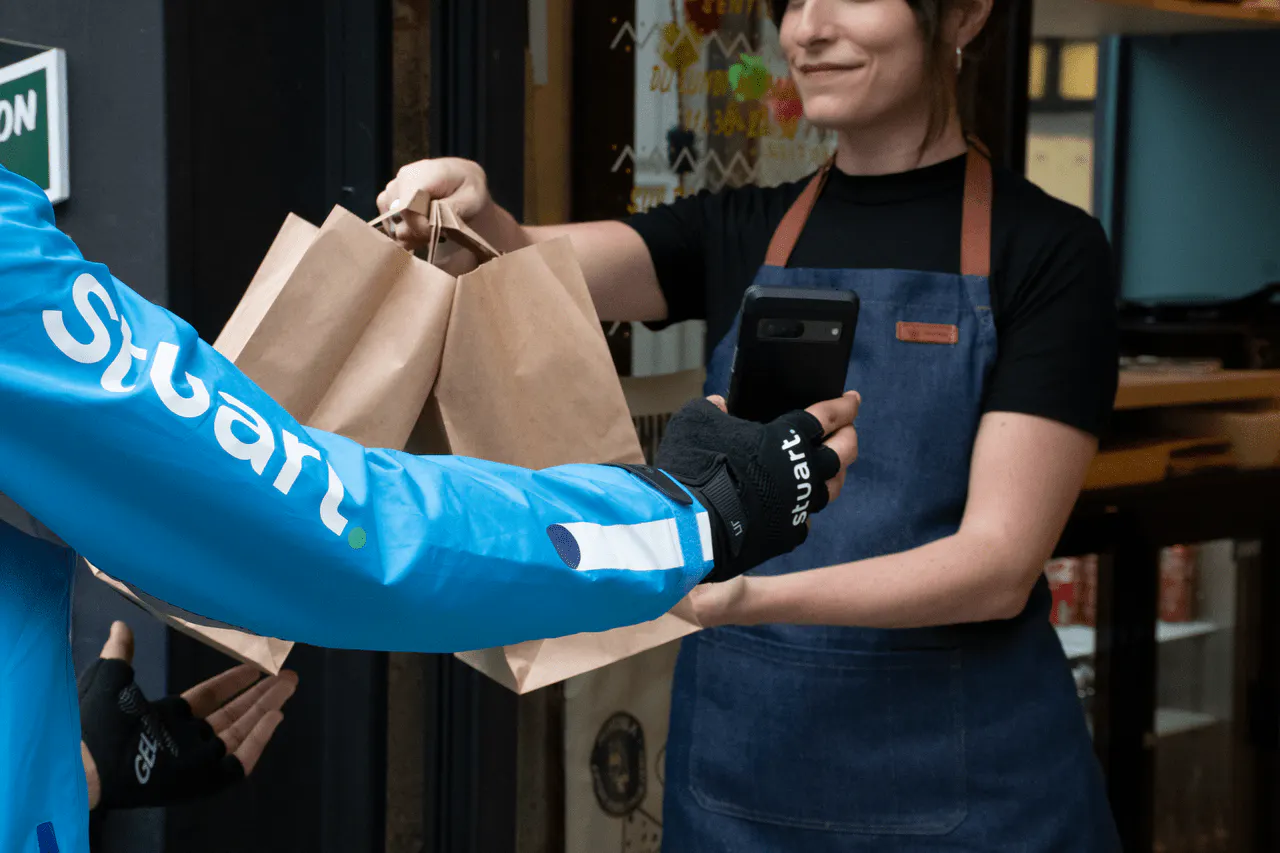
Most restaurants that offer delivery today are not running their own fleet of delivery drivers. They are working with a third-party delivery service, a marketplace like DoorDash, Uber Eats, or Grubhub that lists a restaurant's menu on its mobile apps, routes orders to its own driver network, and takes a commission on every sale in exchange for reach and logistics the restaurant does not have to build itself.
Partnering with a third-party delivery service can open a restaurant to customers it would never reach through its own website or dining room. It can also quietly erode profit margins if the partnership is not set up and managed with a clear plan. This guide walks through how to choose a platform, what to expect during setup, how commission fees actually work, and how to run the partnership day to day without losing control of your operation.
What a third-party delivery service actually is
A third-party delivery service is a company that operates the marketplace, the delivery logistics network, and often the drivers themselves, so a restaurant does not have to. In practice, this covers three functions bundled into one product:
- Discovery: The restaurant's menu appears in the platform's mobile app, next to competitors, where new customers can find it.
- Order routing: The customer places an order in the app, and it is sent to the restaurant's kitchen, either through a tablet, an aggregator, or a direct point-of-sale integration.
- Same-day delivery: The platform dispatches a driver from its own logistics network to pick up the order and deliver it, typically within the hour.
This is different from the term some people use in a broader logistics context. The Amazon delivery service partner program, for example, lets entrepreneurs run last-mile package delivery fleets under contract with Amazon. It is a real third-party delivery partner model, but it delivers packages, not restaurant food, and it works nothing like signing up for DoorDash or Uber Eats. When restaurant operators talk about a third-party delivery partner, they mean a consumer-facing food delivery service.
It is also worth clarifying where Postmates fits into this conversation. Postmates was one of the original third-party delivery apps, but Uber acquired it in 2020, and by mid-2021 Uber had folded its restaurant delivery business into Uber Eats. Restaurants signing up today are signing up for Uber Eats directly, not Postmates.
Why restaurants partner with third-party delivery services
The case for partnering with a third-party delivery service usually comes down to three things a restaurant cannot easily build on its own:
- Brand awareness: Delivery apps put a restaurant in front of people actively searching for food in their area, including customers who have never heard of the restaurant.
- A new revenue stream: Delivery orders add sales during dayparts and weather conditions that would otherwise go unfilled, without requiring more dining room seats.
- Outsourced logistics: Building an in-house delivery operation means hiring delivery drivers, buying or leasing vehicles, and building route optimization into a business that was not designed for it. A third-party delivery service absorbs that entire supply chain problem for a commission.
The tradeoff is control. Once a restaurant lists on a marketplace, it gives up some say over pricing display, driver behavior, and the customer relationship itself, since the platform, not the restaurant, usually owns the customer data from that order.
Uber Eats, DoorDash, and Grubhub: how the major platforms structure their partnerships
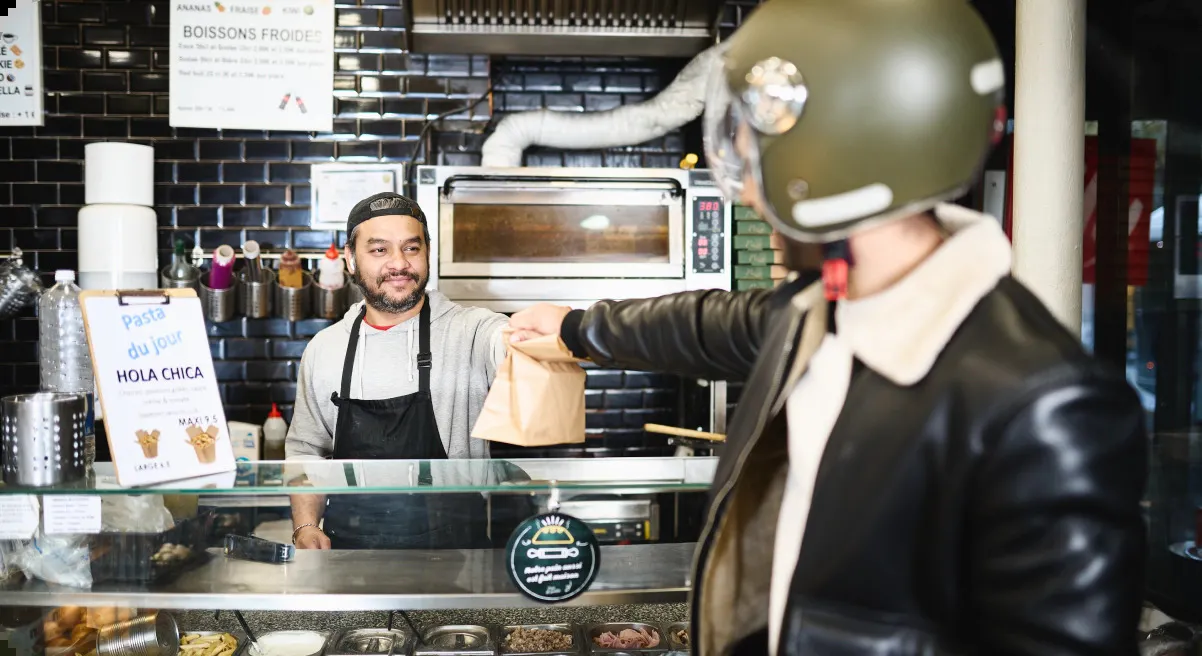
DoorDash, Uber Eats, and Grubhub together account for the large majority of third-party delivery volume in the United States, and each structures its restaurant partnerships around tiered commission fees rather than a single flat rate.
Platform | Plans and commission fees | What higher tiers unlock |
|---|---|---|
DoorDash | Basic (15%), Plus (25%), Premier (30%), plus 6% for pickup orders | Larger delivery radius and access to DashPass, DoorDash's loyalty program for frequent orderers |
Uber Eats | Lite (20%), Plus (25%, or 15% with self-delivery), Premium (30%, or 15% with self-delivery) | Uber One member eligibility, wider delivery radius, higher placement in search results |
Grubhub | Basic (around 15%, self-delivery), Plus (around 20 to 25%), All-Access (around 25 to 30%) | Access to Grubhub's driver network, ad credits, and sponsored listing placement |
Sources: DoorDash Merchant Pricing, Uber Eats Pricing, Grubhub Pricing and Fees
Across all three platforms, commission fees typically land between 15% and 30% per order, and payment processing adds another 2.5% to roughly 3%, on top of whatever tier a restaurant selects. That means the delivery fees a customer sees at checkout are only part of the cost picture. The commission a restaurant pays out of each order is the number that actually determines whether a given platform is helping or hurting profit margins.
How to choose which delivery platforms to partner with
Not every restaurant needs to be on all three major platforms. A few questions narrow the decision:
- Local platform strength: Platform strength varies significantly by city and region. Check which apps competitors nearby are using before assuming national commission and market share numbers apply locally.
- Self-delivery capability: Self-delivery options on Uber Eats and Grubhub let a restaurant use its own drivers at a lower commission tier while still getting marketplace visibility.
- Kitchen capacity: A kitchen already at capacity during peak hours should think carefully before adding a platform that could double order volume overnight.
- Existing point-of-sale system: Native integrations matter here. A platform that connects natively to your existing point-of-sale reduces the odds of missed tickets and manual re-entry once you go live. If you are still evaluating options, Otter's breakdown of the best restaurant POS systems compares how different systems handle multi-platform order management.
Most restaurants that rely heavily on delivery end up on more than one platform simply because customers are not evenly distributed across apps. That makes managing multiple third-party delivery partnerships at once, rather than picking just one, the more common real-world scenario.
Setting up your restaurant on a third-party delivery platform
Once you have picked a platform (or platforms), the setup process follows a similar pattern across DoorDash, Uber Eats, and Grubhub:
Build your menu for the platform
Menu items, photos, descriptions, and modifiers need to be entered into each platform separately unless you are using a menu management tool that pushes updates to every connected app at once. Pricing on delivery apps is also worth a second look: many restaurants build in a modest markup on delivery-app pricing to help absorb commission fees without cutting into in-house dine-in profit margins.
Connect your point-of-sale or order management system
This is the step that determines how smoothly orders actually reach your kitchen. Some restaurants run a separate tablet for every delivery app, which means someone has to manually watch three or four screens during a rush. A better setup uses pos integration or a dedicated order manager to pull every third-party delivery order into a single queue alongside dine-in and online ordering tickets.
Set your delivery radius and hours
Each platform lets you define how far your logistics network should reach and when you are accepting orders. Setting this too wide before you have tested your fulfillment speed is a common way new partnerships get a bad start with poor customer satisfaction scores.
Train your staff on order tracking and delivery tracking
Staff need to know how to check order tracking and delivery tracking on whichever system you use, so they can proactively flag a late pickup instead of waiting for a customer complaint.
Managing delivery operations once you are live
Signing up is the easy part. The ongoing work of partnering with a third-party delivery service is operational:
- Monitor delivery operations daily: Not just at the end of the month. Late pickups, wrong orders, and driver no-shows all show up in a platform's dashboard, and catching a pattern early is cheaper than losing a customer to a bad review.
- Use promotions strategically: Delivery apps often let restaurants pay for sponsored placement or fund limited-time promotions. These can boost order volume, but they also cut further into profit margins, so track whether a promotion actually pays for itself in incremental orders.
- Respond to customer support requests fast: Refund and dispute requests routed through the platform's customer support system need a quick response, since unresolved disputes affect a restaurant's standing on the marketplace.
- Watch per-platform margins: Not just gross sales. A platform driving high order volume at a 30% commission tier can still be less profitable than a smaller volume platform charging 15%
In-house delivery vs. third-party delivery vs. a hybrid model
Some restaurants eventually ask whether they should outsource delivery permanently or bring it in-house. Each model has real tradeoffs:
- Third-party delivery: Removes nearly all operational costs of running delivery yourself. You pay a commission instead of hiring delivery drivers, but you also give up pricing control and, in most cases, direct access to customer data from that order.
- In-house delivery: Keeps the customer relationship and the full order value, but it comes with real operational costs: delivery drivers typically cost $12 to $15 per hour before benefits, vehicles run $300 to $1,000 per month to lease, and fuel adds another $100 to $300 per vehicle monthly.
- A hybrid model: Uses third-party platforms for discovery and overflow capacity while building a commission-free online ordering channel to convert repeat customers into direct orders you keep the full margin and the customer data on.
Most restaurants that rely heavily on delivery land somewhere in the hybrid category: staying visible on third-party marketplaces for new customer acquisition while pushing loyal customers toward direct online ordering, where there is no commission and the restaurant owns the relationship.
Ghost kitchens in particular tend to depend on third-party delivery almost entirely, since they have no dine-in room to build a direct customer base from. Otter's guide to ghost kitchens covers how that dependency shapes the way virtual restaurants operate.
How Otter helps restaurants manage third-party delivery partnerships
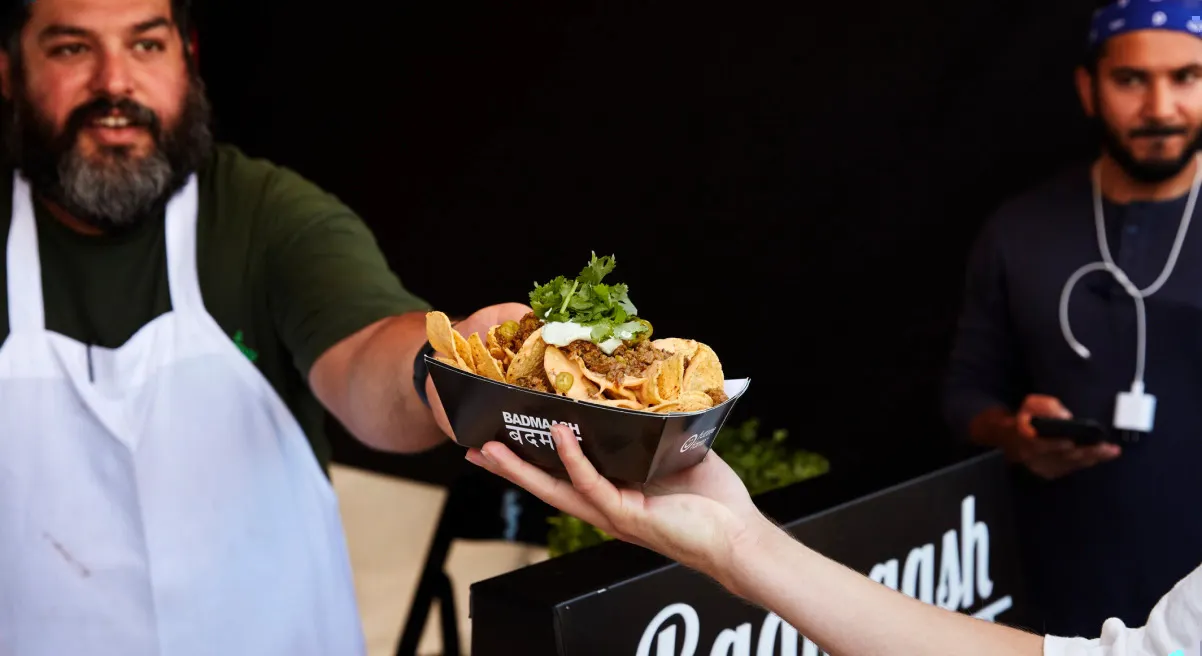
Once a restaurant is partnered with more than one delivery platform, the operational challenge shifts from "how do we sign up" to "how do we manage this without hiring someone just to watch tablets." That is the specific problem Otter's order management is built to solve: it connects to DoorDash, Uber Eats, Grubhub, and other delivery apps and pulls every order into a single queue, so a restaurant is not toggling between separate screens for each partnership.
Otter POS extends that same idea to the point-of-sale itself, combining in-person, phone, and third-party delivery orders into one system with one view of daily sales.
Otter's menu management tool pushes a single menu update to every connected delivery app at once, which removes one of the most common operational headaches of running multiple partnerships: keeping prices and availability consistent everywhere. That kind of centralized control is where the operational efficiency gains of a unified system show up most, since staff no longer repeat the same task across three or four separate logins.
Otter Analytics breaks down order history and revenue by platform, so a restaurant can see which delivery partnerships are actually contributing to profit margins after commission fees, rather than judging performance on gross order volume alone.
For restaurants building toward the hybrid model, Otter's online ordering gives them a commission-free direct channel that runs on the same back end as their third-party delivery orders, and Otter's marketing tools help drive repeat orders through both channels with targeted promotions.
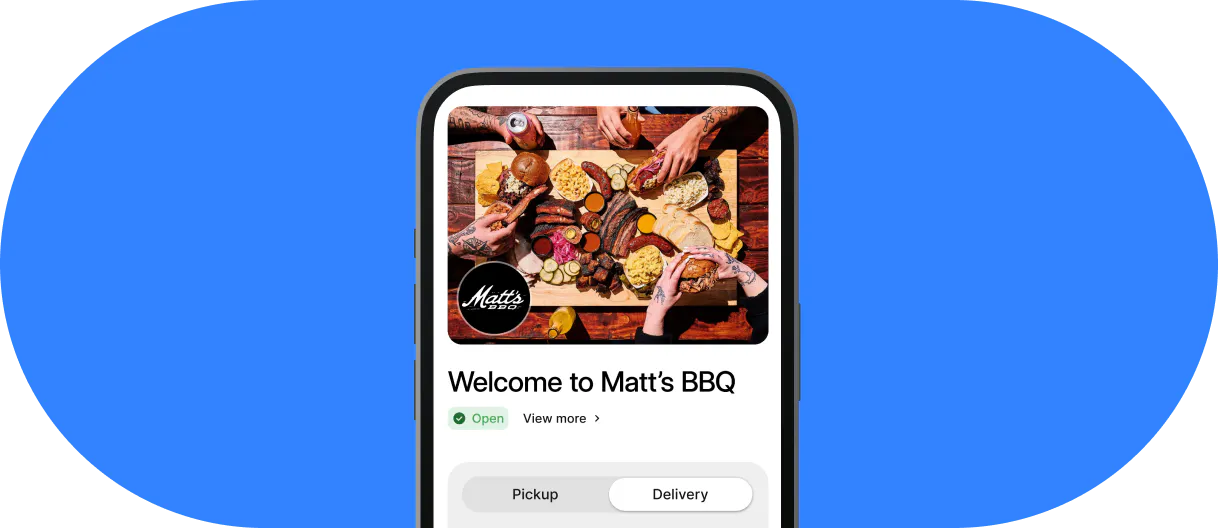
Christina Hong, owner of Seoulmates in Beverly Grove, Los Angeles, depends heavily on third-party delivery platforms for her Korean fusion restaurant. She described what changed once her order management was consolidated:
"One of my favorite things about Otter is the integration with the third-party deliveries. It makes my job as an owner so much easier. Everything is in one place and runs smoothly, because we rely on a lot of those third-party deliveries for our business."
Mistakes that undermine a third-party delivery partnership
A few avoidable mistakes show up repeatedly among restaurants that struggle to make these partnerships profitable:
- Treating every platform the same: A restaurant that gets most of its orders from Uber Eats but is paying for a premium Grubhub tier out of habit is losing money on the underperforming platform.
- Ignoring the true commission fee: Base commission plus payment processing plus any paid promotions can push the real cost of an order well past the advertised rate. Run the math per platform, per tier.
- Letting menu prices drift out of sync: Without centralized menu management, a price change on one platform and not another creates customer complaints and, in some cases, marketplace policy violations.
- Skipping order tracking during peak hours: The busiest windows are exactly when a missed ticket or a stalled delivery driver does the most damage to customer satisfaction.
- Never testing self-delivery options: Restaurants with their own reliable drivers sometimes pay a higher commission tier for delivery they could handle themselves at a lower self-delivery rate.
Should a restaurant eventually move away from third-party delivery apps?
Not necessarily entirely. Many restaurants shift toward a hybrid model, keeping a presence on third-party platforms for discovery and new customer acquisition while building a commission-free online ordering channel for repeat customers, rather than dropping marketplaces altogether.
Managing multiple delivery partnerships does not have to mean juggling a different tablet for every app. Book a demo with Otter to see how one system can handle every third-party delivery partnership from a single queue.
Frequently asked questions about partnering with a third-party delivery service
What is a third-party delivery service?
A third-party delivery service is a company, such as DoorDash, Uber Eats, or Grubhub, that lists a restaurant's menu on its own mobile apps, routes incoming orders to the restaurant, and dispatches drivers from its own logistics network to deliver them, in exchange for a commission on each order.
How much do third-party delivery apps charge restaurants?
Commission fees across DoorDash, Uber Eats, and Grubhub typically range from 15% to 30% per order depending on the plan tier, with payment processing fees of roughly 2.5% to 3% added on top.
Can I partner with more than one delivery service at the same time?
Yes, and most restaurants that rely on delivery do. Customers are spread across different apps depending on the market, so partnering with multiple platforms is common. The operational challenge is keeping menus, pricing, and order tracking consistent across all of them, which is where a unified order management system helps.
Do I need my own delivery drivers to use a third-party delivery service?
No. The platform's own logistics network handles pickup and delivery. Some platforms, like Uber Eats and Grubhub, do offer a self-delivery option at a lower commission tier for restaurants that want to use their own delivery drivers for some or all orders.
Is Postmates still a separate option from Uber Eats?
No. Uber acquired Postmates in 2020 and folded its restaurant delivery operations into Uber Eats by mid-2021. Restaurants signing up today do so directly through Uber Eats.

See How Otter Manages Every Delivery App