Table of contents
- Why start a food truck business?
- Step 1: Research your local food truck market
- Step 2: Develop your food truck concept
- Step 3: Write a food truck business plan
- Step 4: Calculate costs and secure funding
- Step 5: Choose and purchase your food truck
- Step 6: Obtain licenses, permits, and insurance
- Step 7: Equip your food truck with the right technology
- Step 8: Hire and train your staff
- Step 9: Create a marketing and location strategy
- Step 10: Soft launch and grand opening
- Common challenges and how to overcome them
- Start smaller than you think you need to
- Frequently asked questions about how to start a food truck
Denver issued 31% more food truck licenses in 2025 than the year before, and it's not an outlier. The US food truck market is estimated at roughly $2.1 billion as of 2025, and it keeps growing because the entry cost is a fraction of opening a full restaurant.
That lower barrier to entry is also the trap. Roughly 30-40% of food trucks close within three years, most often from underestimating startup costs, picking the wrong locations, or launching before the concept and the numbers actually line up. The 10 steps below cover exactly what determines which side of that number you end up on.
Key insights
- Total startup costs for a food truck typically run $50,000-$200,000, a used truck alone runs $50,000-$100,000, and most operators need another $10,000-$20,000 in working capital just to cover the first three months before the business is self-sustaining
- Profit margins on food trucks tend to run 6-9%, meaningfully better than the 3-5% typical for a traditional restaurant, mainly because rent and staffing costs are so much lower
- The biggest predictor of failure isn't the food, it's underestimating costs and picking a location that doesn't have the foot traffic the concept needs, both fixable with real research before you buy a truck
- POS choice matters more on a truck than in a restaurant: limited counter space and unreliable connectivity make offline-capable, contactless-ready hardware a real requirement, not a nice-to-have
Why start a food truck business?
A food truck costs a fraction of what a full-service restaurant does to open, gives you the flexibility to chase foot traffic instead of waiting for it, and lets you test a concept before committing to a long lease. The tradeoff is smaller margins for error: less space, more dependence on location and weather, and a shorter runway if the first few months don't go as planned.
Step 1: Research your local food truck market
Before anything else, find out how many trucks already operate in your target area, what they serve, and where the actual gaps are. Ride along with your target customer's day: where do they eat lunch, when, and what's missing.
Advantages of food trucks vs. traditional restaurants
Lower buildout cost, mobility to chase events and high-traffic locations, and the ability to test a menu concept in weeks rather than years. The flip side: less seating (or none), tighter kitchen space, and revenue that can swing hard with weather and local permitting rules.
Step 2: Develop your food truck concept
Choose your cuisine and menu focus
A food truck menu works best narrow: a handful of items you can execute fast and consistently in a small kitchen, not a shrunk-down version of a full restaurant menu.
Define your target audience
Lunch crowds near office parks, late-night crowds near bars, weekend crowds at markets and events, each wants a different menu, price point, and schedule. Pick one to build around first.
Differentiate from competitors
Look at what's already parked in your target area and find the gap, whether that's a cuisine nobody's doing well or a price point nobody's hitting. Otter's roundup of the most profitable food truck items is a useful starting point for menu economics specifically.
Step 3: Write a food truck business plan
Key components of a food truck business plan
Concept and menu, target market and locations, startup and operating cost breakdown, financial projections, and a funding plan. Most lenders and investors will ask for this before anything else.
Financial projections and break-even analysis
Model your break-even point against realistic daily sales, not best-case ones. Most food trucks reach break-even somewhere between six and eighteen months, depending on location consistency and how tight the initial cost control is.
Step 4: Calculate costs and secure funding
Initial startup costs breakdown
Category | Typical range |
|---|---|
Truck (used) | $50,000 - $100,000 |
Truck (new) | $100,000 - $200,000 |
Custom build | $75,000 - $150,000 |
Kitchen equipment & supplies | $20,000 - $50,000 |
Initial inventory | $2,000 - $5,000 |
Licenses & permits | $500 - $5,000 |
Insurance (annual) | $3,000 - $8,000 |
POS & technology (upfront) | $1,000 - $3,000, plus ongoing monthly fees |
Marketing & branding | $2,000 - $10,000 |
Working capital (first 3 months) | $10,000 - $20,000 |
Total startup cost typically lands between $50,000 and $200,000 depending on whether you buy used, new, or custom-build, and how much of the above you can do yourself versus hiring out.
Recurring operating costs
Plan for $10,000-$25,000 in monthly operating expenses once you're running: fuel, commissary kitchen fees, ingredient costs, staff, insurance, and permit renewals. Labor typically runs 25-30% of revenue.
Funding options for food trucks
Common routes: SBA loans, equipment financing specifically for the truck itself, personal savings, and outside investors or partners. Equipment financing is worth a specific look for food trucks since the truck itself can serve as collateral, often making it easier to qualify for than an unsecured loan.
Step 5: Choose and purchase your food truck
New vs. used food trucks
A used truck ($50,000-$100,000) gets you operating faster and cheaper, but budget for inspection and likely repair costs. A new truck ($100,000-$200,000) costs more upfront but comes with a warranty and no hidden maintenance history.
Custom build vs. ready-made
A custom build ($75,000-$150,000) gets you a layout matched exactly to your menu and workflow, at the cost of longer lead time. A ready-made truck gets you moving faster if the layout is close enough to what you need.
Essential truck features
Commercial-grade cooking equipment rated for your menu, adequate refrigeration, a generator or shore-power setup, handwashing and sanitation stations that meet local health code, and enough counter and prep space for your actual menu, not just what fits.
Step 6: Obtain licenses, permits, and insurance
Requirements vary significantly by city and state, so confirm local rules before you budget. Expect a business license, a mobile food vendor permit, health department permits, and in many cities, a fire safety inspection. Costs typically run $500 to $5,000 combined, though dense urban markets can run higher.
Health and safety certifications
Most jurisdictions require at least one certified food handler on staff (ServSafe or a local equivalent) and a passed health inspection before you can operate.
Insurance requirements
Commercial auto insurance for the vehicle, general liability, and often workers' comp if you have employees. Budget $3,000-$8,000 annually, more if you'll be doing catering or events that require higher liability limits.
Step 7: Equip your food truck with the right technology
Point-of-sale (POS) systems for food trucks
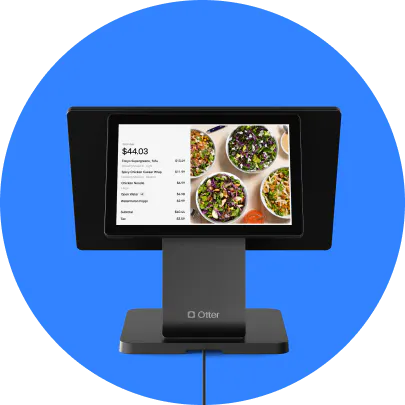
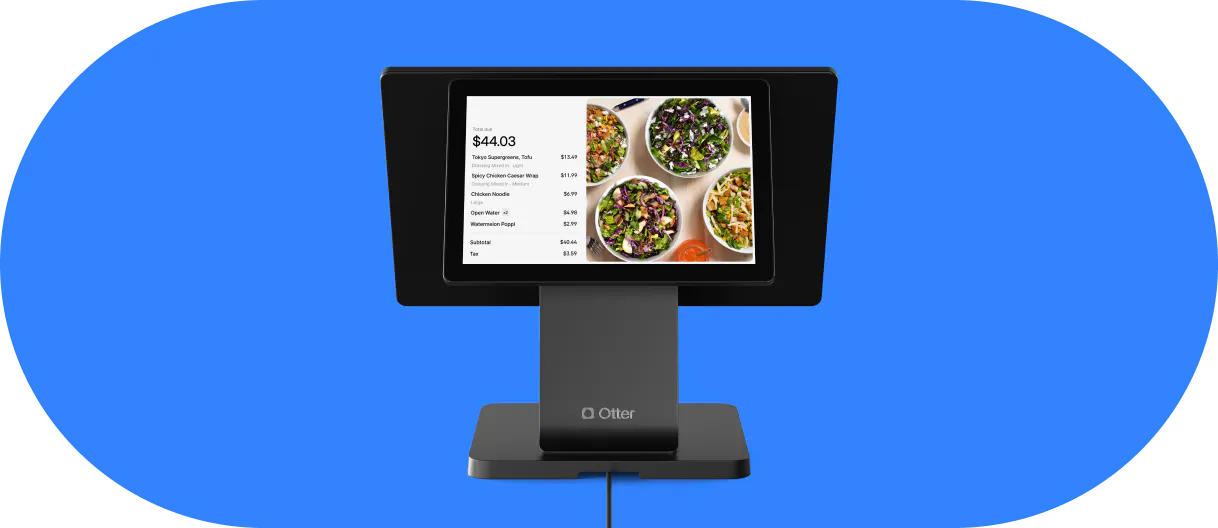
Limited counter space and unreliable connectivity make food truck POS selection different from a fixed location: you need hardware that's fast at checkout, accepts contactless payments, and keeps working through a dead signal. Otter POS is built for exactly that, offline mode so orders keep processing when connectivity drops, plus 24/7 support for when something does go wrong mid-service.
Otter's plans run Starter, Advanced, and Professional, with hardware bundled into the monthly price rather than billed separately, and processing rates that improve at higher tiers. See current Otter POS pricing for an exact quote, or Otter's dedicated food truck POS guide if you're comparing vendors specifically.
Online ordering and delivery integrations
Instead of running a separate tablet for every delivery app, Otter Order Manager consolidates every platform onto one screen tied to your POS, so your team isn't juggling a tablet farm mid-rush. Menu changes and 86'd items sync across every channel at once. Delivery app aggregation is included starting at Otter's Advanced plan tier rather than sold separately, see current pricing for what's included at each tier.
Inventory and menu management
A narrow food truck menu still needs live inventory tracking, running out of one ingredient mid-shift with no backstock is a bigger problem on a truck than in a restaurant. Otter Menu Management lets you 86 an item across every channel instantly, and Otter Inventory Savings helps identify purchasing opportunities to reduce food cost over time.
Step 8: Hire and train your staff
Building your team
Most food trucks run lean, often two to four people per shift covering cooking, service, and the window. Cross-train everyone on every station; a truck can't absorb one person calling out the way a full restaurant staff can.
Training your staff
Speed and consistency matter more on a truck, where a slow line directly costs you sales during a short lunch rush. Otter Live Alerts flags a missed order or a channel going offline in real time, so a training gap shows up immediately instead of after a bad review.
Step 9: Create a marketing and location strategy
Best locations for food trucks
Rotate between a few reliable spots (office parks for lunch, breweries or bars for evenings, markets and events for weekends) rather than parking randomly. Otter's food truck marketing guide covers how to build a location schedule your regulars can actually plan around.
Social media and online presence
Your daily location is content on its own, most food truck customers check social media same-day to find you, not a website. Otter's guide to current food truck trends is worth a look before you lock in your opening concept and content plan.
Promotions and customer loyalty
A loyalty program gives regulars a reason to track down your truck specifically instead of whichever one happens to be closest that day. Otter Loyalty is included at Otter's Professional plan tier rather than sold as a separate add-on; see current pricing for what's included at each tier.
Step 10: Soft launch and grand opening
Testing your operations
Run a soft launch at a low-stakes location before your official opening: test ticket times, menu execution under real volume, and whether your staffing plan actually holds up during a rush.
Gathering customer feedback
Otter Ratings and Reviews lets you track and respond to delivery-app reviews from one place, useful for catching a recurring problem (a slow item, a packaging issue) before it becomes a pattern.
Planning your grand opening
Once the soft launch is clean, announce your opening location and time everywhere your following actually looks, social first, then any local food truck directories or apps. Otter's roundup of the most profitable food truck items is worth revisiting here too, opening week is when a tight, high-margin menu matters most.
Common challenges and how to overcome them
- Underestimating costs: build a real budget from the ranges above before you buy anything, and keep the working-capital cushion separate from the truck budget itself
- Inconsistent locations: a rotating but predictable schedule beats parking wherever looks good that day, customers need to know where to find you
- Equipment breakdowns: budget for repairs as a recurring cost, not a surprise, and know your nearest commercial kitchen equipment repair option before you need one
- Weather and seasonality: plan for slower months in your cash flow projections rather than assuming steady revenue year-round
Shireen Imani, owner of Chulita in Venice, California, described what getting onto every ordering channel quickly meant for her business:
“Because of Otter, we were able to get through to all of the platforms very quickly and start maximizing as much revenue as possible.”
That's the same problem a new food truck faces in its first weeks: getting online ordering and every delivery channel running cleanly from day one, instead of losing early momentum to a clunky setup.
Start smaller than you think you need to
The trucks that make it past year three aren't usually the ones with the biggest budget, they're the ones that priced their costs honestly, picked a menu they could execute fast in a small space, and built a location schedule customers could count on. Get those three right before you worry about anything else on this list.

Book a demo with Otter
It’s time to enhance your operations with Otter’s all-in-one restaurant platform. Book time with our sales team to learn more.
Frequently asked questions about how to start a food truck
How much does it cost to start a food truck business?
Total startup costs typically run $50,000 to $200,000, depending on whether you buy a used truck, a new one, or go custom. Add $10,000-$20,000 in working capital to cover the first three months before the business is self-sustaining.
What type of food truck is most profitable?
There's no single answer, profitability depends more on execution speed, ingredient cost control, and location than on cuisine type. Otter's roundup of the most profitable food truck items breaks down which menu items tend to carry the best margins.
Can a food truck business be profitable?
Yes. Food trucks typically run 6-9% profit margins, better than the 3-5% common for traditional restaurants, mainly because rent and staffing costs are so much lower.
How many food trucks fail in the first few years?
Estimates vary, but roughly 30-40% of food trucks close within three years, most often from underestimating startup costs or picking locations without enough consistent foot traffic.
Do I need a business plan for a food truck?
Yes, especially if you're seeking a loan or investors. A solid plan covers your concept, target market, cost breakdown, financial projections, and funding strategy, and most lenders will ask to see it before anything else.
What licenses do I need to start a food truck?
Requirements vary by city and state, but expect to need a business license, a mobile food vendor permit, health department permits, and often a fire safety inspection. Combined costs typically run $500 to $5,000.
How do I find the best locations for my food truck?
Research where your target customers already are at the times you'll be serving: office parks for lunch, bars and breweries for evenings, markets and events for weekends. Otter's food truck marketing guide covers how to build a schedule regulars can plan around.
What POS system is best for food trucks?
Look for hardware built for tight counter space and unreliable connectivity: fast checkout, contactless payment support, and offline mode so you can keep taking orders through a dead signal. Otter's dedicated food truck POS comparison covers Otter and other vendors side by side.

Roll out your food truck with Otter