
Table of contents
- What restaurant supply chain software actually covers
- The core capabilities of restaurant supply chain management software
- What poor supply chain visibility actually costs
- How to choose restaurant supply chain management software
- Where Otter fits into your supply chain
- Buy the piece that fixes your actual bottleneck, not the whole stack
- Frequently asked questions about supply chain software for restaurants
Food costs rose for 87% of restaurant operators in the first half of 2026, and 78% expect them to keep climbing through the rest of the year. Tariffs, tight cattle supplies, and weather-driven produce shortages are the headline reasons, but the operators who are absorbing those hits the best all share one thing: they can see their supply chain clearly enough to react before a price jump or a missed delivery turns into a bad week.
That visibility is what restaurant supply chain software is supposed to provide. The term gets used loosely, sometimes to describe a full procurement and vendor-management platform, sometimes to describe little more than a stock-counting app with a new label. Before choosing anything, it helps to know what the category actually covers, what it costs you to go without it, and which pieces solve the specific gap in your operation.
Key insights
- Restaurant supply chain software and restaurant inventory management software solve different problems. Inventory management tracks what is on your shelves; supply chain management also covers procurement, purchase orders, supplier performance, and the data that connects ordering to your books.
- Food costs already sit at a median of 32.4% of sales industry-wide, and 41% of operators say tariffs drove up their ingredient and supply costs in 2026, which makes visibility a margin issue, not just an operations one.
- Restaurant food waste costs the industry an estimated $162 billion a year, and ReFED attributes much of that to difficulty forecasting demand, bulk purchasing, and improper storage, not just food that spoils after it reaches the plate.
- Otter is not a procurement or ERP platform, but its POS, menu and 86ing, analytics, and Inventory Savings products cover the demand-visibility and cost layers that most restaurants are actually missing, and each one integrates with the accounting and supply chain tools you already use.
What restaurant supply chain software actually covers
Restaurant supply chain management is the full path an ingredient takes: sourcing raw materials from a distributor, placing and tracking purchase orders, receiving and quality-checking the delivery, moving it through stock management in your kitchen, and closing the loop in your accounting software once it is used and billed. Supply chain software is any tool, or combination of tools, built to manage and give visibility into that path. Done well, tightening supply chain operations this way is one of the more reliable levers for operational efficiency: less time spent reconciling paperwork, more time actually running the floor.
That is a broader job than most people mean when they say "inventory software."
Restaurant supply chain management vs. restaurant inventory management software
Restaurant inventory management software answers one question: what do I have on hand right now? It counts stock, flags low quantities, and helps with FIFO rotation.
Restaurant supply chain management software answers a wider set of questions: who did I order this from, at what price, did it arrive on time and at the quality I paid for, and how does that purchase flow into my food cost and my books? Inventory management is one module inside a full supply chain system, not a replacement for it. Some restaurants only need the narrower tool. Multi-location groups, cloud kitchens running several brands out of one facility, and any operation juggling more than a couple of distributors usually need the wider one.
The core capabilities of restaurant supply chain management software
A full platform in this category is usually built from the same handful of modules, whether it is sold as one product or stitched together from a few.
Procurement and purchase orders
This is the ordering layer: generating purchase orders, sending them to the right distributor, and tracking what was ordered against what was actually delivered and billed. Good procurement tools flag price changes and short shipments automatically instead of leaving a manager to catch them on a printed invoice.
Demand forecasting and menu planning
Demand forecasting uses your sales history, upcoming events, and seasonality to predict how much of each ingredient you will need, which is what keeps you from over-ordering perishables or getting caught short during a rush. It is also the piece that makes menu planning realistic: launching new LTOs without forecasting the ingredient volume they need is one of the most common ways restaurants end up with either stockouts in week one or a walk-in full of unused product in week three.
Stock and inventory management
This is the counting and tracking layer: par levels, FIFO rotation, and real-time stock management that ties usage back to your recipe costing so you know exactly how much of each dish's ingredients you are burning through per shift.
Supplier performance and vendor relationship management
Not every distributor delivers on time, at the agreed price, or with consistent quality. Supplier performance tracking, sometimes labeled vendor performance in the software itself, scores vendors on fill rate, on-time delivery, and pricing accuracy over time, which turns vendor relationship management from a gut feeling into a decision backed by data. That data is also your leverage in the next contract negotiation.
Quality control, food safety, traceability, and allergen tracking
Every delivery needs a quality control check at receiving, and every ingredient needs to be traceable back to its source in case of a recall. Food safety and allergen tracking depend on that same traceability: if you cannot trace an ingredient back to its supplier and lot number, you cannot confidently answer a guest's allergen question or respond quickly if a recall notice comes in.
Accounting, ERP, and API integrations
The supply chain only creates value if the data it generates reaches your books. That means an API connection between your ordering and inventory tools and your accounting software, or into a full ERP if you are running multiple locations. Without that connection, someone on your team is re-entering the same invoice data twice, once for ordering and once for the ledger.
What poor supply chain visibility actually costs
The numbers behind this category are not abstract. They show up directly in restaurant P&Ls.
Cost area | What the data shows | Source |
|---|---|---|
Food cost | Median food and non-alcohol beverage cost sits at 32.4% of sales | |
Food waste | Restaurant food waste costs the industry an estimated $162 billion a year | |
Price volatility | 87% of operators reported food cost increases in the first half of 2026; 78% expect further increases through year-end | |
Profit impact | 76% of operators say rising ingredient costs are affecting their profit | |
Supply chain risk | 41% attribute rising ingredient and supply costs to tariffs; 25% call supply chain volatility a major obstacle |
A 3-point swing on top of that 32.4% median food cost is not a rounding error. It is the difference between a profitable month and a break-even one, and it is exactly the kind of swing that shows up first as rising inventory costs, a stockout, a spoiled case of produce, or a distributor price increase nobody caught before it hit the books.
How to choose restaurant supply chain management software
Match the software to the specific gap in your operation rather than buying the biggest platform on the market. Look for:
- Supply chain visibility across every location. You should be able to see purchase orders, deliveries, and stock levels for every site from one dashboard, not one login per restaurant.
- API integration with your existing POS and accounting software. If the platform cannot pass sales and usage data automatically into your books, you have just added a new manual task, not removed one.
- Supplier relationship management, not just a vendor list. The tool should score supplier performance over time so you have data to negotiate with, not just a static contact sheet.
- Traceability and food safety features, including lot-level tracking and allergen flags, especially if you run a multi-brand or cloud kitchen concept where the same ingredient feeds several menus.
- Sustainability and waste reporting. The best systems flag which ingredients are trending toward spoilage before they are wasted, not after.
- Room to grow. A single-location tool that cannot add locations, brands, or distributors later means a second migration in a year or two.
Where Otter fits into your supply chain
Otter is not a procurement platform or an ERP system, and it will not generate your purchase orders. Where it does help is the demand-visibility and cost-savings layer that sits on top of, and feeds into, whatever procurement process you already run.
Otter POS, a restaurant POS system built to handle every ordering channel from one screen, is the source of the sales data that should be driving your demand forecasting in the first place: every ticket, modifier, and channel it processes is a data point about what you actually need to buy next week, not what you guessed you'd need.
Menus and 86ing gives you real-time product availability across every channel. When an ingredient runs out, the item goes unavailable everywhere at once instead of quietly overselling on one delivery app while your kitchen scrambles. Scott, co-owner of Bred Hot Chicken in Costa Mesa and San Juan Capistrano, California, put it plainly:
“Another great element is that I instantly know when something's out of stock. The goal is to never have anything out of stock, so if something goes out of stock in one of our restaurants, I definitely want to know why, and then build a system where it's never out of stock again.”
Otter Analytics turns your transaction history into supply chain data you can act on: product mix, sales by item, and order cancellations, all in one place instead of scattered across a POS report, a delivery app dashboard, and a spreadsheet. For a closer look at how that reporting connects to your books, Otter's guide to restaurant accounting and bookkeeping walks through the accounting side of that same data.
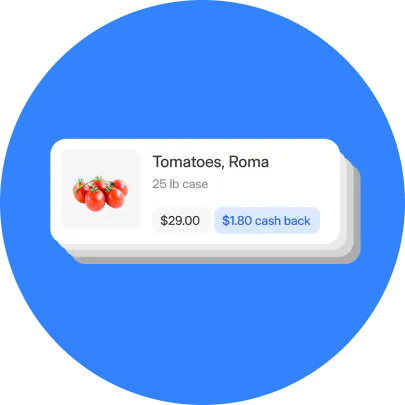
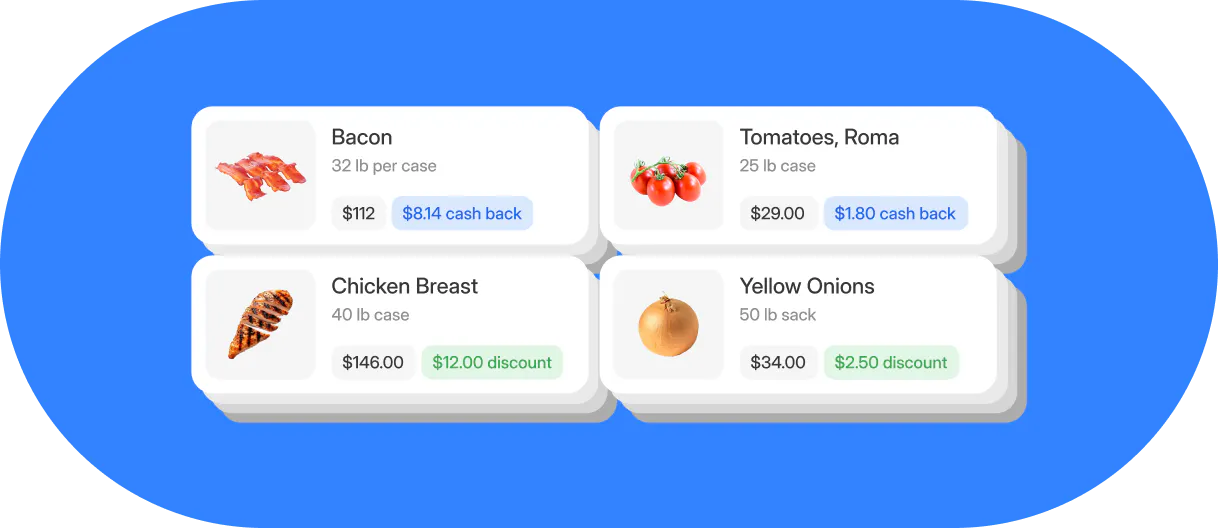
Otter Inventory Savings is the piece that touches procurement directly. It connects to your existing distributor network, more than 100 national and regional distributors, without requiring you to switch who you order from, and pays cash back on eligible purchases you are already making. It also surfaces sourcing recommendations for lower-cost alternatives on ingredients you already buy, which is a form of automated supplier comparison most independent restaurants could never run manually.
None of this replaces a dedicated ERP if you are running dozens of locations with complex procurement needs. For a broader look at how these pieces fit into a full restaurant technology stack, Otter's rundown of restaurant technology solutions covers automated inventory management alongside the rest of the stack.
Buy the piece that fixes your actual bottleneck, not the whole stack
Most restaurants do not need a full enterprise supply chain suite on day one. They need to know, accurately and in real time, what is running low, what a vendor actually delivers versus what they promised, and where the last three points of food cost went. Start with whichever of those three is costing you the most sleep, choose the software that solves it, and make sure it can talk to the tools you already run. The rest of the stack can wait until you have outgrown what you started with.
Frequently asked questions about supply chain software for restaurants
What is restaurant supply chain management software?
It is software that manages the full path an ingredient takes from a distributor to your kitchen to your books, including procurement, purchase orders, supplier performance, stock management, and the accounting integration that ties usage back to cost.
Is restaurant inventory management software the same as supply chain software?
No. Inventory management software tracks what you have on hand. Supply chain management software is broader and also covers ordering, supplier relationships, quality control, and the accounting connection. Inventory management is typically one module inside a full supply chain platform.
How much does restaurant supply chain software cost?
Pricing depends heavily on scope. A standalone inventory or ordering tool can run a few hundred dollars a month, while a full ERP-level supply chain platform for a multi-location group can run into the thousands, often priced per location or per number of distributors connected.
Does Otter offer supply chain software?
Not as a standalone procurement or ERP platform. Otter's POS, Menus and 86ing, Analytics, and Inventory Savings products cover the demand-visibility and cost-savings side of the supply chain, and they integrate with accounting and procurement tools through an API rather than replacing them.
How does demand forecasting reduce food waste?
Demand forecasting uses sales history and upcoming events to predict how much of each ingredient you actually need, which cuts down on the over-ordering of perishables that leads to spoilage. ReFED names difficulty forecasting demand as one of the leading causes of foodservice waste, alongside bulk purchasing and improper storage, so even modest forecasting accuracy gains translate directly into lower food waste.
What should I look for in a supplier performance tracking tool?
Look for tools that score fill rate, on-time delivery, and pricing accuracy over time rather than just storing a contact list. That history gives you leverage in vendor negotiations and an early warning when a distributor's service is slipping.

See how Otter connects your restaurant's data