Table of contents
- What is AI & why it matters for food delivery
- Personalizing the dining experience with AI
- Optimizing Delivery Logistics & Driver Experience
- Smarter Marketing
- Elevating Customer Support with Conversational AI
- Unlocking New Revenue Streams: Virtual Brands & Menu Engineering
- Implementation Roadmap & Best Practices
- The Competitive Landscape: How AI Leaders Are Winning
- The Future of Food Delivery is Here
The numbers tell a compelling story: artificial intelligence powered $6.59 billion in solutions for the global food and beverage industry in 2023, with the market expected to grow nearly 46% annually through 2030 (1). But behind these figures lies a more practical reality for restaurant operators – AI has moved at lightning speed from an experimental tech tool to an everyday essential for food delivery services.
Whether you're running a single location or managing multiple virtual brands, AI technology now touches three critical areas of your food delivery operation: how you connect with customers through personalization and customer preferences, how efficiently you get orders to their doors through logistics optimization and route optimization, and how quickly you resolve issues through enhanced customer support and automation.
The difference between restaurants that thrive in delivery and those that struggle often comes down to how well they harness these AI-driven technologies. Platforms like Otter's Order Management help operators unify multiple delivery channels, automate routine tasks, and turn customer data into actionable insights without requiring a computer science degree. Let's explore how AI is creating new opportunities for restaurant operators to better serve their customers and operate with more efficiency.
What is AI & why it matters for food delivery
Think of artificial intelligence as your restaurant's most reliable assistant, with a few super powers: it never sleeps, it can process thousands of data points instantaneously, and it learns something new from every interaction. When it comes to food delivery, AI has an incredible ability to analyze everything—from your busiest order times and popular menu combinations to real-time traffic patterns and weather conditions that affect delivery windows—within seconds.
It's important to note that AI-powered systems are not replacing human judgment; they're augmenting it. AI gives you freedom to focus on food quality and customer experience while quickly comprehending loads of customer data — including tools that track restaurant guest sentiment over time — a task that once required hours of manual analysis.
Consider how this plays out practically with an example: Let's take Otter's Order Management platform, which uses AI algorithms to automatically organize incoming orders from multiple food delivery apps, reducing the chaos of juggling different tablets and eliminating order mix-ups. At the same time, Otter's Analytics suite works to spot patterns a human might miss, like which menu item combinations are ordered the most, or peak hours when your order errors are highest.
The investment community has taken notice too. CB Insights reports that funding for AI-driven food tech solutions climbed sharply in 2023, as restaurant leaders increasingly view these tools as essential rather than optional (2).
Personalizing the dining experience with AI
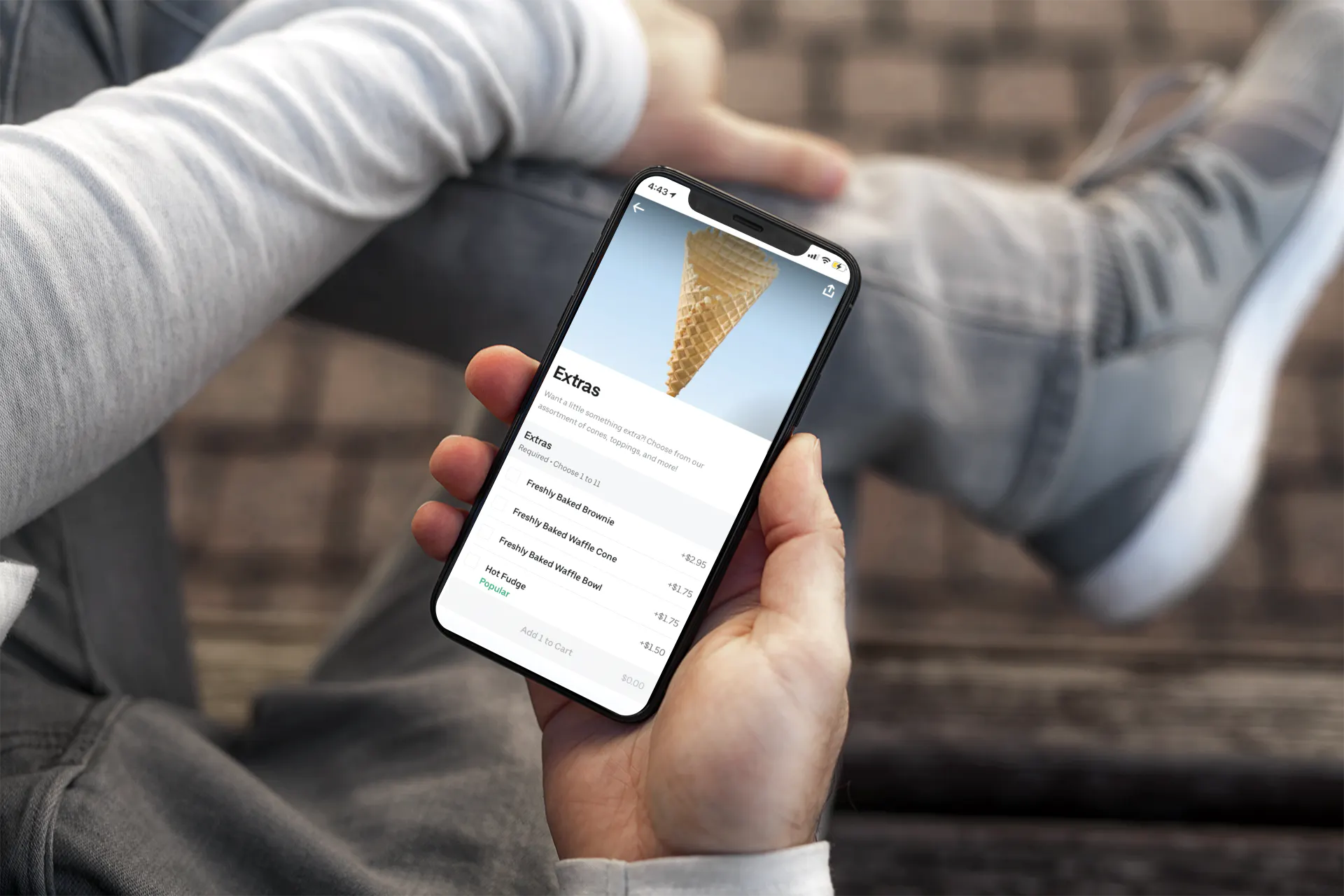
To understand how AI personalizes a dining experience, let's consider a real-life situation. Imagine a customer opens your mobile app and immediately sees their usual Friday night order at the top of the screen based on their order history. This time, however, a new dessert suggestion pops up, and it pairs perfectly with their go-to entrée. The customer, unable to resist this match made in culinary heaven, adds it to the cart. This is the type of personalized recommendations that not only makes customers happier, but also drives real business results.
Smart recommendation engines analyze individual ordering patterns, seasonal preferences, and even local trends to surface the right options at the right moment. Domino's and Rappi have mastered this approach, using personalization to increase both order frequency and average ticket size. When customers feel understood, they're inclined to order more often.
The key is connecting this intelligence to your operations. Otter’s Kiosks, for example, use smart upselling to suggest popular combinations depending on the order. So, if a customer orders a burger that other customers usually pair with a milkshake, the kiosk will offer the milkshake as an add-on. This is an easy step that makes the diner happy and boosts your restaurant’s profits.
It also helps restaurants increase sales and retention. Want to push a slow-moving appetizer? Otter's Menu Management can highlight it for customers who typically order similar items, improving the overall ordering experience.
As a result, customers spend less time scrolling and more time enjoying meals tailored to their tastes. For operators, this means higher order values and more predictable demand patterns that make inventory planning significantly easier.
Optimizing Delivery Logistics & Driver Experience
Every minute saved in delivery translates directly to happier customers and lower operational costs. AI-powered logistics systems continuously analyze traffic patterns, weather conditions, and order volumes to optimize delivery routes in real-time. When a sudden rainstorm hits or construction blocks a main road, smart routing algorithms instantly recalculate the best paths for every active delivery, ensuring faster deliveries and timely deliveries even during peak hours.
The impact is measurable: McKinsey research shows that advanced analytics in food delivery can increase route efficiency and reduce overall delivery times by 15–20% in urban environments (3). Therefore, ETAs for customers are more accurate and drivers spend less time idling. Beyond route optimization, AI helps with driver assignment, predicting which orders will be ready when based on patterns that coincide with time-of-day. It also assists with balancing workloads across your delivery team.
These AI systems provide real-time analytics that give you complete visibility into delivery performance. When everything runs smoothly, customers get their orders faster, drivers earn more per hour, and your restaurant builds a reputation for reliable service that enhances customer satisfaction.
Smarter Marketing
The days of one-size-fits-all restaurant marketing are over. Today's most successful food delivery operations use AI to identify exactly who orders what, when they're most likely to reorder, and which promotions will drive action using advanced demand forecasting.
Instead of blasting the same discount to everyone, smart operators target specific customer segments with relevant offers using AI-based marketing strategies. So, if a customer orders a healthy bowl every Tuesday, that same customer will be notified about new salad options when they arise. Diners who regularly order pizza on the weekends might see family combo deals that enhance their usual order. SevenRooms data shows restaurants using AI-driven targeted marketing achieve up to 30% higher guest engagement compared to traditional mass campaigns (4).
The payoff is immediate: higher open rates, better conversion, and customers who feel genuinely understood rather than bombarded, leading to improved profitability.
Elevating Customer Support with Conversational AI
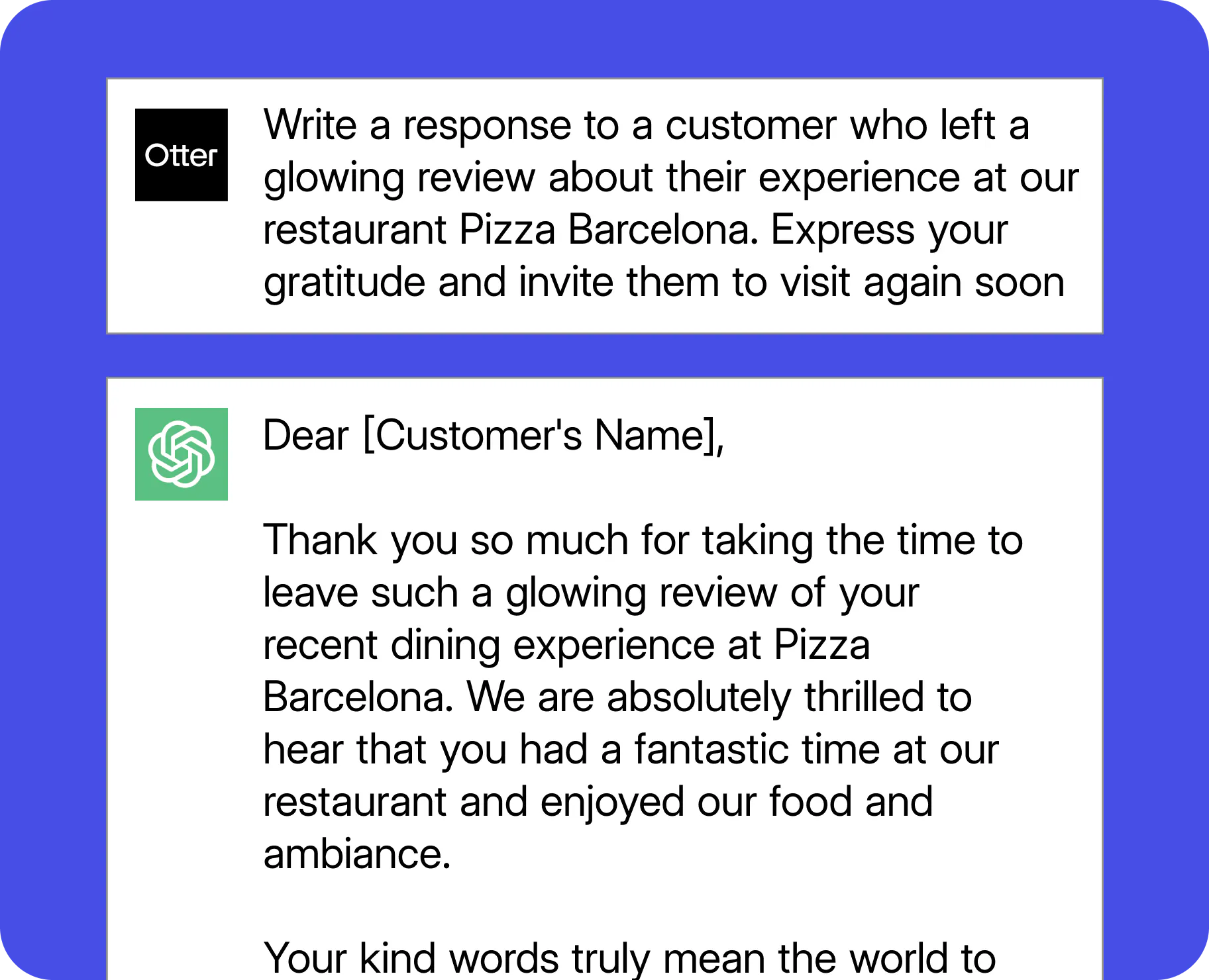
How often has your team heard the dreaded question "Where's my order?" It’s probably frequent, and it’s probably the most frustrating inquiry for both customers and staff. AI-powered chatbots have stepped in to respond instantly, providing real-time order tracking and delivery updates, no human intervention required. Worried about sounding like a robot? Modern conversational AI goes beyond simple responses. Today, systems can actually detect customer frustration levels, switch to appropriate languages for diverse markets, and escalate complex issues to human staff when needed. Forbes research indicates that businesses using AI-driven customer service cut resolution times by up to 50% while significantly reducing support costs (5).
The practical impact for restaurant operators is substantial: your team spends less time on repetitive questions and more time on food quality and hospitality. This creates faster resolution for customers and more efficient use of your team's attendance and expertise, ultimately improving the user experience across your food delivery business.
Implementation Roadmap & Best Practices
Successful AI implementation follows a proven path: start small, measure results, then scale what works. Begin by auditing your current data quality: clean, organized customer data and order information forms the foundation for any AI system. Next, prioritize integrations between your POS, food ordering platforms, and delivery management systems.
The pilot phase is crucial. Test AI features on a limited scale, track specific metrics like order accuracy or delivery times, and gather feedback from both staff and customers to improve the user experience. MDPI research emphasizes keeping humans in the loop throughout implementation, ensuring AI improves rather than replaces critical decision-making functions (7).
Plan your rollout in phases: data preparation, system integration, pilot testing, full launch, and ongoing optimization. Otter's ecosystem—including performant restaurant POS system, restaurant analytics platform, Marketing, and order management—provides integrated AI-based solutions that work together from day one to enhance inventory management and streamline food delivery services. The key is measuring ROI at each step, ensuring your AI investments deliver measurable improvements to your bottom line and overall profitability.
Choosing the right restaurant technology solutions at each phase keeps that ROI on track.
The Competitive Landscape: How AI Leaders Are Winning
The restaurant industry has reached a tipping point where AI adoption separates the leaders from the laggards. While some operators struggle with basic delivery coordination, forward-thinking restaurants are leveraging artificial intelligence to dominate their markets, creating competitive advantages that compound over time.
Global Scale: McDonald's AI-First Approach
McDonald's has incorporated comprehensive AI implementation across their 43,000 global locations. AI-powered voice ordering in drive-thrus, real-time menu optimization based on weather and local preferences, and predictive maintenance systems have increased order accuracy, kitchen efficiency, and customer satisfaction. By treating AI as essential infrastructure rather than experimental technology, McDonald's has created operational advantages that competitors struggle to match.
Mid-Market Success: Skyline Chili's Transformation
Skyline Chili, a Cincinnati-based chain, demonstrates how targeted AI implementation solves persistent operational challenges. After adopting Otter’s all-in-one technology platform, they achieved a 57% decrease in order cancellations and 66% reduction in order issues through automated order processing and intelligent menu management.
The platform's algorithm-driven process ensured orders make it the POS, error-free. Reliable support during implementation has made all the difference. Scott, a Skyline Chili team member, states: "[Otter has] been extremely responsive and helpful with troubleshooting. We can't tell you how much of a difference this has been from our experience with previous providers."
The Winning Formula
Successful AI adopters share three critical characteristics: they implement comprehensive platforms rather than piecemeal solutions, focus on measurable business outcomes like order accuracy and processing time, and treat AI as essential infrastructure. These restaurants report consistent advantages over competitors: faster service, higher accuracy, better retention, and improved staff productivity.
The Future of Food Delivery is Here
The food delivery industry stands at a pivotal moment. AI technology has evolved from experimental feature to operational necessity, with machine learning algorithms now powering everything from demand forecasting to dynamic pricing across major food delivery platforms like Uber Eats, DoorDash, and Grubhub.
For restaurant operators, the choice isn't whether to adopt AI-based solutions – it's about how quickly you can implement them effectively. The restaurants thriving in today's on-demand ecosystem are those using AI to streamline operations, enhance customer satisfaction, and create scalable revenue streams. From AI-powered chatbots that reduce wait times to predictive analytics that optimize inventory management, these advancements have a direct impact on your bottom line. For a broader view of where the industry is headed, see the latest qsr industry trends.
Ready to transform your delivery operations?Otter's comprehensive platform unifies order management, analytics, marketing automation, and customer support—giving you all the AI-powered tools covered in this guide in one integrated ecosystem. The restaurants that embrace these technological advancements today will set the standard for customer experience tomorrow in the competitive food ordering landscape.

Book a demo with Otter
It’s time to enhance your operations with Otter’s all-in-one restaurant platform. Book time with our sales team to learn more.

Book a demo to see how Otter’s all-in-one platform can help your restaurant thrive.