
Table of contents
- What Is Restaurant Supply Chain Management?
- How to build a restaurant supply chain process
- Which supply chain metrics should you track?
- What should you do when a delivery fails?
- Where technology can help
- Make your next order more predictable
- Frequently asked questions about restaurant supply chain management
An ingredient price jumps just before your weekend rush. You can raise menu prices, absorb the increase, or find a better way to buy and use what you need. In the James Beard Foundation’s 2026 independent restaurant study, operators who raised menu prices by more than 10% were the group most likely to report lower profits and expect fewer customers than those making modest increases. That finding does not establish that the price increases caused either outcome. It does show why you need more ways to protect your margin.
Restaurant supply chain management gives you those levers. It connects sales forecasts, supplier choices, purchase orders, delivery checks, storage, and menu availability. A dependable process helps you catch a short shipment or price change early, reduce avoidable waste, and serve the dishes guests came to order.
Key insights
- Restaurant supply chain management connects forecasts, purchasing, receiving, storage, and menu availability so shortages and price changes are caught before they disrupt service.
- Set reorder points from actual usage and supplier lead times, then keep a tested backup for ingredients that can stop a signature dish.
- Compare every delivery with the purchase order and invoice, recording shorts, substitutions, quality issues, and credits while the details are fresh.
- Review supplier fill rate, delivery timing, price variance, waste, and stockouts weekly so you can correct the cause rather than simply buying more.
What Is Restaurant Supply Chain Management?
Restaurant supply chain management is the process of getting the right ingredients and supplies from vendors into your kitchen, in usable condition, at a cost your menu can support. It starts before you place an order and continues after the delivery is put away. You need to know what you expect to sell, what you already have, when each supplier can deliver, what actually arrived, and how much you used or discarded.
Inventory is one part of that process: it tells you what is on hand. Procurement covers how you select vendors, negotiate terms, and buy. The wider supply chain connects those decisions to receiving, storage, food safety, and the guest-facing menu. For a deeper buying process, see Otter’s restaurant procurement guide.
The goal is not to keep every shelf full. It is to make a reliable promise to guests without tying up cash in excess stock. A single-location restaurant can start with a count sheet and a purchase-order log. A group with multiple locations may need shared item names, approved substitutes, and a common view of supplier performance.
How to build a restaurant supply chain process
1. Forecast demand by item and daypart
Start with recent sales by menu item and daypart, then adjust for reservations, weather, local events, promotions, and holidays. Convert expected portions into ingredient quantities using your actual recipes and prep yields. If 100 orders of a dish use four ounces of raw chicken each, account for trimming and other loss before deciding how many pounds to buy.
Compare forecasts with actual sales every week. A recurring Friday shortage is a different problem from an unusually busy one-off event. Otter’s restaurant demand planning guide covers the forecasting work in greater depth.
Tip: Forecast your highest-volume and most perishable items first. Those create the fastest service disruption or waste when your estimate is wrong.
2. Set supplier standards and an approved backup
For each critical ingredient, record the product specification, pack size, price, order cutoff, normal lead time, delivery window, minimum order, and return or credit process. Ask what happens when an item is unavailable: will the supplier substitute automatically, call for approval, or short the order? A low quoted price may cost more if case sizes, spoilage, or unreliable delivery change what you can serve.
Keep an approved alternative for items that can stop a signature dish. Test its quality and recipe yield before an emergency, and note the price and ordering contact. A second vendor only helps if your team knows when and how to use it.
Tip: Review specifications with the kitchen team before switching suppliers. Two products with similar names can behave differently in prep and on the plate.
3. Order from counts, lead times, and a reorder point
Count what you have before you buy, including prepared stock and usable backstock. Subtract that from the quantity required for the next delivery period, then add a modest safety stock for demand swings or delays. One simple trigger is:
Reorder point = average daily use × supplier lead time in days + safety stock.
For example, if you use 10 pounds a day, the supplier takes two days, and you hold 10 pounds as a buffer, place the next order when usable stock reaches 30 pounds. This is an illustrative starting point; update it using your actual daypart demand, shelf life, delivery schedule, and supplier reliability. Record the order, agreed price, and expected arrival so the receiving team knows what to check.
Tip: Set separate reorder points for items with different lead times. A shelf-stable case and fresh seafood should not share the same buffer rule.
4. Check every delivery before signing it in
Compare the purchase order, delivery, and invoice. Count cases or units, inspect packaging and quality, confirm item and pack size, check relevant temperatures using your food safety procedure, and record shortages or substitutions. Resolve discrepancies while the driver is present when possible. Photograph damage and request credits promptly, following the supplier’s process.
Keep supplier, item, date, quantity, and lot information where relevant so you can trace a product if there is a recall. The FDA’s Food Traceability Rule FAQ explains which foods and restaurant activities may require additional receiving records and which exemptions can apply. Check current federal, state, and local requirements for your operation.
Tip: Give one person on each shift ownership of receiving. An unchecked invoice can hide both an unexpected price increase and a short shipment.
5. Store, rotate, and communicate shortages
Put away approved deliveries promptly, label and date items, use first in, first out rotation where appropriate, and follow your food safety plan for storage. Keep a simple waste log that records item, amount, reason, and shift. Spoilage, overproduction, and a prep mistake call for different fixes.
If an ingredient is missing, decide whether a tested substitute preserves the dish’s quality and allergen information. If not, mark the affected menu item unavailable across your ordering channels and tell the front-of-house and kitchen teams. Do not wait for guests to order a dish you cannot make. Otter’s Menus and 86ing tools can help you update item availability; they do not automatically detect ingredient stock or place replenishment orders.
Tip: Make the shortage handoff explicit: who confirms the item is gone, who changes the menu, and who restores it when stock arrives.
6. Review prices, reliability, and waste every week
Bring together order records, invoices, actual receipts, sales, and waste. Look for a price change you did not approve, repeated shorts, late deliveries, inconsistent quality, or excess stock after a promotion. Discuss patterns with the supplier using dates and quantities, then adjust your forecast, order size, specification, or backup plan.
Use the same item names and units across locations. A case, pound, and individual portion are not interchangeable when you compare prices or usage. If you are choosing a system to connect purchase orders, suppliers, inventory, and accounting, see Otter’s restaurant supply chain software guide.
Tip: Hold a short weekly review with both the person who orders and the person who receives. The gap between those two views often explains the variance.
Which supply chain metrics should you track?
You do not need a complicated dashboard to spot trouble. Start with a few measures tied to decisions you can make. Use a consistent time period and product unit, and separate a supplier failure from a forecasting error.
Metric | How to calculate or record it | What it tells you |
|---|---|---|
Fill rate | Units received as ordered ÷ units ordered | Whether the supplier delivers the quantities you requested |
On-time delivery rate | Deliveries within the agreed window ÷ total deliveries | Whether receiving and prep can rely on the schedule |
Purchase price variance | Actual unit price minus agreed or budgeted unit price | Which ingredients are moving away from your cost target |
Waste by reason | Quantity or cost discarded, tagged by cause | Whether the fix is forecasting, storage, prep, or quality |
Stockout frequency | Number of times a menu item or critical ingredient runs out | How often supply problems reach the guest |
Set a baseline before choosing a target. A supplier with frequent short shipments may need an earlier order cutoff or a backup. High waste alongside few stockouts may mean your buffer is too large. Review food cost alongside these measures, but investigate the cause before changing prices or portions.
What should you do when a delivery fails?
Suppose your main supplier delivers only part of the chicken order on Friday morning. First, confirm the usable quantity on hand and the expected demand through the next delivery. Then ask the supplier for the earliest correction and call your approved backup if the gap remains. If neither can cover the menu, agree on a safe substitute or pause the affected item across ordering channels. Log the short, credit, and lost menu availability for the weekly supplier review.
This sequence is easier to execute when you have established product specifications, contacts, decision owners, and menu update access in advance. A contingency plan can be one page. It should tell a manager what to check and who can approve the next action.
Where technology can help
Use technology to remove repeat manual work at the point where your process breaks. Sales reporting can improve a demand forecast. An inventory or procurement system can compare counts, purchase orders, deliveries, and invoices. Menu management can help you remove an unavailable item from ordering channels after a person confirms the shortage. The software you choose should match the operational gap and connect cleanly with the tools your team already uses.
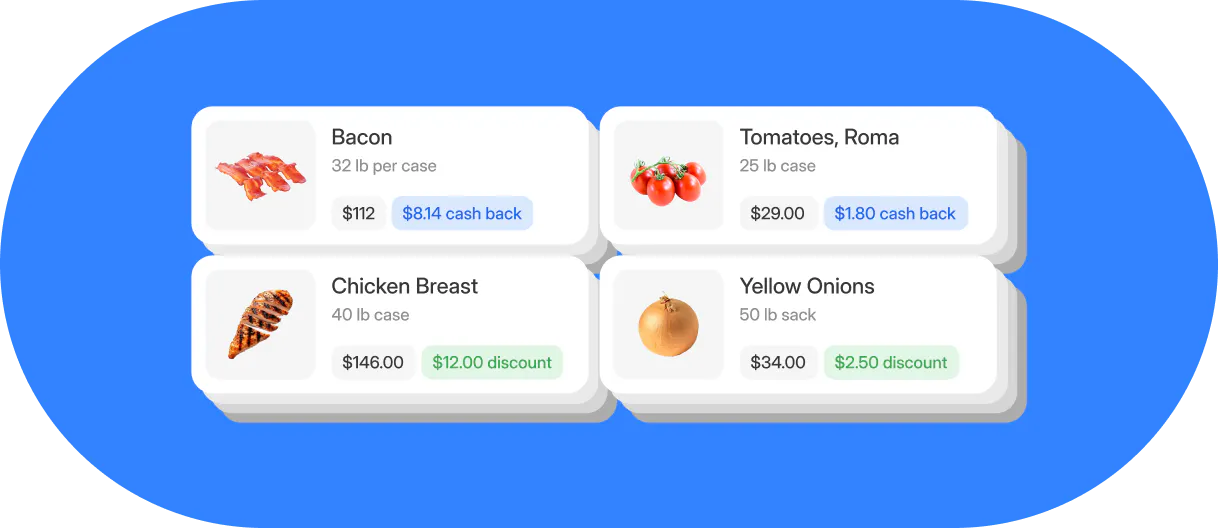
Otter’s Inventory Savings works with participating existing distributors to surface eligible cash back, discounts, and sourcing suggestions. It can help with purchase cost while you continue to manage supplier terms, orders, receiving, and stock in the systems and procedures you use. Evaluate any suggested substitute against your recipe and quality standards before changing what you buy.
Make your next order more predictable
Pick one ingredient that regularly creates a shortage, waste, or price surprise. Check its last four weeks of sales, counts, orders, receipts, and invoices. Set a reorder point and a backup decision, then assign someone to review the result next week. Repeat the process for the next critical item. Small, visible corrections build a supply chain your kitchen can rely on.
Frequently asked questions about restaurant supply chain management
What are the main stages of a restaurant supply chain?
The operating cycle is demand forecasting, supplier selection, purchasing, receiving, storage, production, and review. Inventory counts and food safety checks run through several of those stages. The aim is to connect what guests buy with what you order and what actually arrives.
How can a small restaurant improve its supply chain without new software?
Start with a consistent count sheet for your critical ingredients, a purchase-order log, a receiving checklist, and a weekly comparison of invoices and sales. Document supplier lead times and an approved backup for the items that can stop service. A simple process used every week is more useful than a complex system nobody updates.
What is the difference between inventory management and supply chain management?
Inventory management tracks usable stock, usage, and replenishment. Supply chain management also covers supplier choices, ordering terms, delivery reliability, invoice prices, traceability, and contingency decisions. Inventory data tells you what is on the shelf; the wider process explains how it got there and whether the next order will arrive as expected.
How much safety stock should a restaurant hold?
There is no universal number. Base the buffer on demand variation, supplier lead time and reliability, delivery frequency, shelf life, and the cost of a stockout. Review it after shortages and waste; a large buffer for a highly perishable item may solve one problem while creating another.

Make Every Order Count