Table of contents
- What is a cloud kitchen? (the short answer)
- Cloud kitchen vs. ghost kitchen vs. virtual restaurant: is there a difference?
- How a cloud kitchen works: from order to handoff
- Cloud kitchen business models explained
- The real economics: operating costs, commissions, and what the math looks like
- Running multiple brands from one kitchen: what actually works
- The tech stack a cloud kitchen needs from day one
- Benefits and challenges: an honest look
- Delivery-first operations reward operators who design for the channel from the start
- Frequently asked questions about cloud kitchens
If you're a food entrepreneur who wants to sell at scale without signing a 10-year lease, building out a dining room, or hiring a front-of-house team, that's exactly the problem the cloud kitchen model was designed to solve. As consumer behavior keeps shifting toward delivery-first dining, the global online food delivery market is projected to reach nearly $730 billion by 2034, and delivery-only operations have grown directly alongside that demand.
But the delivery-only business model is not as simple as "rent a kitchen, list on DoorDash, print money." The operators who struggle are almost always the ones who launched without modeling the real economics or building the right operational systems from the start.
Here's what a cloud kitchen actually is, how the business model works, what the margin math looks like, and what it takes to run one profitably, including the multi-brand setup most guides skip over.
Key insights
- A cloud kitchen cuts overhead but doesn't cut platform commissions. At 15–30% per order on 100% of your revenue, the margin math hits harder than it does for a restaurant offering dine-in service, where delivery is supplemental
- The multi-brand model is a real opportunity, but it breaks without menu discipline and order consolidation. Kitchens running three concepts on separate tablets collapse under volume rather than scaling with it
- Your packaging is your storefront: in a delivery-only model, the bag that arrives at the customer's door is the only physical touchpoint your brand ever gets. Design for that moment from the start
- Operators who win treat their cloud kitchen like a data business: tracking which brands, platforms, and menu items are actually profitable, not just busy, is the difference between scaling and spinning
What is a cloud kitchen? (the short answer)
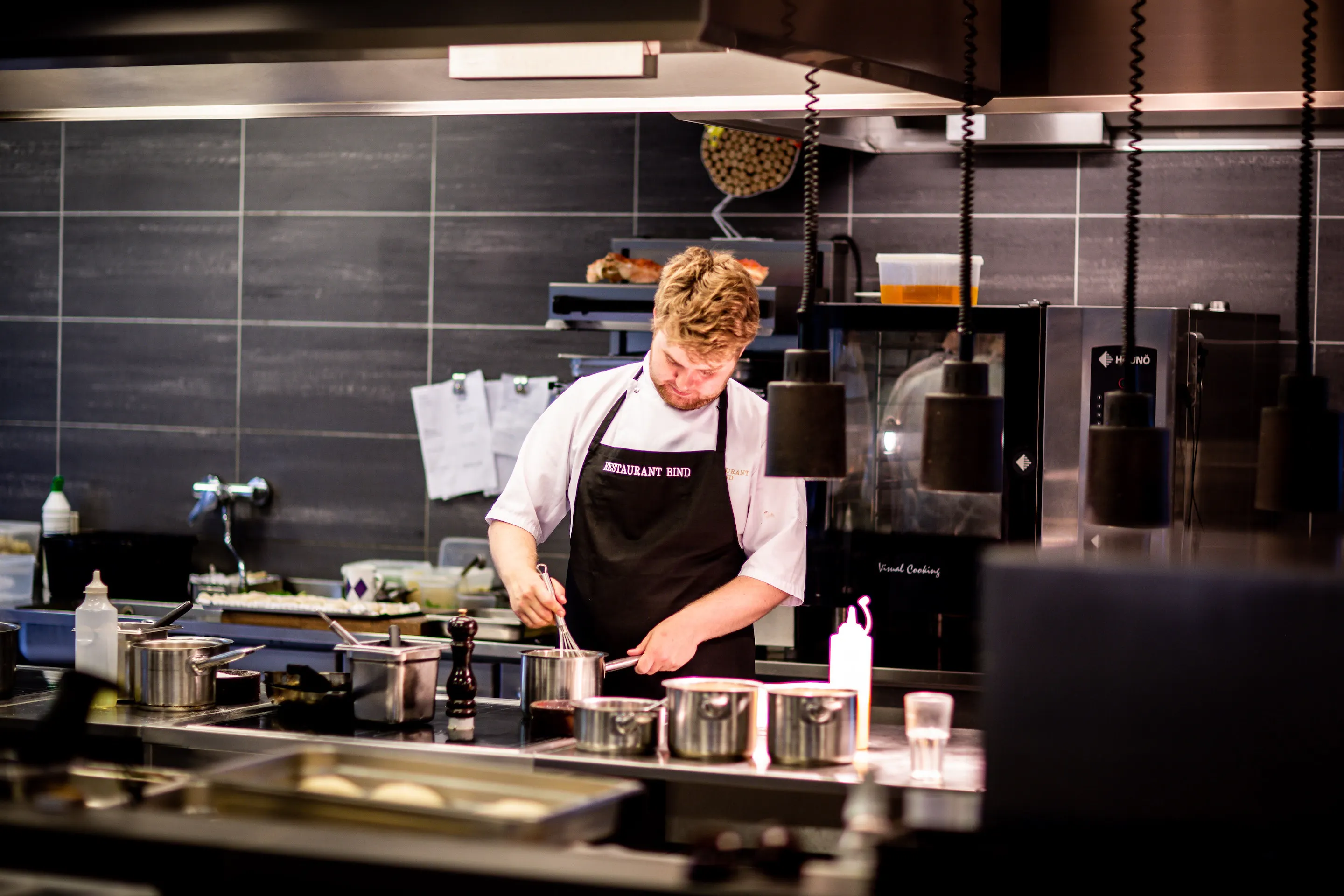
A cloud kitchen is a delivery-only commercial kitchen with no dining room, no storefront, and no walk-in customers. Every order arrives through an online ordering channel: a third-party delivery app, a branded ordering page, or both. Every square foot of commercial kitchen space is dedicated to food preparation, not seating or service. The kitchen prepares the food, a delivery driver picks it up, and the customer receives it at home or at work. That's the entire loop.
No host stand. No tables. No signage visible from the street.
"Cloud kitchen" describes a facility and an operating model, not a software product or a franchise system. You'll see the term used interchangeably with "ghost kitchen" and dark kitchen across trade press, lease agreements, and supplier conversations. They all mean the same thing.
The terminology that does mean something different is covered in the next section.
Cloud kitchen vs. ghost kitchen vs. virtual restaurant: is there a difference?
Cloud kitchens, ghost kitchens, dark kitchens, and virtual kitchens all describe the same physical setup: a delivery-only commercial kitchen with no dine-in option. The industry uses these terms interchangeably, and you'll encounter all of them when reading trade press, negotiating a kitchen lease, or vetting suppliers. Don't let the label confusion slow you down.
Virtual brand and virtual restaurant are related but distinct. A virtual brand is a brand identity that exists only on delivery platforms. It has its own name, menu, and app listing, but no dedicated physical location. A virtual brand can operate out of a cloud kitchen, or it can run out of an existing restaurant's kitchen during off-peak hours. The brand is the concept; the cloud kitchen is the facility. For a deeper dive, see our full guide to what a virtual brand is.
Why does this matter practically? Because the multi-brand model, running two or three virtual brands from one virtual kitchen, is one of the most common strategies operators use to multiply revenue from the same space and staff. Understanding the difference between the facility and the brand identity is the foundation for building that model correctly.
The label matters less than the underlying reality: you're building a business where 100% of revenue flows through digital ordering channels, whether that's a third-party mobile app or your own branded ordering page. That single fact shapes every decision you'll make, from menu design to tech stack to packaging.
How a cloud kitchen works: from order to handoff
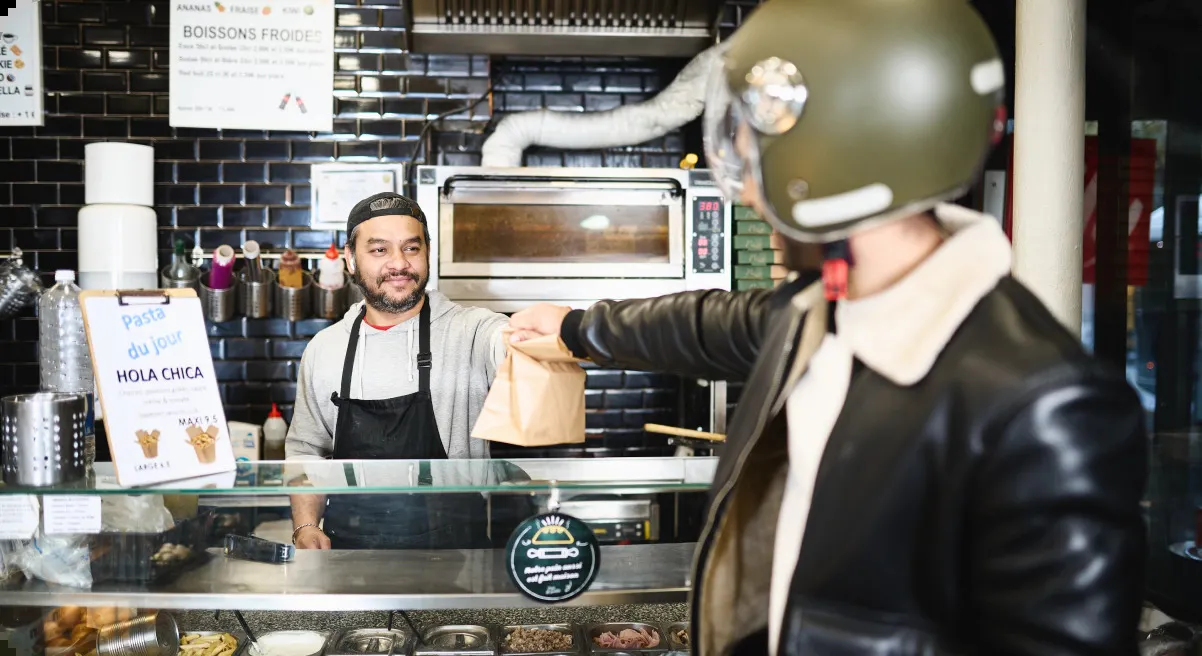
The operational loop is straightforward. A customer opens a third-party delivery app, finds your listing, places an order, and pays. That order routes to your kitchen, ideally through a single consolidated display rather than a platform-specific tablet. Your staff cooks and packages the order. A courier picks it up. The customer receives it.
There is no front-of-house anywhere in that sequence.
Two things to internalize before you launch:
- Your app listing is your storefront. Your photos, your item descriptions, your ratings: that's what replaces curb appeal and atmosphere. A blurry photo or a three-star rating is the equivalent of a dirty window and a broken sign.
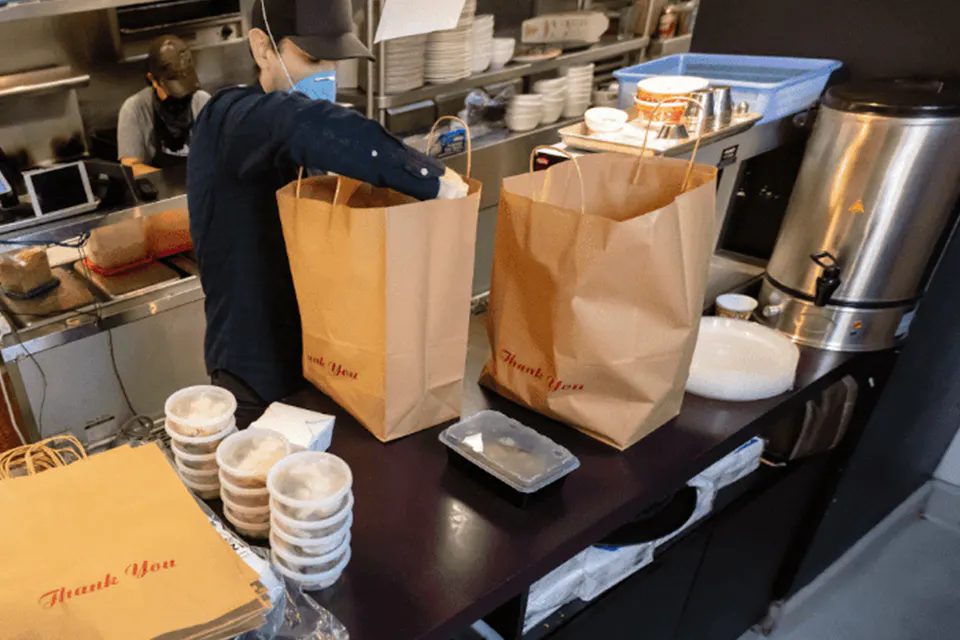
- Your packaging is the only physical touchpoint your brand ever gets. The bag, the box, the label: that's the moment your brand exists in the physical world for that customer. Operators who treat packaging as an afterthought hand that moment to a generic brown bag.
The technology layer is not optional. You need active listings on delivery platforms, a way to receive and route orders, and a POS system for delivery restaurants to consolidate incoming tickets. If you go live on DoorDash, Uber Eats, and Grubhub simultaneously, you will receive three separate order streams. Without a unified system, that means three tablets pinging independently and three separate ticket queues with no single view of what's happening in your kitchen. That's tablet sprawl, and it creates missed orders and rating damage fast.
Cloud kitchen business models explained
Model 1: single-brand delivery-only
One concept, one menu, all orders through online ordering channels. This is the lowest-complexity starting point. It's the right model for testing a new food concept, launching a delivery arm of an existing restaurant, or validating demand before committing to a larger operation. Staffing is simpler, prep is focused, and ticket management is manageable even with basic tooling. For most first-time operators, mastering a single brand before expanding into a multi-brand kitchen is the safer sequence.
Model 2: multi-brand / virtual food hall
Multiple distinct brand identities, each with its own menu and app listing, all operating from the same physical kitchen. Revenue multiplies from the same space and staff. This is where the model gets genuinely interesting, and where it most often breaks.
Running two or three virtual brands from one virtual kitchen requires disciplined menu design (more on this below), staffing that accounts for combined order volume across all brands, and an order management system that consolidates tickets from every platform into one view. Without those three things, the model collapses under volume rather than scaling with it.
Otter's Virtual Brands feature is built specifically for this setup. As your POS, Otter consolidates orders across brands and delivery platforms into a single screen so your staff see the full ticket queue regardless of which concept or app the order came from.
Christina Hong, owner of Seoulmates in Los Angeles, runs a second virtual brand, Boffin Bird, out of the same kitchen: "Another cool thing about Otter is it helps me run multiple brands. We have our main storefront, Seoulmates, and then we have our virtual kitchen, which is Boffin Bird. When people order on the kiosk, they can order from both menus. Both menus are also available on all the third parties. It makes the ordering system for both restaurants, through the same system, very easy."
Model 3: shared or rented commissary space
Renting time or a station inside a larger shared commercial kitchen, such as an incubator kitchen, a commissary kitchen, or a dedicated cloud kitchen facility like CloudKitchens. (Kitchen United, one of the category's early pioneers, exited the physical-facility business in 2023, a useful reminder to vet any commissary partner's staying power before you sign.) Lower upfront capital, no long-term lease on a full facility. You bring your own concept, staffing, and equipment. This is the most common entry point for operators testing a market before committing to a standalone kitchen.
Want to see how Otter handles multi-platform order consolidation? Get started with Otter.
The real economics: operating costs, commissions, and what the math looks like
The overhead savings are real. A cloud kitchen typically needs 200–1,000 square feet of commercial kitchen space versus 2,000–5,000 square feet for a brick-and-mortar restaurant. No dining room rent, no front-of-house labor, no furniture or decor spend.
Here's what most operators miss before launch: third-party food delivery services like Uber Eats, DoorDash, and Grubhub charge 15–30% commission per order. For a brick-and-mortar restaurant, delivery might represent 20–30% of total revenue, so that commission applies to a slice of the business. In a cloud kitchen, 100% of your revenue runs through these platforms. That's a structurally different margin problem, and it's the single most important number to model before you open.
Weighing in-house vs third-party delivery early helps you decide how much of that exposure to accept.
Run the numbers on a single order:
- Customer pays $25
- Platform takes 25% commission: you receive $18.75
- Food cost at 30%: $7.50
- Packaging: $0.75–$1.50
- Labor allocation per order: variable, but real
What's left is a narrow window, and that's before kitchen overhead, licensing fees, or any marketing spend to improve your platform ranking. That narrow window is where your profit margins live.
The partial counter-move is building a direct online ordering channel, your own website or branded ordering page, to reduce platform dependency over time. Commission-free direct orders change the unit economics meaningfully at scale, though that shift takes time to build.
Be honest about your startup costs and ongoing operating costs too. Commercial kitchen licensing, food safety certification, cooking equipment, buildout, and initial platform setup require real capital. Operators who budget only for lower overhead and overlook platform fees, packaging costs, and permitting often hit a wall in the first 90 days.
Running multiple brands from one kitchen: what actually works
So how many brands can one kitchen realistically handle before ticket times collapse? The answer depends on three things.
Menu design is the first constraint. Successful multi-brand kitchens share core ingredients and prep steps across concepts, which also simplifies your supply chain since fewer distinct SKUs move through the same distributor relationships. Three brands built around overlapping proteins, bases, and sauces are manageable. Three brands with entirely different prep profiles create a staffing and timing breakdown under even moderate volume. Design your virtual brands to share a prep foundation, not just a kitchen, and hold quality control to the same standard across every brand running through it.
Staffing reality. You cannot run three full menus with two line cooks. Order volume needs to be distributed across concepts so no single ticket window gets overwhelmed. Most solo operators find two brands is the realistic ceiling before a third requires a dedicated additional staff member.
Order management is the operational bottleneck. When Brand A on DoorDash, Brand B on Uber Eats, and Brand C on Grubhub all fire tickets at the same time, your kitchen needs a single unified view, not three separate tablets, for real operational efficiency. A missed ticket under one brand name hurts that brand's platform rating, and ratings compound downward over time. A brand with consistently low ratings on a major platform sees meaningful order volume decline.
Otter POS consolidates orders across brands and platforms into one kitchen display. Your staff see the full ticket queue regardless of which concept or delivery app the order came from, which is what makes multi-brand operation feasible at real volume rather than just in theory.
The tech stack a cloud kitchen needs from day one
Name the problem plainly: if you go live on three platforms across two brands, you start with up to six active tablets, each pinging separately. Tablet sprawl means misrouted tickets, missed orders, and no unified sales view. These are immediate problems, not ones that show up later.
Required from day one:
- Active listings and menus on each delivery platform
- Order consolidation: a single display, often a kitchen display system, that receives and routes all incoming orders regardless of source
- A POS that records sales, surfaces per-brand reporting, and routes tickets to the kitchen
Useful but not mandatory at launch:
- A direct online ordering channel (your own website or branded ordering page)
- Customer feedback tracking by platform
- Financial reporting segmented by brand and channel
Otter functions as the restaurant POS system for cloud kitchen and virtual brand operators, pulling orders from all connected third-party delivery apps into one interface, routing kitchen tickets, and providing per-brand financial data so you know which concept is actually profitable, not just which one is busy.
Benefits and challenges: an honest look
Benefits
- Faster market entry. Without a dining room buildout, a cloud kitchen can go live in weeks. The risk of an underperforming concept is easier to absorb when you haven't signed a 10-year lease
- Operational flexibility. Menus update digitally with no reprint cost. Pricing can vary by platform. An underperforming brand can be paused without closing a physical location
- Low-risk menu testing. An existing QSR or fast-casual operator can launch a delivery-only concept from their current kitchen during off-peak hours to test demand before committing
Challenges
- Brand invisibility. Customers remember the delivery platform, not your brand name. Building recognition requires consistent packaging, quality, and social presence
- No direct customer data. Orders through third-party delivery apps don't give you customer contact information. You can't build a loyalty program or email list from platform traffic without a direct ordering channel
- Platform dependency. If a delivery app adjusts its algorithm, raises commissions, or suspends your listing, revenue can drop overnight. Treat this as a real operational risk, not a theoretical one
- Cuisines that don't travel. Dishes that arrive cold, soggy, or structurally compromised generate low ratings fast. Menu design must account for a 20–45 minute delivery window before you launch
Delivery-first operations reward operators who design for the channel from the start
Cloud kitchens are one of the fastest-growing segments of the food industry, and every decision, from menu design to packaging to platform selection to tech stack, needs to be made with delivery as the primary product experience.
Your packaging is your storefront. Your app listing photo is your curb appeal. Your ticket time is your table turn. Operators who apply dine-in intuition to a delivery-only model consistently underperform against operators who design for the channel from day one.
The model rewards data discipline. Which brand is profitable? Which platform drives volume vs. margin? Which menu items perform on delivery vs. slow down ticket times? Without a POS that surfaces this data by brand and by channel, you're guessing with real money.
The model works well for:
- Existing restaurant operators adding a delivery-only concept from their current kitchen
- New operators testing a food concept before committing to a full lease
- Multi-concept entrepreneurs running separate brand identities from one virtual kitchen
Be cautious before launching if:
- Your cuisine doesn't hold up over a 30-minute delivery window
- Your business depends on regulars who need to physically see you
- You haven't modeled the 15–30% commission math against your projected operating costs
If you're launching a cloud kitchen or running virtual brands, Otter POS consolidates orders from every delivery platform into one kitchen view so you can run more brands with fewer missed tickets and more clarity on what's actually profitable. Get started with Otter.
Frequently asked questions about cloud kitchens
What is a cloud kitchen?
A cloud kitchen is a delivery-only commercial kitchen with no dining room, no storefront, and no walk-in customers. All orders arrive through online ordering channels: third-party delivery apps or a direct ordering page. The terms "ghost kitchen" and "dark kitchen" refer to the same model and are used interchangeably.
What is the difference between a cloud kitchen and a ghost kitchen?
There is no meaningful operational difference. All three terms describe a delivery-only commercial kitchen with no dine-in option. "Virtual brand" or "virtual restaurant" is distinct: it refers to a brand identity that exists only on delivery platforms — the model behind launching virtual restaurant brands — which can run out of a cloud kitchen or out of an existing restaurant's kitchen during off-peak hours.
How does a cloud kitchen make money?
A cloud kitchen earns revenue through food orders placed on third-party delivery apps or a direct online ordering channel. Profitability depends on what remains after platform commissions (typically 15–30% per order), food costs, packaging, labor, and kitchen overhead. Because 100% of revenue runs through delivery channels, those commission rates have a larger structural impact on operating costs than they do for a brick-and-mortar restaurant where delivery is supplemental.
How much does it cost to start a cloud kitchen?
Costs vary by model. Renting space in a shared commissary can run $1,000–$3,000 per month. Building or leasing a dedicated kitchen requires equipment investment, commercial permitting, and buildout costs. While startup capital is lower than a full restaurant, cloud kitchens are not zero-cost. Operators who budget only for lower overhead and overlook platform fees, packaging, and licensing often get caught in the first 90 days.
Can one cloud kitchen run multiple brands?
Yes. One virtual kitchen can run multiple distinct brand identities with separate menus and delivery platform listings. It works best when menus share core ingredients and prep steps, staffing accounts for combined order volume across all brands, and an order management system consolidates tickets from every platform so nothing gets missed.
What technology does a cloud kitchen need from day one?
At minimum: active listings on each delivery platform, a way to consolidate incoming orders from multiple platforms into a single kitchen view (to avoid tablet sprawl), and a POS that routes kitchen tickets and tracks sales by brand. As the operation grows, direct online ordering, per-brand financial reporting, and customer feedback tracking become important additions.
What are the biggest risks of running a cloud kitchen?
Three stand out: (1) Platform dependency: a delivery app can change its algorithm, raise commissions, or suspend your listing and your revenue drops with it. (2) Brand invisibility: customers remember the platform, not your name, making repeat business harder to build without a direct channel. (3) Commission math: at 15–30% per order on 100% of your revenue, there is very little margin before food cost and labor take their cut.
What cuisines work best in a cloud kitchen?
Cuisines that hold up well over a 20–45 minute delivery window perform best: bowls, sandwiches, burgers, tacos, pizza, and fried chicken concepts. Dishes that rely on precise temperature, crispy textures, or delicate plating tend to generate lower ratings because the product degrades in transit. Menu design should account for the delivery window before you launch, not after your first round of one-star reviews.
Run your cloud kitchen from one screen